
For most of automotive history, a new car was largely finished when it left the factory. Its engine performance, dashboard functions and major features remained essentially the same for the rest of its life. Software existed, but it mostly operated individual systems hidden behind the mechanical parts of the vehicle. That relationship is changing rapidly. In 2026, some of the industry's biggest technological developments are no longer centered on adding more horsepower or another screen. Automakers are redesigning the electronic architecture underneath the entire vehicle. Cars are increasingly becoming software-defined platforms capable of receiving updates, running artificial intelligence locally, managing increasingly sophisticated driver-assistance systems and communicating with cloud services and even electricity networks. The result is not simply a more computerized car. It is a different approach to designing, manufacturing and owning one.
The Software-Defined Vehicle Is Becoming Real
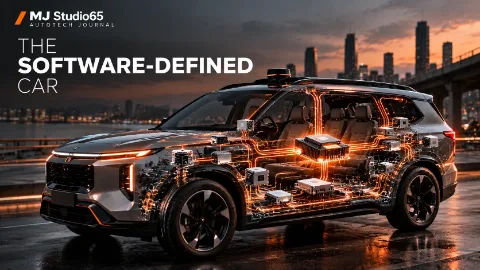
The term software-defined vehicle, or SDV, is used so often that it can sound like another technology-industry buzzword. But there is a substantial engineering change behind it. Traditional cars may contain dozens of separate electronic control units, each responsible for a particular function. A modern software-defined architecture increasingly consolidates those functions into more powerful central or zonal computers. Instead of every feature being tightly linked to an individual hardware module, more vehicle functions can be controlled and changed through software. That makes over-the-air updates much more important. An automaker can potentially correct software problems, improve infotainment, modify charging behavior or introduce additional functions without requiring every vehicle to return to a workshop. Qualcomm's Snapdragon Digital Chassis, for example, combines technologies covering cockpit functions, connectivity, cloud services and automated driving as part of an architecture designed specifically for software-defined vehicles. Its car-to-cloud platform also supports remote device management, OTA updates and optional feature upgrades.
We are also beginning to see more of that architecture reach production vehicles. Leapmotor and Qualcomm demonstrated a central automotive computer in 2026 capable of combining cockpit, driver-assistance, body controls and the vehicle gateway into a more consolidated architecture. Volkswagen Group is similarly developing a zonal SDV architecture through its Rivian and Volkswagen Group Technologies joint venture. That shift matters because the architecture of the vehicle determines what manufacturers can do with software later. A car designed around isolated electronic modules cannot simply become a fully software-defined vehicle through one update. The capability has to be engineered into the vehicle from the beginning.
Over-the-Air Updates Change What Ownership Means
This also changes the relationship between the manufacturer and the vehicle after the sale. A conventional car gradually ages away from the newest technology. A connected, software-defined vehicle can potentially receive improvements years after leaving the showroom. That sounds entirely positive, but there is another side to it. If more vehicle functionality depends on software, the quality of software support becomes part of the ownership experience. Buyers may eventually need to ask questions that were rarely important when purchasing a car 15 years ago: How long will the manufacturer provide software updates? Will connected services remain supported for the life of the vehicle? Which features belong permanently to the owner, and which require subscriptions? What happens if a digital service is discontinued? This is why software-defined cars should not automatically be described as cars that simply "get better with age." They can improve through updates. But that also makes long-term software support, cybersecurity and manufacturer commitment increasingly important parts of vehicle quality.
From Software-Defined to AI-Defined Cars
The next stage is already emerging. Automotive technology companies increasingly use the term AI-defined vehicle to describe cars in which artificial intelligence becomes deeply integrated into the vehicle's operating environment rather than being limited to a voice assistant. Qualcomm, for example, is developing automotive platforms capable of running AI workloads across the vehicle and has expanded its work with Google around generative and agentic AI. The goal is to allow future cars to interpret context, personalize functions and perform more AI processing directly within the vehicle instead of relying entirely on the cloud. The most visible example for drivers will probably be the cabin. Instead of memorizing fixed voice commands such as "set temperature to 22 degrees," increasingly capable assistants can interpret normal conversation. A driver might eventually say that the cabin feels too warm, ask for a charging stop somewhere with food, or request a route that avoids difficult roads, and the system could understand the intention rather than requiring a specific command phrase. But AI can extend much further than infotainment. Vehicle systems can potentially use it for driver monitoring, predictive maintenance, energy management, perception and increasingly sophisticated driver assistance. The important distinction is that the car is not becoming intelligent simply because it contains a chatbot. The larger transformation is occurring because high-performance automotive computers can increasingly process data from numerous vehicle systems simultaneously.
Centralized Computing Could Change How Cars Are Engineered
Modern vehicles contain cameras, radar, ultrasonic sensors, displays, connectivity modules and numerous electronic systems constantly generating information. Historically, many of those systems were developed relatively independently. A more centralized computing architecture makes it possible for different vehicle functions to share computing resources and information. That could reduce electronic complexity while making software easier to update across different models. Stellantis, for example, expanded its collaboration with Qualcomm in 2026 around a common technology foundation covering cockpit, connectivity and advanced driver assistance across future vehicle architectures. For automakers, this has an important business advantage. Instead of developing completely different electronics for every vehicle, manufacturers can build common computing platforms and scale them across multiple brands and models. The hardware then becomes the foundation. Software determines how much of its capability each vehicle uses. That starts to make the automotive industry look surprisingly similar to the computing industry.
Level 3 Driving Is Real But Still Highly Restricted
Automated driving is another area where the difference between marketing and engineering matters. Many vehicles now offer sophisticated Level 2 driver-assistance systems capable of controlling steering, acceleration and braking. But Level 2 is not autonomous driving. The driver remains responsible for monitoring the road and must be prepared to intervene. SAE Level 3 is fundamentally different. Within the specific conditions in which an approved Level 3 system is operating, the vehicle takes responsibility for the driving task and the driver can temporarily direct attention elsewhere. The driver must still be capable of taking control when the system requests it. Only a small number of production systems currently offer that capability. Mercedes-Benz's DRIVE PILOT is one of the clearest examples. In Germany, the system received approval to operate at speeds of up to 95 km/h under specified conditions on the Autobahn. It is offered on the S-Class and EQS. BMW also offers Personal Pilot L3 on compatible 7 Series models in Germany, where the system can take over the driving task under defined motorway conditions at speeds up to 60 km/h. BMW's Highway Assistant can operate at much higher speeds, including up to 130 km/h in Germany, but that system is Level 2 and the driver remains responsible. That distinction is crucial. A car being able to drive with the driver's hands off the steering wheel does not necessarily mean it is Level 3 autonomous.
The Real Autonomous-Driving Story Is Gradual Expansion
The industry is therefore not moving directly from ordinary cars to vehicles that can drive themselves everywhere. Instead, automation is expanding one defined operating condition at a time. Highways are easier than complicated city streets. Low-speed congestion is easier than high-speed driving. Good weather is easier than heavy rain or snow. Well-mapped roads are easier than unpredictable environments. That incremental progression is likely to continue. For most buyers, increasingly capable Level 2 systems will remain much more common than true Level 3 operation for some time. And even Level 3 should not be confused with Level 4 or Level 5 autonomy. The technical vocabulary matters because misunderstanding what a driver-assistance system can actually do creates a safety problem.
Batteries Are Entering a Different Phase
Electric-vehicle development is changing as well. The first major EV race centered heavily on battery capacity and driving range. Those remain important, but manufacturers are now paying increasing attention to battery cost, charging speed, longevity, thermal safety and manufacturing efficiency. Hyundai provided a good example during its 2026 CEO Investor Day. The company said EV models planned for 2027 will use new mid-nickel NCM battery cells intended to reduce battery cost by around 30 percent while maintaining performance for real-world use. Hyundai has also developed higher-performance cells that it says can reduce charging time by around 40 percent compared with the high-nickel cells it previously used. Those are manufacturer claims rather than independent long-term test results, but they demonstrate where battery development is heading. The objective is no longer simply to install the largest possible pack. A smaller, cheaper battery that charges quickly and maintains its health for longer can be just as important to making an EV practical.
Battery Software Is Becoming Important Too
Battery development itself is also becoming partly a software problem. Hyundai says it is expanding its cloud-based battery-management system with the goal of increasing average battery life by around 20 percent by 2028 through improved monitoring and predictive diagnostics. That illustrates how the software-defined vehicle and the EV transition increasingly overlap. The battery may be physical hardware, but software determines how aggressively it charges, how temperatures are managed, how degradation is monitored and how problems are detected. In other words, future improvements in EV durability may come partly from chemistry and partly from code.
Solid-State Batteries Are Getting Closer But They Are Not Here Yet
Few automotive technologies generate as much excitement as the solid-state battery. The attraction is understandable. Replacing the liquid electrolyte used in conventional lithium-ion cells with a solid material has the potential to improve energy density, charging performance and packaging. But the important word remains potential. Solid-state batteries still face difficult manufacturing, durability and cost challenges. There has nevertheless been meaningful progress. QuantumScape inaugurated its Eagle Line pilot production facility in California in February 2026. The line is intended to manufacture solid-state cells for customer testing, demonstrations and integration development rather than immediate mass-market vehicle production. Toyota continues targeting 2027–2028 for commercialization of its all-solid-state battery technology and is working with partners including Idemitsu and Sumitomo Metal Mining on production methods and battery materials. That is meaningful progress. But it is still different from saying solid-state batteries are about to replace today's lithium-ion packs across the market. The next several years will determine whether the technology can move successfully from pilot production to automotive-scale manufacturing.
Your EV Could Also Become Part of the Energy System
Another important development has less to do with how an EV drives and more to do with what happens when it is parked. Most EVs normally operate in one direction:
Grid → Car
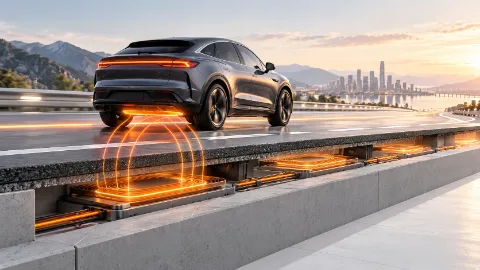
Bidirectional charging allows electricity to travel the other way as well. A vehicle equipped for vehicle-to-home, or V2H, can potentially supply electricity to a properly equipped house during an outage. Vehicle-to-grid, or V2G, goes further by allowing the vehicle to export energy to the electricity network when grid conditions and local regulations permit it. That turns an EV battery into something much larger than an energy source used only for transportation.
V2X Is Moving From Demonstration to Real Programs
This technology is no longer entirely experimental. PG&E in California currently operates a Vehicle-to-Everything program for residential and commercial customers. Compatible systems can provide backup electricity during outages and, depending on the setup and program, export power during periods of high electricity demand. General Motors is also building bidirectional capability into vehicles including models such as the Chevrolet Equinox EV, GMC SierraEV and Cadillac LYRIQ, with compatible GM Energy hardware enabling V2H operation. GM is also conducting vehicle-grid integration testing with utilities. Hyundai Motor Group took another step in July 2026 by introducing AllDayEnergy, a global name for services covering smart charging, V2G and V2H across Hyundai and Kia products. Its rollout starts with smart charging before expanding into additional bidirectional services. The hardware, however, is only one part of the problem. Utilities, electricity tariffs, grid-interconnection rules, compatible chargers and local regulation all determine whether a technically capable car can actually export electricity. That means V2G adoption may depend as much on energy policy as automotive engineering.
Cars and Energy Are Starting to Merge
This could eventually change how people think about an EV battery. Consider a vehicle with a large battery sitting parked for most of the day. From a transportation perspective, that stored energy is doing nothing while the car is stationary. From the perspective of the electricity grid, however, thousands or millions of connected EV batteries could potentially become distributed energy resources. They could absorb electricity when supply is plentiful. They could reduce household demand during expensive peak periods. They could provide backup power during outages. And, where regulations permit, they could return electricity to the grid when it is needed most. That makes EV development increasingly connected to the future of the electricity system itself.
More Technology Also Creates More Questions
For consumers, all of these developments offer genuine benefits. Software updates can fix issues without a workshop visit. AI can make vehicle interfaces easier to use. Driver-assistance systems can reduce workload. Battery technology can improve EV affordability and longevity. Bidirectional charging can give an EV value even while parked. But the technology also introduces new forms of complexity. A software problem can affect functions that once depended only on hardware. A subscription can determine whether a feature remains available. A cloud service can become part of normal vehicle operation. A driver-assistance system can be dangerous when its capability is misunderstood. And a vehicle that constantly exchanges data with external systems requires manufacturers to take cybersecurity and privacy seriously throughout its life. The industry is therefore moving toward a world where assessing a car means evaluating far more than its engine, suspension and build quality. Software support may become part of reliability. Cybersecurity may become part of safety. And long-term digital support may become part of resale value.
The Automotive Industry's Competitive Advantage Is Changing
Mechanical engineering is not becoming unimportant. A poorly designed suspension is still a poorly designed suspension. A badly packaged vehicle will not become practical because it has artificial intelligence. Good brakes, steering, crash structures, durability and manufacturing quality remain fundamental. What is changing is that they are no longer enough on their own. Automakers increasingly need expertise in software development, semiconductors, cloud computing, AI, cybersecurity and energy management alongside their traditional automotive engineering capabilities. That creates opportunities for technology companies that previously operated largely outside the car industry. It also forces established automakers to decide which technologies they should develop internally and where they should rely on outside partners. The winners of the next automotive era may not necessarily be the companies with the most software written entirely in-house. They may be the manufacturers that manage the complete system best.
The Car Is Becoming a Platform But It Still Has to Be a Good Car
It is tempting to describe the future automobile simply as a smartphone on wheels. That comparison captures the importance of software, but it also misses something fundamental. A phone does not travel at highway speed while carrying a family. A vehicle must continue working safely when connectivity disappears. Its software must interact with steering, braking, battery systems and safety-critical hardware reliably for many years. That gives automotive software a very different responsibility from an ordinary consumer app. The most successful software-defined vehicles will therefore not be the ones with the most features. They will be the ones in which technology becomes useful without making the vehicle more difficult to trust, understand or own. That may ultimately be the most important automotive technology story of 2026. Cars are unquestionably becoming more like digital platforms. But the companies that lead this transition will still have to remember something much older: Before a car can be a good computer, it still has to be a good car.
Sources & References:
1. Qualcomm - Snapdragon Digital Chassis: software-defined vehicle architecture, OTA updating and automotive computing. Qualcomm
2. Qualcomm and Google - Automotive AI collaboration, 2026: generative and agentic AI for software-defined vehicles. Qualcomm
3. Mercedes-Benz - DRIVE PILOT: official Level 3 approval in Germany at up to 95 km/h under defined conditions. Mercedes-Benz Media
4. BMW Group - Personal Pilot L3: official Level 3 system information and operating limitations. BMW Group Press
5. Hyundai Motor - 2026 CEO Investor Day: battery-cost, charging and cloud-BMS development. Hyundai
6. QuantumScape - Eagle Line: solid-state battery pilot production opened in February 2026. QuantumScape
7. Toyota Motor Corporation - All-solid-state batteries: commercialization target of 2027–2028. トヨタ自動車株式会社 公式企業サイト
8. PG&E - Vehicle-to-Everything Program: real-world V2H/V2G implementation. PG&E
9. Hyundai Motor Group - AllDayEnergy: global smart-charging, V2G and V2H initiative. Hyundai

Comments
No comments yet. Be the first to join the discussion.