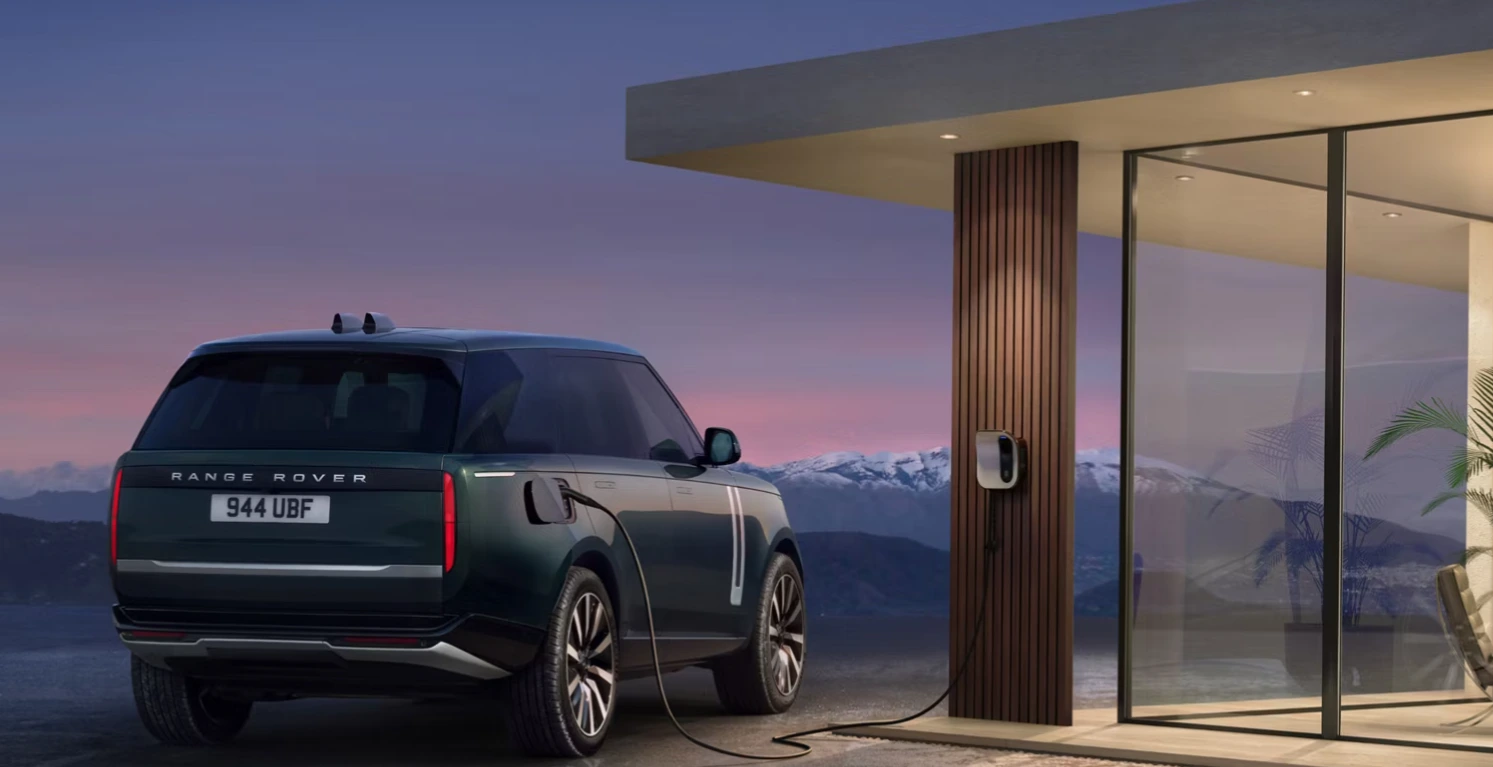
The Evoque Hoxton Edition Adds London Style and PHEV Practicality
Special editions sometimes amount to little more than a different set of wheels, a new badge and a longer equipment list. The 2026 Range Rover Evoque Hoxton Edition has some of those ingredients too, but its purpose is more interesting. Range Rover created the Hoxton Edition as part of a series of models inspired by distinctive areas of London. The Evoque takes its name from Hoxton, an area associated with art, fashion and London's creative culture, while other models in the series reference places including Belgravia, Battersea and Westminster. That makes the Evoque an obvious candidate. Since the original model arrived, the Evoque has always placed unusually strong emphasis on styling for a compact SUV. The Hoxton Edition builds on that identity rather than trying to turn the vehicle into something fundamentally different. But underneath the special-edition design is something more relevant to everyday ownership: buyers in participating markets can combine the Hoxton specification with a plug-in hybrid drivetrain, allowing shorter journeys to be completed using electricity while retaining a petrol engine for longer trips. The result is not a completely new Evoque. It is a more distinctive version of one of Range Rover's smallest SUVs at a time when luxury buyers are increasingly being asked to choose between combustion, hybrid and fully electric vehicles.
Hoxton Is About Design First
The changes that distinguish the Hoxton Edition are immediately visible. Range Rover equips it with a Platinum Atlas exterior styling package and distinctive 20-inch Style 5089 wheels finished in Satin Gold with Diamond-Turned contrast. Special projection puddle lamps display Hoxton Edition script when approaching or leaving the vehicle. Those details give the Evoque a different personality without dramatically changing its familiar shape. The underlying silhouette remains recognizably Evoque: a relatively high beltline, tapered roof, short overhangs and the visual proportions that helped distinguish the model from more conventional compact SUVs. Inside, the special-edition treatment continues with grained leather seats with contrast stitching, black brushed-aluminum trim and illuminated Hoxton Edition treadplates. Depending on market and specification, equipment can also include configurable cabin lighting, an interactive driver display, head-up display and Meridian audio. This is therefore primarily a styling and equipment package rather than a performance edition. And that fits the Evoque particularly well. The attraction is less about standing out through aggressive aerodynamics or more power and more about offering something visually different from the standard luxury-SUV formula.
The Evoque's Cabin Is Increasingly About Simplicity
The current Evoque uses Range Rover's 11.4-inch Pivi Pro touchscreen as the center of its cabin interface. The display appears to float above the dashboard rather than being surrounded by a large collection of buttons and switches. That minimalist approach creates a clean-looking interior, although it also means more vehicle functions depend on the touchscreen. Wireless Apple CarPlay and Android Auto are available, while connected navigation and other online functions are integrated through Pivi Pro. Higher specifications can also add equipment such as an interactive digital driver display and head-up display. One interesting feature is Cabin Air Purification Plus. The system is designed to filter dust and microbes while monitoring carbon-dioxide levels inside the cabin. Air purification sounds like a minor luxury feature compared with power or electric range, but in a vehicle designed heavily around city use it can have practical value. Urban vehicles spend significant amounts of time in congested traffic where external air quality may not be ideal. That makes cabin comfort increasingly about more than seat material and climate control.
The PHEV Is Now the P270e in Many European Markets
The powertrain deserves some clarification because Evoque PHEV specifications have changed over time. Earlier versions of the Evoque were widely sold as the P300e, with output figures around 309 PS. For the current 2026 European-market Hoxton Edition, the plug-in hybrid is generally listed as the P270e, producing around 269 PS (198 kW). That distinction matters because older articles and specification sheets can easily create the impression that every 2026 Evoque PHEV still uses the previous P300e configuration. The current P270e combines a 1.5-liter turbocharged three-cylinder petrol engine with an electric motor and all-wheel drive. ADAC lists the 2026 Hoxton Edition P270e at 198 kW, or roughly 269 PS, with 540 Nm of combined torque and a 0–100 km/h time of about 7.2 seconds. Those numbers make the Evoque reasonably quick, but performance is not really the point of this version. The electric component is there primarily to reduce petrol use during shorter journeys and allow genuine electric-only operation.
Around 60 KM of Electric Range
Range Rover currently quotes up to approximately 60 km of WLTP electric range for the Evoque plug-in hybrid. More importantly, the company also publishes an expected real-world figure of up to approximately 47 km. That second number is arguably more useful. A 60 km laboratory rating does not mean every owner will travel exactly 60 km electrically. Temperature, speed, climate-control use, elevation and driving style all affect battery consumption. But 40–50 km of real-world electric driving could still cover a meaningful percentage of daily journeys for many urban and suburban owners. Consider someone commuting 15 km each way. With home charging, that owner could theoretically complete most weekday commuting without starting the petrol engine. The petrol engine remains available for longer journeys without requiring the charging planning of a full EV. That is the fundamental PHEV proposition. And it works only when the vehicle is actually charged.
A PHEV Makes the Most Sense When You Plug It In
This is an important point because plug-in hybrids are often misunderstood. The benefit of the Evoque PHEV is not simply that it contains an electric motor. Its advantage comes from regularly using the energy stored in its battery. If the vehicle is charged each night and used for relatively short trips, a large proportion of everyday driving can potentially be electric. If the owner rarely plugs it in, however, the vehicle has to carry the weight and complexity of both an electric drivetrain and a combustion engine while depending heavily on petrol. That can significantly reduce the efficiency advantage. The ideal Evoque PHEV owner therefore probably has reliable access to charging at home, work or another regular location. That is more important than simply choosing the PHEV badge.
Unusually, the Evoque PHEV Supports DC Fast Charging
One interesting feature of the Evoque is that its relatively small PHEV battery supports DC fast charging. Range Rover quotes approximately 30 minutes from 0 to 80 percent using a compatible 32 kW DC charger. Using a 7 kW AC home wallbox, a full charge takes approximately 2 hours and 12 minutes. A domestic outlet takes considerably longer, at roughly six hours and 42 minutes according to Range Rover's technical information. DC charging on a PHEV is relatively uncommon because the batteries involved are much smaller than those in full EVs. Whether regularly using a public rapid charger makes financial sense will depend on local electricity pricing. For many owners, overnight home charging will still be the more convenient and economical solution. But having the DC option increases flexibility.
What the Electric Range Means in Practice
The Evoque's roughly 60 km rated electric range illustrates an important difference between a PHEV and a full EV. A battery-electric vehicle needs enough energy storage to accommodate almost every journey the owner expects to make. A PHEV battery only needs to cover a useful proportion of them. That allows the battery to remain much smaller. Current European specifications list the P270e battery at around 14.9 kWh gross capacity, with approximately 11.5 kWh usable. That is tiny compared with the 60, 80 or even 100-plus kWh packs found in many battery-electric SUVs. A smaller battery requires fewer materials, adds less weight than a large EV pack and can be charged relatively quickly. The trade-off is obvious: once the usable battery energy is exhausted, the vehicle operates primarily using petrol. Whether that approach is efficient therefore depends heavily on the owner's driving pattern.
The Evoque Still Has Genuine Range Rover Hardware
The Hoxton Edition may be inspired by one of London's trendiest districts, but the Evoque has not completely abandoned Range Rover's traditional capability philosophy. Depending on specification, the model offers technologies including all-wheel drive, Terrain Response 2, All-Terrain Progress Control, Hill Descent Control and a 3D Surround Camera. Those systems give it capabilities that extend beyond the normal requirements of urban driving. That does not make the Evoque a substitute for a Defender on extreme terrain. Nor does the Hoxton Edition suddenly become a dedicated off-road vehicle because it wears the Range Rover badge. But the engineering philosophy is worth noting. Many compact premium SUVs are essentially road cars with higher ground clearance. Range Rover continues to place more emphasis on maintaining useful all-surface capability even in its smallest model.
Its Compact Size Comes With Compromises
The Evoque's design has always prioritized its distinctive proportions. There is a trade-off. The sloping roofline and compact overall dimensions mean it does not offer the same interior openness as some more conventionally shaped SUVs. The Evoque measures roughly 4.37 meters long, putting it firmly in the compact premium-SUV category. That makes it useful in crowded urban environments, but customers prioritizing maximum rear-seat or cargo space may find larger or more box-shaped competitors better suited to their needs. This is another area where we should avoid presenting an opinion as a test result. Without driving and measuring the Hoxton Edition ourselves, MJ Studio65 should not claim that the rear seat is uncomfortable or that its luggage space is better or worse than specific rivals. What we can say is that the Evoque deliberately places styling and compact external dimensions ahead of maximizing every liter of interior volume. That is part of the design compromise buyers should consider.
Hoxton Edition Doesn't Change the Evoque's Basic Mission
It is important to understand what this special edition does and what it doesn't. The Hoxton Edition does not transform the Evoque into a performance SUV. It does not introduce a new suspension architecture. And the special-edition treatment itself does not give the PHEV more electric range. Instead, it packages familiar Evoque engineering with a more individual design treatment and a generous specification. That makes it primarily an aesthetic choice. If a buyer already wants an Evoque PHEV and likes the Satin Gold wheels, Platinum Atlas details and Hoxton-specific cabin treatment, the special edition offers a more distinctive version of the same basic vehicle. For someone interested only in powertrain efficiency, a less elaborate Evoque PHEV may accomplish much the same task.
The Hoxton Edition Also Shows How Range Rover Thinks About Luxury
There is a broader point hidden in the London Editions strategy. Traditional automotive luxury was often defined by things such as engine size, leather, wood trim and mechanical complexity. Those still matter, but manufacturers increasingly use design stories, personalization and cultural references to differentiate premium products. Naming an Evoque after Hoxton is part of that change. Range Rover isn't suggesting that the car was engineered specifically for one London neighborhood. Instead, it is using the neighborhood's association with creativity, art and fashion to give the vehicle a particular identity. That approach will not appeal to everyone. Some buyers will see special-edition wheels and badges as superficial. Others specifically want a car that feels less common than the standard version. Both interpretations are reasonable.
Is a PHEV Still Relevant in 2026?
The Evoque also arrives during an interesting period for plug-in hybrids. Full EVs are becoming more capable, while charging infrastructure continues to expand in many markets. At the same time, not every buyer is ready or able to depend completely on public charging during longer journeys. That leaves room for a vehicle such as the Evoque PHEV. It can operate electrically during many short trips while keeping a petrol engine available when required. But this middle ground also creates additional complexity. A PHEV carries two propulsion systems. It still needs engine servicing. It still uses petrol on longer journeys. And the environmental and operating-cost benefits depend heavily on charging behavior. For an owner who can charge every day, that compromise may make sense. For an owner who cannot regularly plug in, a conventional hybrid, efficient combustion vehicle or full EV may prove a better fit depending on the use case.
Who Does the Evoque Hoxton Edition Make Sense For?
The Hoxton Edition PHEV is easiest to understand when viewed as a city-oriented luxury SUV with an electric commuting capability, rather than a replacement for a long-range EV.
It should particularly appeal to buyers who:
- have reliable home or workplace charging;
- make frequent journeys within roughly 40–60 km;
- occasionally need the flexibility of a petrol engine for longer travel;
- value design and equipment more than maximum cargo capacity;
- want Range Rover's compact SUV rather than a larger model;
- specifically like the Hoxton Edition's London-inspired styling.
It makes considerably less sense for someone who cannot charge regularly. That owner would be paying for a plug-in hybrid system without using one of its biggest advantages.
A Stylish PHEV but the Charging Habit Matters More Than the Badge
The 2026 Range Rover Evoque Hoxton Edition demonstrates two different trends happening at the same time. One is the continued growth of personalization in the luxury-car market. The other is the attempt to make everyday driving increasingly electric without requiring every customer to switch immediately to a battery-only vehicle. The Hoxton Edition handles the first with distinctive Satin Gold wheels, Platinum Atlas detailing and special interior trim. The Evoque PHEV handles the second with around 60 km of WLTP electric range, an expected real-world figure of around 47 km, home charging and even DC rapid-charging capability. Neither makes the Evoque revolutionary. But together they create an interesting proposition for a particular type of buyer. The key is not simply choosing the PHEV version. It is using it the way a plug-in hybrid is intended to be used. For an owner who charges regularly and spends most days covering relatively short distances, the Evoque can conduct much of its routine driving electrically while keeping the flexibility of petrol for longer journeys. For someone who rarely plugs in, much of that advantage disappears. And that may be the most important thing to understand about the Evoque Hoxton Edition PHEV: The gold wheels make it different. Charging it regularly is what makes the powertrain worthwhile.
Sources & References:
1. Range Rover - Evoque Hoxton Edition / Models and Specifications.
Official electric range, expected real-world range, home charging and rapid-charging figures. Land Rover Philippines
Current European-market P270e performance, battery, charging and WLTP information. ADAC


Comments
No comments yet. Be the first to join the discussion.