Electric vehicles have improved dramatically in only a few years. Batteries are getting larger, charging speeds are increasing, and driving ranges that once seemed ambitious are becoming normal. But the basic routine has barely changed. Eventually, the vehicle still has to stop and recharge. Honda is now working on a different idea: instead of asking electric vehicles to keep stopping for electricity, what if electricity could be delivered through the road while the vehicle is moving? Last October 5, 2026, Honda revealed new underlying technology for a Dynamic Wireless Power Transfer system, or DWPT, developed together with construction company Taisei Corporation and road builder Taisei Rotec. The system places wireless power-transmission equipment beneath the pavement and a receiving unit underneath the vehicle, allowing electricity to move between them without a physical charging cable. Honda plans to participate in public road testing in Japan from fiscal 2027 onward. It sounds futuristic, but the basic idea is surprisingly familiar.
Think of Wireless Phone Charging But Under a Highway
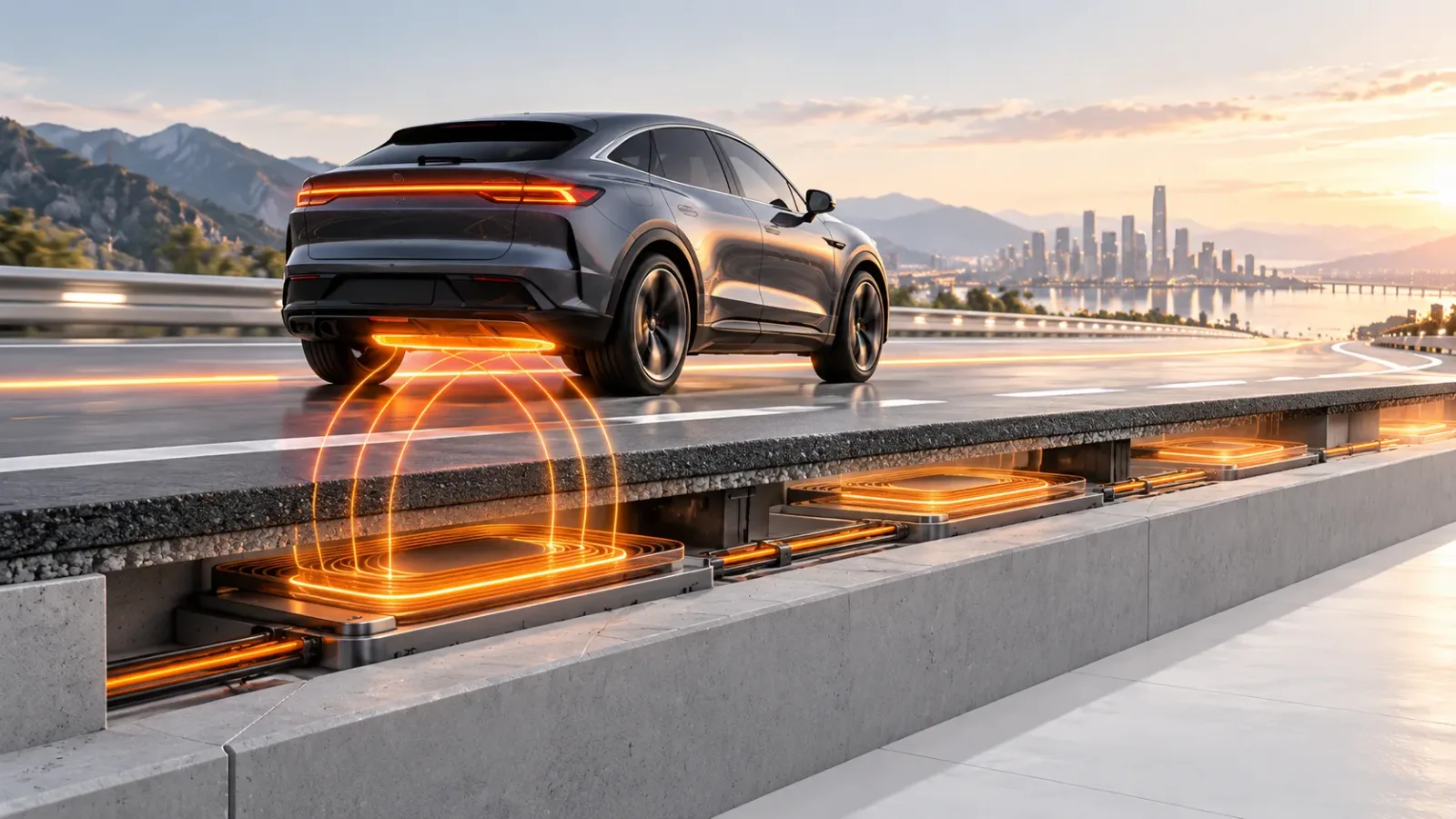
Wireless smartphone charging works without metal contacts connecting the charger directly to the phone. Electrical energy creates a changing magnetic field in one coil, and another coil in the device converts that magnetic energy back into electricity. Honda's system follows the same broad principle, but at a completely different scale. Power transmitting units called Ground Assemblies, or GA units, are installed beneath the road surface. An EV carries a Vehicle Assembly, or VA unit, underneath the vehicle. As the vehicle passes over the powered section of road, coils in the pavement generate a magnetic field. The receiving coil under the vehicle captures that energy and converts it back into electrical power. The important point is that electricity is not simply being “beamed” through the air. The system uses magnetic coupling between the roadside and vehicle-side equipment. Honda says it has been researching dynamic wireless power transfer since 2021 and has been developing the current road system with Taisei and Taisei Rotec since 2025.
Up to 150 kW, Changes the Conversation
Wireless charging sounds convenient, but convenience alone would not justify rebuilding roads. The technology becomes much more interesting when we look at the amount of power Honda is targeting. Honda says it is developing its road-side technology for power transmission of up to 150 kW peak output from a single ground unit. The company is also preparing future high-power testing of up to 150 kW for large commercial vehicles. For comparison, 150 kW is already within the territory normally associated with DC fast charging. There is an important difference, however. A conventional fast charger delivers high power while the vehicle is parked. A dynamic wireless charging road delivers energy while the vehicle continues moving. That means the objective does not necessarily have to be taking an almost empty battery back to 100 percent while driving. The road could continuously replace part of the energy being consumed by the vehicle. Imagine an electric truck traveling along a highway and using energy from its battery. Whenever it enters an electrified section of road, additional electricity begins flowing into the vehicle. Instead of repeatedly draining the battery and stopping to recharge it, the truck could maintain its state of charge for longer periods. That could completely change the battery equation for some vehicles.
Trucks May Benefit Before Passenger Cars
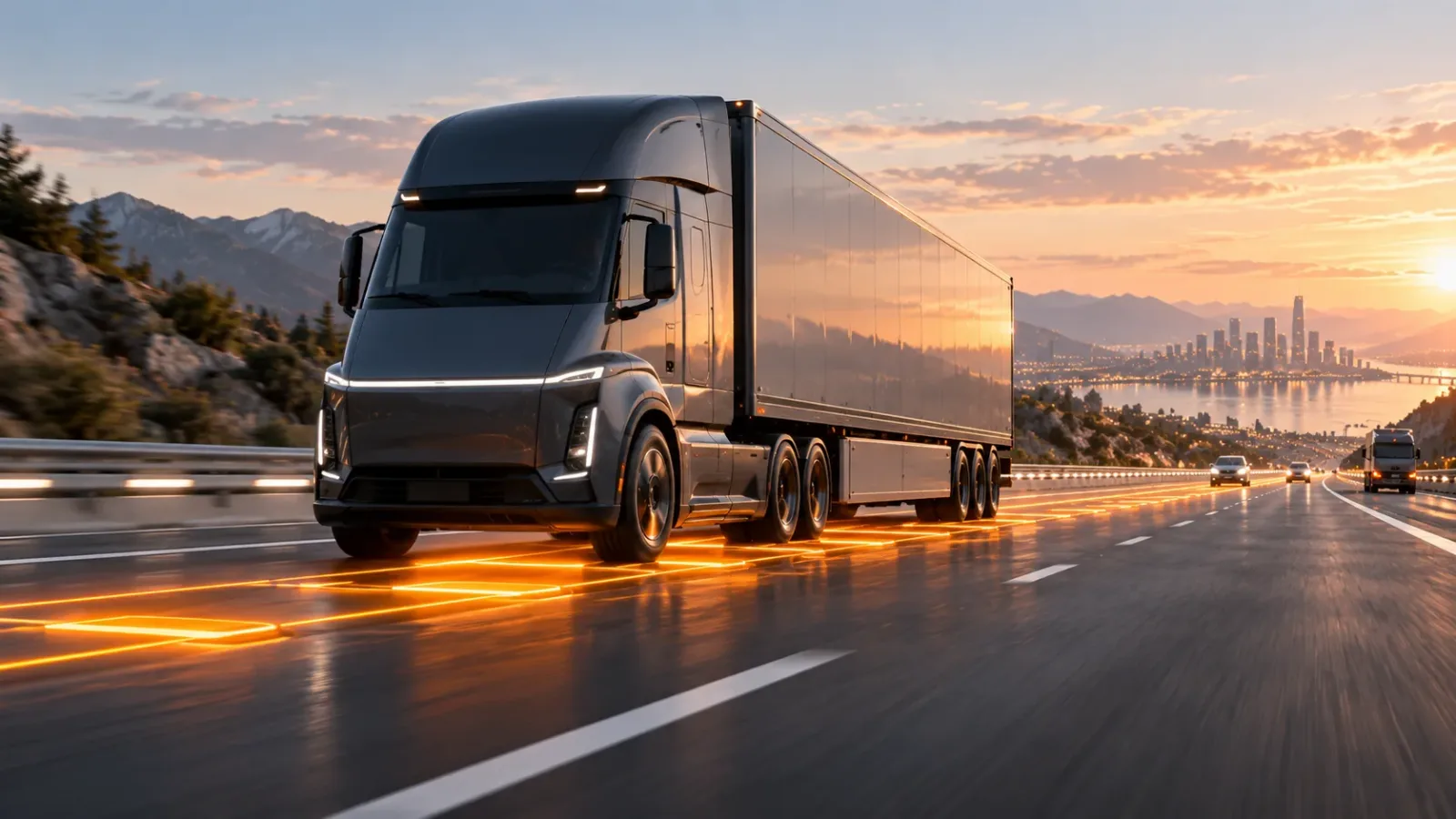 It might seem logical to introduce electric roads for passenger cars first because there are more cars on the road. Honda sees another opportunity. Commercial trucks and logistics vehicles may actually be the better starting point. Heavy electric trucks present a difficult engineering problem. They require enormous amounts of energy, yet every kilogram devoted to batteries is weight that cannot be used for cargo. Increasing battery capacity gives a truck more range, but it also increases weight, cost and charging requirements. Commercial vehicles also make money while moving. Spending long periods parked beside a charger reduces vehicle utilization. Dynamic charging attacks those problems differently. Instead of carrying enough battery capacity for an entire long-distance journey, a future truck operating on electrified routes might receive part of its energy from the highway itself. Honda therefore says its initial goal is practical use in logistics and transportation, where high vehicle utilization and long-distance operation could make dynamic wireless charging particularly valuable. This may ultimately be more important than simply eliminating charging stops for private cars.
The Road Has to Survive Being a Road
Transferring electricity to a moving vehicle is only part of the challenge. The charging equipment must survive underneath an actual highway. Rain, heat, vibration, road repairs and years of heavy traffic are very different conditions from those faced by a charger sitting beside a parking space. Honda, Taisei and Taisei Rotec have therefore been working on the pavement itself as part of the charging system. Their test infrastructure is being designed to withstand traffic from commercial vehicles weighing around 20 tons. Starting in late 2026, the companies plan additional durability testing equivalent to one million wheel loads, together with charging performance tests and evaluation of electromagnetic field leakage. Honda has also designed the road modules so they can potentially be installed into existing pavement through cutting and embedding rather than requiring an entirely new road structure. That matters because an electric road that works technically but is too expensive or disruptive to install would have little chance of widespread adoption. Honda's ground unit also integrates its inverter and transmission coil into a single assembly. Multiple modules can then be connected through a simpler DC distribution system, reducing some of the underground wiring that would otherwise be required. It is a reminder that the real breakthrough may not simply be wireless charging. It may be finding a way to construct and maintain wireless charging roads economically.
Could EVs Eventually Use Smaller Batteries?
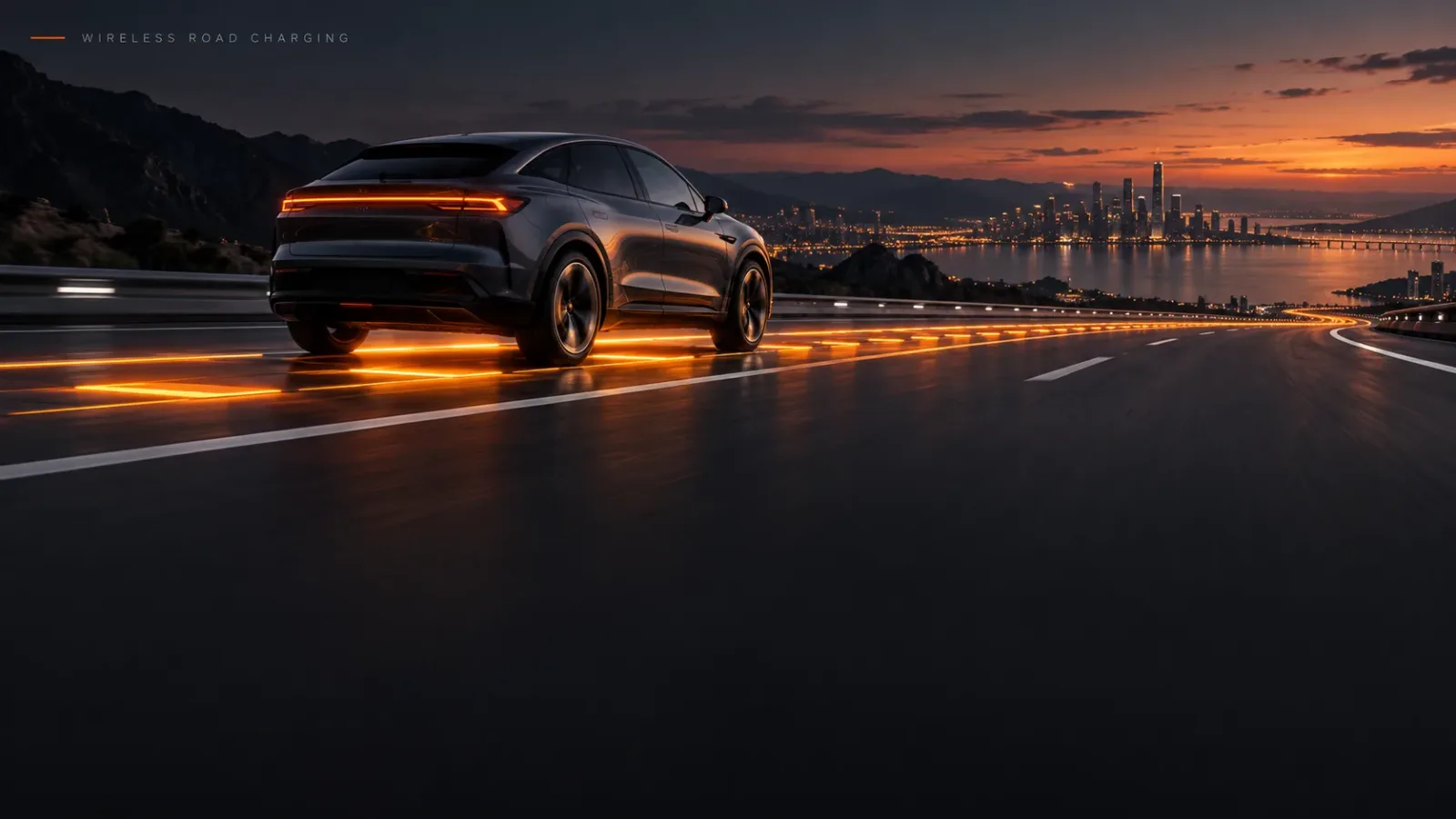 This is where dynamic charging becomes particularly interesting. Today's EV development largely follows one strategy for increasing range: install more battery capacity. But batteries add weight, consume raw materials and remain one of the most expensive components of an electric vehicle. If major travel corridors could provide electricity while vehicles were moving, some vehicles might no longer require batteries sized for their absolute maximum journey. A battery would still be necessary. Vehicles must leave electrified highways, drive through local streets and operate in places without charging infrastructure. But the relationship between battery size and driving range could change. Instead of carrying all of the energy required for a trip from the beginning, an EV could receive part of that energy along the way. In that world, improving charging infrastructure could become another way of extending vehicle range without continuously making batteries larger. That is still a future possibility rather than something Honda has promised, but it illustrates why dynamic wireless charging deserves attention beyond the novelty of “charging while driving.”
The Biggest Problem May Not Be the Car
There is also a major obstacle. Roads are enormously expensive pieces of infrastructure. Installing electrical equipment, power electronics, communication systems and charging coils across hundreds or thousands of kilometers would require huge investment. The system would also need electricity available along those routes, equipment capable of managing substantial loads, methods of identifying vehicles and charging users, maintenance procedures, safety standards and compatibility between different car manufacturers. And then comes the most important question: Would building all of that be cheaper than simply installing more high-speed charging stations? That question remains unanswered. Reuters reported that a Honda engineer declined to estimate how the system's cost would compare with conventional high speed charging infrastructure, saying economic viability still needs to be assessed. That may eventually determine the technology's future more than power output or charging speed. Engineering can prove that something works. Economics determines whether anyone builds it.
Japan Will Put the Idea on a Real Highway
Honda's next major step will move the technology closer to real traffic. The company, together with its project partners, is preparing to participate in the Tateyama Project, led by East Nippon Expressway Company. Dynamic wireless charging technology is scheduled for demonstration testing on the Tateyama Expressway in Chiba Prefecture beginning in Japan's 2027 fiscal year or later. Honda also plans further testing involving high-speed vehicles and power levels up to 150 kW. This will be an important transition. A controlled test track can demonstrate that wireless power transfer works. A highway has trucks, weather, road repairs, lane positioning, high speeds and constant traffic. That is where an interesting laboratory technology begins proving whether it can become infrastructure.
Could Something Like This Work in the Philippines?
For the Philippines, dynamic charging roads would be extremely difficult to justify today. The country is still expanding conventional EV charging infrastructure, and installing wireless power equipment beneath ordinary roads would add another level of complexity and cost. Road conditions, flooding, construction quality, maintenance access, electricity distribution and the cost of modifying existing highways would all have to be considered. But that does not mean the idea has no possible application here. If dynamic charging ever becomes commercially mature, the most logical Philippine deployment probably would not be thousands of kilometers of city streets. A controlled transport corridor would make more sense. Major expressways, port-to-logistics routes, bus corridors or heavily used trucking lanes provide predictable traffic patterns. Commercial vehicles repeatedly travel the same route, making infrastructure investment easier to concentrate. Imagine electric delivery trucks moving between a port, distribution center and industrial zone, receiving power along selected sections of road rather than depending entirely on enormous batteries. Or electric buses charging along parts of a dedicated route without having to sit at a charging station. Those applications could potentially offer more value than placing wireless charging underneath every road. The technology would first have to become dramatically cheaper, standardized and proven reliable. But if that happens, countries would not necessarily need to electrify their entire road networks. Strategic sections could be enough.
A Different Way of Thinking About EV Range
Battery breakthroughs usually dominate discussions about the future of electric vehicles. Solid-state batteries promise greater energy density. Sodium-ion technology could reduce dependence on expensive materials. Faster charging cells could shorten charging stops. Honda's experiment approaches the same problem from the opposite direction. Instead of asking how much more electricity can we carry inside the vehicle?, it asks: What if the vehicle didn't have to carry all of its electricity in the first place? That is what makes dynamic wireless charging worth following. Honda has not solved EV charging, and electric highways are nowhere close to replacing conventional chargers. The company still has to demonstrate durability, efficiency, high speed reliability, safety and economic viability in real world conditions. But the technology introduces an intriguing possibility. For more than a century, roads have done one basic job: provide a surface for vehicles to travel on. In the electric era, the road itself may eventually become part of the vehicle's energy system. And if that happens, the future charging station might not always be somewhere you stop. It could be underneath you while you drive.
Sources & References:
- Honda Motor Co., Ltd. - “Honda Develops Underlaying Technology for In-motion Wireless Charging of EVs, Including Large Commercial Vehicles,” October 5, 2026. Honda Global Honda official announcement
- NEXCO East - Tateyama Expressway Dynamic Wireless Power Transfer Demonstration Project, May 26, 2026. NEXCO East Japan NEXCO East Tateyama Project announcement
- Reuters - “Honda plans highway test of wireless charging for moving trucks,” October 5, 2026. Reuters Reuters report
- Philippine Department of Energy - EV charging ecosystem data, August–September 2026. Department of Education Philippine DOE EV adoption and charging ecosystem update
Comments
No comments yet. Be the first to join the discussion.