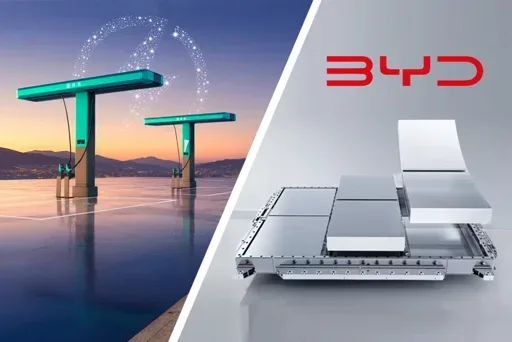
For years, Tesla set the benchmark for electric-vehicle fast charging. The Supercharger network did not necessarily offer the biggest number on every specification sheet, but it solved something arguably more important: drivers could find a charger, plug in and expect the system to work. Now Chinese automakers are attacking a different part of the problem. They are trying to make charging itself dramatically faster. BYD's latest Flash Charging system is perhaps the clearest example. Introduced alongside the company's second-generation Blade Battery in March 2026, the newest Flash Charger can deliver up to 1,500 kW - or 1.5 megawatts through a single connector in its Chinese-market specification. BYD says a compatible vehicle can charge from 10 to 70 percent in five minutes and from 10 to 97 percent in only nine minutes. For comparison, Tesla's latest V4 Supercharger Post is rated at up to 500 kW for passenger vehicles when paired with the company's V4 charging hardware. On paper, BYD therefore has three times the peak connector rating. But that does not mean a BYD automatically completes every charging stop three times faster than a Tesla. The real story is more interesting.
BYD Is Trying to Make Charging Feel Like Refueling
BYD's goal is easy to understand. One of the remaining differences between an electric car and a combustion vehicle is the amount of time required to replenish energy during a long journey. Even a fast modern EV may require 15, 20 or 30 minutes at a DC charger. BYD wants to bring that much closer to the time required for a petrol stop.
Its official claim for the second-generation Blade Battery is:
- 10% to 70% - 5 minutes
- 10% to 97% - 9 minutes
- 20% to 97% at - 30°C - around 12 minutes
The company summarizes the technology as: “Ready in 5, Full in 9, Cold Add 3.” Those figures are manufacturer claims obtained with compatible vehicles and charging infrastructure, but they are nevertheless remarkable. Cold-temperature performance may be particularly significant. Lithium-ion batteries normally accept energy more slowly when extremely cold because aggressive charging can damage the cells. BYD says the second-generation Blade Battery and its thermal-management systems substantially reduce that penalty.
The Battery Is Just as Important as the Charger
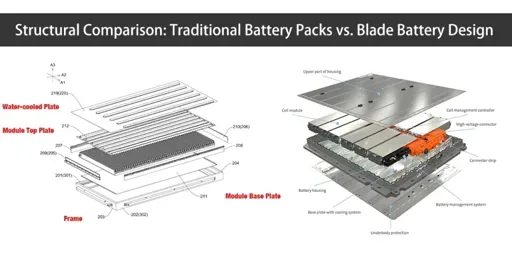
A 1,500 kW charger would be almost meaningless if the battery connected to it could accept only 200 or 300 kW. That is why BYD introduced Flash Charging together with the second-generation Blade Battery. The Blade Battery continues to use lithium iron phosphate, or LFP, chemistry, but BYD says it has redesigned several important parts of the cell. The company calls the system Flash Pass Ion Transport. According to BYD, changes to the cathode, electrolyte and anode allow lithium ions to move through the battery more quickly while reducing internal resistance and heat generation. BYD also claims the second-generation battery has approximately 5 percent higher energy density than the original Blade Battery while reducing overall capacity degradation by around 2.5 percent. These are BYD's own technical claims rather than independent long-term durability results. That distinction is important. Ultra-fast charging looks impressive during a demonstration, but the more important question for owners will be how the battery performs after years and thousands of charging cycles.
1,500 kW Is Peak Power not Constant Power
This is probably the most important thing to understand about the headline number. A charger rated at 1,500 kW does not continuously feed 1,500 kW into the battery throughout the entire charging session. EV charging follows a curve. Power normally rises, reaches a peak and then falls as battery state of charge increases. The European Denza Z9GT provides a useful example. Its new Blade Battery has a capacity of 122.49 kWh, and BYD says it can move from 10 to 70 percent in five minutes. Moving through 60 percent of a 122.49 kWh battery represents roughly 73.5 kWh of energy. Putting 73.5 kWh into the battery in five minutes corresponds to an average charging power of roughly 882 kW across that period. That is extraordinary. But it is also substantially below the charger's 1,500 kW peak rating. The same applies to the 10-to-97-percent claim. That adds roughly 106.6 kWh in nine minutes, equivalent to an average of around 710 kW. So the 1.5 MW figure matters because it provides enormous peak capacity. But charging-curve performance tells us more about what the driver actually experiences.
Tesla Takes a Different Approach
Tesla's V4 Supercharger hardware is considerably less dramatic on the specification sheet. The V4 Post is rated at up to 500 kW for passenger vehicles, supports vehicle architectures as high as 1,000 volts, and uses a longer three-meter cable designed to work with a broader variety of charge-port locations. The associated V4 cabinet can provide up to 1.2 MW of DC output shared among as many as eight charging posts. That last detail illustrates why comparing chargers using only the number printed beside an individual connector can be misleading. Charging sites are systems.
They include:
- grid connections;
- power-conversion cabinets;
- charging posts;
- power sharing;
- cables;
- vehicle communication;
- battery thermal management;
- software;
- payment and authentication;
- and sometimes stationary energy storage.
The driver experiences the complete system, not one peak-power number.
Tesla V4 Does Not Mean Every Tesla Charges at 500 kW
This is another important distinction. The V4 charger may be capable of delivering 500 kW. That does not mean every Tesla vehicle currently accepts 500 kW. The car determines how much power it will request. A vehicle designed around a lower charging voltage or battery acceptance rate will simply take less power. The same principle applies to BYD's Flash Charger. Plugging an ordinary 150 kW EV into a 1,500 kW charger does not turn it into a 1,500 kW EV. The charger makes capacity available. The vehicle decides how much it can safely use. This is why future charging competition increasingly involves both sides of the connector. Automakers need faster chargers and batteries capable of taking advantage of them.
BYD Is Using Stationary Batteries to Avoid Requiring 1.5 MW From the Grid
 Providing 1.5 MW directly from the electricity grid every time a car plugs in would create obvious infrastructure challenges. BYD's solution is particularly interesting. Flash Charging stations can be paired with an ultra-fast-discharge stationary battery system. That battery can recharge more gradually from the electrical grid and then release stored energy rapidly when a vehicle needs to Flash Charge. BYD describes the battery as both an energy reservoir and a power amplifier, helping sites deliver extremely high charging power without requiring the grid connection itself to continuously supply the same peak output. This is an increasingly important idea in EV infrastructure. Instead of designing every charging site entirely around its maximum instantaneous demand, energy storage can smooth the difference between the power available from the grid and the power temporarily required by the vehicles. That could make ultra-fast charging practical at more locations. But it does not eliminate the energy requirement. The stationary battery still needs to be recharged. A heavily used charging station ultimately needs enough grid energy over time to replenish everything it delivers to vehicles. Battery storage changes when the electricity is drawn. It does not create electricity.
BYD Also Rethought the Charging Cable
At 1.5 MW, cable design becomes a serious engineering problem. High electrical currents generate heat, and cables capable of carrying extreme charging power can become large and difficult to handle. BYD's Flash Charger uses an overhead T-shaped sliding rail system. The cable is suspended rather than lying on the ground, while a pulley and sliding mechanism reduces the amount of weight the driver needs to handle. BYD says the design also helps keep the connector and cable cleaner while allowing the charging gun to move more easily between different charge-port positions. This may seem like a minor detail beside a 1,500 kW headline. But charging-network usability often depends on these smaller things. A charger can have extraordinary electronics and still provide a poor experience if the cable is difficult to move, the connector cannot comfortably reach the car or the payment system is confusing.
BYD's Rollout Has Been Extremely Fast
When BYD unveiled the second-generation Flash Charging technology on March 5, 2026, it already had 4,239 Flash Charging stations operating in China. Less than six months later, on August 28, BYD officially opened its 10,000th Flash Charging station. The company said those stations covered hundreds of Chinese cities and represented the halfway point toward its goal of 20,000 stations by the end of 2026. That rate of construction matters almost as much as the charging technology. An EV capable of a nine-minute refill provides little benefit if the appropriate charger is available only in a handful of locations. BYD is therefore attempting to develop the car, battery and infrastructure together. That vertically integrated strategy has similarities to what made Tesla Supercharging so effective during the earlier stages of EV adoption.
Tesla Still Has a Huge Network Advantage
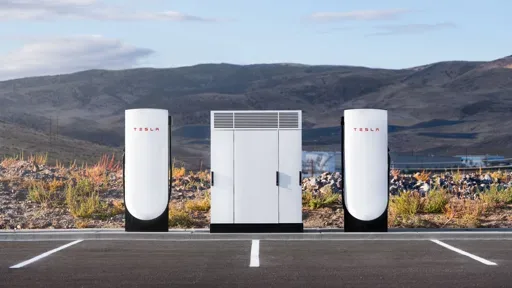 Tesla's strength is scale. As of 2026, Tesla says its network has grown beyond 80,000 Superchargers globally. The company says Supercharging can add as much as 200 miles, or roughly 322 kilometers, in 15 minutes on compatible vehicles under appropriate conditions. Perhaps even more importantly, Tesla has spent more than a decade refining the complete experience. Navigation can route the vehicle through charging stops. The car can precondition its battery before arrival. The station communicates directly with the vehicle. Payment can occur automatically. The Tesla app displays availability and charging status. And increasingly, the network serves vehicles from other manufacturers as well. That makes Tesla difficult to evaluate purely through peak charging speed. Its competitive advantage has historically been the network as a product.
BYD Is Beginning to Take Flash Charging Outside China
Flash Charging is no longer only a Chinese-market technology demonstration. BYD's premium Denza brand introduced the technology to Europe with the Z9GT in 2026. The European Z9GT uses a 122.49 kWh second-generation Blade Battery and supports the Flash Charging system, although BYD specifically notes that the full 1,500 kW single-connector figure refers to the Chinese-market specification. That caveat matters. Different markets use different grid standards, charging connectors, regulations and site requirements. The fact that the technology can reach 1.5 MW in China does not automatically mean every European installation will deliver exactly the same maximum output. BYD demonstrated Flash Charging in the UK in June 2026, marking the technology's first UK demonstration. BYD has also said it intends to deploy Flash Charging internationally, with thousands of overseas stations planned as its global rollout expands. The next challenge is therefore no longer proving that the technology exists. It is deploying it at useful scale outside China.
BYD Flash Charging vs Tesla V4
The headline comparison looks like this:
| BYD Flash Charging | Tesla V4 Supercharger | |
|---|---|---|
| Maximum connector rating | Up to 1,500 kW in Chinese-market specification | Up to 500 kW for passenger vehicles |
| Vehicle voltage support | High-voltage Flash Charging architecture | Up to 1,000 V with V4 cabinet |
| Headline charging claim | 10–70% in 5 min, 10–97% in 9 min | Up to 200 miles / 322 km in 15 min, depending on vehicle |
| Battery technology | Second-generation LFP Blade Battery | Depends on connected vehicle |
| Site energy storage | BYD integrates stationary storage to support extreme peaks | Not required as part of every V4 installation |
| China Flash network | 10,000 stations as of Aug. 28, 2026 | — |
| Tesla global network | — | 80,000+ Superchargers |
| Main advantage | Extreme charging speed | Scale, integration and mature network |
The table makes BYD's raw power advantage obvious. But it also shows that the companies are currently strongest in different areas.
Why 1,500 kW Is More Than a Marketing Number
It would be easy to dismiss 1,500 kW as specification-sheet competition. That would be a mistake. Even if drivers rarely see 1.5 MW continuously, increasing the charger's available headroom allows compatible batteries to maintain very high power through more of the charging session. That can reduce the importance of battery size. If an EV can reliably replenish energy in five to ten minutes, buyers may feel less pressure to purchase extremely large batteries simply to avoid charging stops. That could potentially have benefits beyond convenience.
Smaller batteries can mean:
- lower vehicle weight;
- lower manufacturing cost;
- fewer battery materials;
- improved efficiency;
- and potentially more affordable EVs.
Ultra-fast charging therefore has the potential to change vehicle design, not merely shorten coffee breaks. But that depends on the infrastructure becoming widespread enough that drivers can actually rely on it.
Extreme Charging Creates New Engineering Questions
There are also reasons to remain cautious. Moving hundreds of kilowatts into a battery creates enormous thermal and electrical loads. BYD says Blade Battery 2.0 reduces internal resistance and has passed demanding safety testing, including tests conducted after repeated Flash Charging cycles. But manufacturer testing is not the same thing as millions of vehicles accumulating years of real-world use. The questions worth watching are: How well does battery capacity hold up after years of frequent Flash Charging? How often will vehicles actually achieve the advertised charging curve? How will performance change as the battery ages? How reliable will 1.5 MW charging equipment be under heavy public use? And what will operating and electricity costs look like at busy sites? Those answers will come with time. The technology is impressive. Long-term ownership data will tell us how transformative it really is.
Tesla's Advantage Is Not Standing Still Either
Tesla is also moving beyond the V3 era. Its V4 charging system supports a much broader voltage range than earlier Supercharger hardware and is designed for multiple global connector standards. Tesla lists support for NACS, CCS1, CCS2 and GB/T, depending on deployment, while the V4 cabinet can provide as much as 1.2 MW shared across eight posts. This means Tesla is preparing its network for vehicles that may charge very differently from today's Model 3 and Model Y. It also reinforces an important point: Charger capability and vehicle capability are not the same thing. A 500 kW post can serve a 150 kW car. A 1,500 kW Flash Charger can serve a car that accepts much less. The highest number matters only when both sides are capable of using it.
So Which Is Better?
If the question is simply: Which charger has the higher peak output? BYD wins decisively. 1,500 kW versus 500 kW. If the question is: Which company currently operates the larger and more mature global fast-charging network? Tesla wins decisively. More than 80,000 Superchargers and more than a decade of deployment give Tesla an enormous infrastructure advantage. But there is a third question that may ultimately matter most:
Which system gets a driver back on the road more reliably?
That involves much more than maximum kilowatts. It depends on:
- how many compatible chargers exist;
- where they are located;
- charger uptime;
- battery preconditioning;
- charging curves;
- vehicle efficiency;
- station congestion;
- payment simplicity;
- and how accurately the navigation system plans charging stops.
That is why declaring a winner from a single specification would miss the bigger story.
The New Charging Race Is About Time, Not Just Power
The first generation of EV charging competition was largely about building enough infrastructure. The next phase may be about making charging stops disappear into the background. BYD's new system demonstrates what is technically becoming possible. A compatible EV can recover most of its battery in less than ten minutes. Tesla demonstrates something equally important: a charging network becomes much more useful when the car, software, payment system and infrastructure behave as one ecosystem. The ideal future charging network probably combines both approaches.
BYD-level charging speed with Tesla level network integration and availability.
If the industry reaches that point, one of the longest-running arguments against electric vehicles that charging takes too long becomes much less persuasive. And that is why BYD's 1,500 kW Flash Charger matters. It is not simply three times the number printed on Tesla's V4 specification sheet. It is evidence that the engineering limit for EV charging is moving much faster than many expected. The bigger challenge now is turning that extraordinary peak performance into something ordinary drivers can find, afford and depend on every day.
Sources & References
1. BYD - Blade Battery 2.0 and Flash Charging
Official 1,500 kW specification, 5-minute and 9-minute charging claims, battery developments, stationary energy storage and initial China network deployment. GlobeNewswire
2. BYD - 10,000th Flash Charging Station
Official August 2026 milestone and progress toward 20,000 Chinese stations by year-end. BYD
3. BYD / Denza - Z9GT European Launch
European introduction of Blade Battery 2.0 and Flash Charging, including the 122.49 kWh battery and clarification that 1,500 kW is the Chinese-market charger specification. BYD
4. BYD UK - Flash Charging UK Demonstration
Confirms the technology's first UK demonstration in June 2026. Byduk Media
5. Tesla - V4 Supercharger Technical Specifications
500 kW passenger-vehicle capability, 1,000V support and 1.2 MW V4 cabinet architecture. Tesla

Comments
good kind of article.