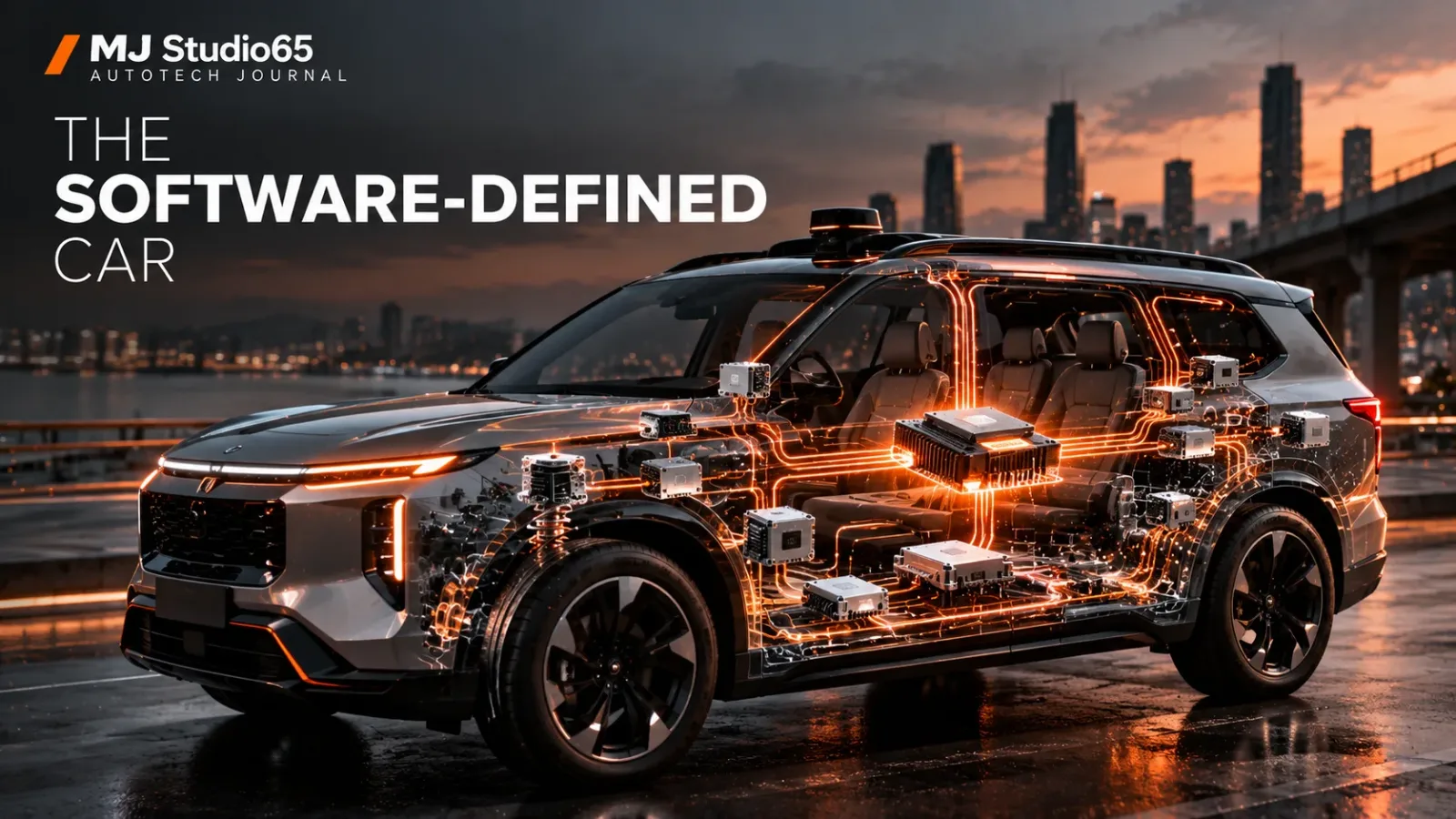
For more than a century, the specifications that defined a car were mostly mechanical.
- How large is the engine?
- How much horsepower does it produce?
- How many gears does the transmission have?
- How quickly can it accelerate?
Those questions still matter. But another set of specifications is quietly becoming just as important.
- What computer does the vehicle use?
- How powerful is its processor?
- Can its software be updated?
- How long will the manufacturer support it?
And perhaps most importantly: what can the vehicle learn to do after you have already bought it? The automotive industry is moving toward what is commonly called the software-defined vehicle, or SDV. It doesn't mean engines, suspension, brakes and batteries are suddenly unimportant. It means more of what a vehicle can do and how those functions behave is being controlled by software running on increasingly powerful computing hardware. The automobile isn't becoming less mechanical. It is gaining another layer. And that layer increasingly looks like a computing platform.
What is a software-defined Vehicle?
The term can sound more complicated than it really is. A software-defined vehicle is essentially a vehicle in which a growing number of functions and capabilities are controlled, managed and potentially improved through software. That distinction is important. A car isn't necessarily software-defined simply because it has a large touchscreen. Modern vehicles have contained software for decades. Engine control modules manage combustion. Transmission controllers decide when gears change. Airbag modules monitor crash sensors. Anti-lock braking systems constantly calculate wheel speed. Software in cars isn't new. What is changing is how all of those electronic systems are organized and how deeply software is integrated into the entire vehicle. Instead of designing every electronic feature as an almost independent system tied closely to its own hardware, automakers are increasingly developing computing platforms capable of supporting multiple vehicle functions. That is a major architectural change.
How cars used to be built
Look underneath the software of a modern vehicle and you may find a surprisingly complicated electronic network. Over decades, manufacturers added more electronic features. Power windows needed controllers. Electronic stability control needed another. Seats became electronically adjustable. Climate control became automatic. Parking sensors arrived. Then cameras. Then radar. Then increasingly sophisticated infotainment and driver-assistance systems. Many of these features were developed around separate electronic control units, commonly called ECUs. The result was effectively a collection of specialized computers distributed throughout the vehicle. They communicated with one another through automotive networks such as CAN bus. This approach worked. But as cars became more complicated, the number of electronic modules, wiring connections and software dependencies also increased. Now the industry is beginning to reorganize that architecture.
From dozens of computers to centralized computing
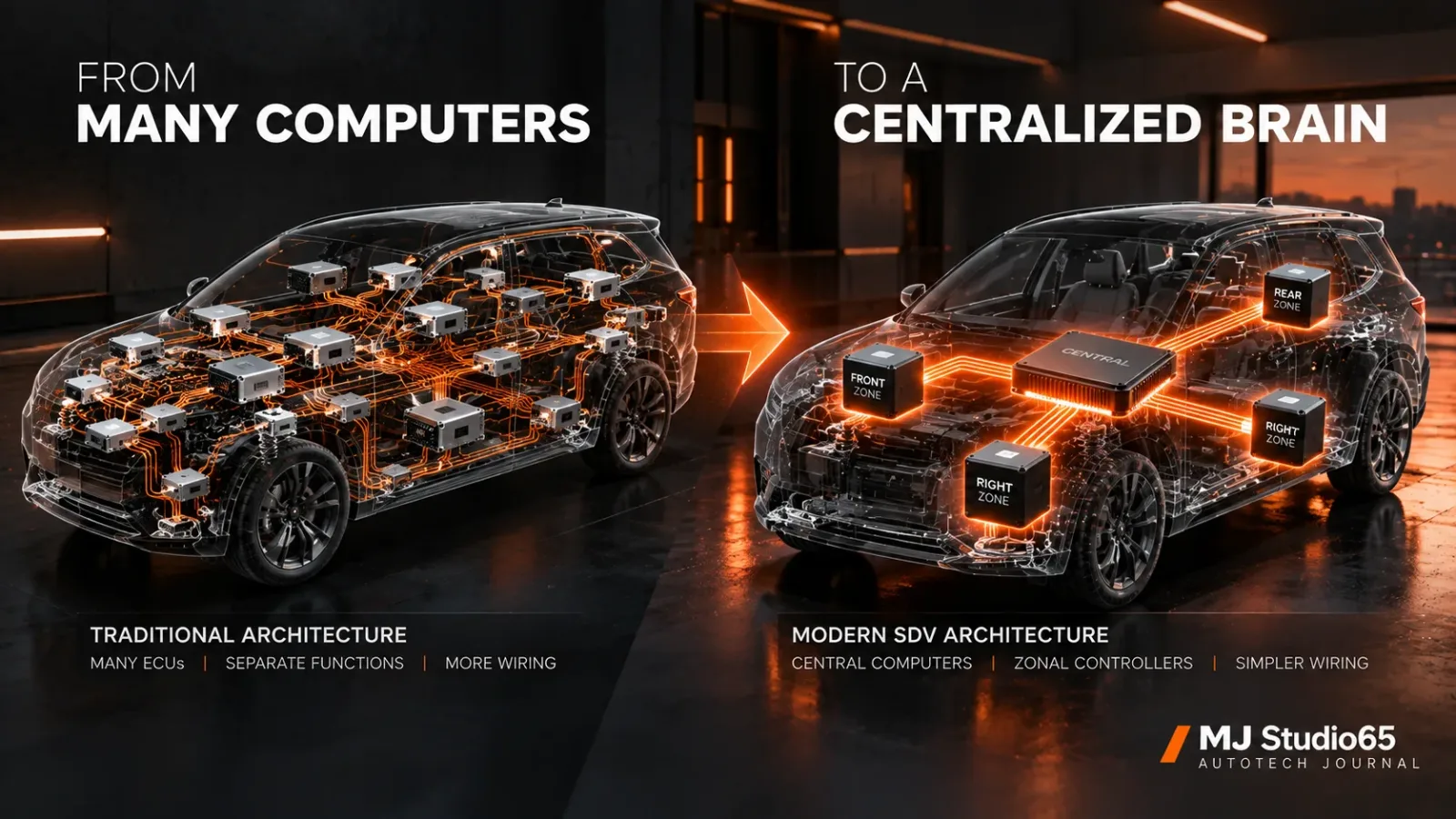 Imagine replacing many small computers scattered throughout a vehicle with several much more powerful computers. That is broadly where automotive electrical architecture is heading. Functions that previously required individual control modules can increasingly be consolidated into high-performance computing platforms. Alongside those computers, manufacturers can use zonal controllers. Instead of organizing electronics only according to function powertrain here, body electronics there, infotainment somewhere else zonal architecture can organize some connections according to their physical location in the vehicle. A front-zone controller, for example, could provide connections for multiple sensors and actuators located around the front of the car. The powerful central computers perform more of the “thinking.” The zonal controllers help connect that computing layer to the physical components that actually perform the work. Lights still need to turn on. Motors still need to move seats. Sensors still need to collect information. Brakes still need to respond. But the intelligence controlling those systems can increasingly be consolidated. The result can be fewer separate controllers, simpler wiring architectures and a computing foundation capable of running increasingly sophisticated software.
The car can change after you buy it
This is where the software-defined vehicle becomes noticeable to the owner. Traditionally, the capabilities of a vehicle were largely fixed when it left the factory. If you bought a car with a particular engine, transmission and equipment package, that was essentially the vehicle you would own for the rest of its life. Software changes that relationship. Modern connected vehicles can receive over-the-air updates, commonly called OTA updates. The idea is familiar to anyone who owns a smartphone. Instead of bringing the device to a service center whenever software needs updating, new software can be downloaded remotely. In vehicles, OTA systems can potentially deliver bug fixes, security patches and updates to supported vehicle functions. Depending on how the vehicle is designed, manufacturers may also improve infotainment systems, navigation, charging behavior, energy management or other software-controlled functions. That means some aspects of the vehicle no longer have to remain exactly as they were on the day it was manufactured. The hardware still creates limits. Software cannot magically turn a small battery into a larger one or install a sensor that isn't physically present. But within the capabilities of the installed hardware, software can change how those components are used. That creates something relatively new in the automotive world: A vehicle whose capabilities can continue evolving after production.
AI is moving into the vehicle
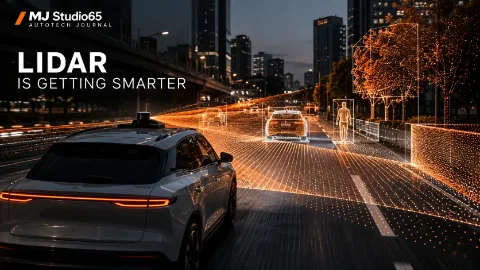
The next step goes beyond conventional software. Automotive computing platforms are increasingly being designed specifically to run artificial-intelligence workloads. Modern automotive processors can combine CPUs with GPUs and dedicated neural-processing hardware. That matters because many emerging vehicle functions require enormous amounts of real-time computation. Driver-assistance systems need to process information from cameras, radar, LiDAR and other sensors. Voice assistants need to understand natural speech. Driver-monitoring systems can analyze whether someone is paying attention. Infotainment systems can personalize recommendations and interfaces. Predictive systems may eventually use vehicle data to identify potential problems before a conventional warning light appears. And increasingly, some of that processing can happen directly inside the vehicle rather than relying entirely on a remote cloud server. This is sometimes described as edge AI. Processing information locally can reduce latency and allows some functions to operate even when internet connectivity is limited. As automotive processors become more capable, the distinction between a vehicle computer and the computers used in other high-performance devices becomes increasingly interesting.
EVs accelerated the transition but SDVs aren't just EVs
Electric vehicles and software-defined vehicles are often discussed together. There is a reason for that. Many newer EV platforms were developed at a time when centralized computing, connected services and OTA software were already becoming important. Starting with a new electrical architecture also gave manufacturers opportunities to rethink how vehicle electronics were organized. But an SDV does not have to be electric. A gasoline-powered vehicle can use centralized computing. So can a hybrid. So can a plug-in hybrid. The software-defined vehicle describes the vehicle's electronic and software architecture, not the technology turning its wheels. Electrification and software-defined architecture are therefore two separate transitions happening at roughly the same time. They frequently overlap. But they are not the same thing.
Why automakers want software-defined Vehicles
There are several potential advantages. Consolidating electronic functions can reduce the complexity created by large numbers of independent control modules. Software can potentially be reused across multiple vehicles rather than developing completely separate systems for every model. New features can be developed and tested digitally before physical production vehicles are available. Problems may sometimes be corrected through software rather than replacing hardware. Diagnostics can become more sophisticated. And vehicle platforms can potentially support new functions during their lifetime. There is also an important business reason. Traditionally, most of the manufacturer's relationship with the buyer happened when the vehicle was sold and later when it returned for servicing. Connected software creates the possibility of an ongoing relationship. That can be beneficial when it means useful improvements and security updates. But it also creates a more controversial possibility.
When features become Services
If a vehicle can download new features, manufacturers can also sell features through software. Some capabilities might be purchased after the vehicle leaves the dealership. Others could potentially be offered through subscriptions. Technically, this can provide flexibility. A buyer might activate something later instead of deciding every option when ordering the vehicle. But it also raises an uncomfortable question. If the hardware is already installed in the car you purchased, should you have to keep paying to use it? There isn't one universal answer. A continuously connected service that requires cloud infrastructure has ongoing operating costs. Navigation traffic information, cloud processing or streaming services are different from a physical component already installed inside the vehicle. The difficult part will be determining where that boundary should sit. As vehicles become more software-defined, buyers may increasingly need to understand not only what equipment their car contains but also which features they actually own.
More Software also means more Cybersecurity
Connecting more vehicle functions through software creates another challenge. Security. A mechanical system cannot receive malware over the internet. A connected computer can. That doesn't mean connected vehicles are inherently unsafe. It means cybersecurity becomes part of automotive engineering rather than simply an IT problem. Vehicle manufacturers have to consider authentication, encrypted communications, software integrity, secure updates and how individual systems are isolated from one another. Cybersecurity also doesn't end when the vehicle leaves the factory. New vulnerabilities can be discovered years later. That means the ability to securely update software becomes part of maintaining the vehicle. International standards and regulations are already addressing this issue. Cybersecurity engineering now extends across the vehicle lifecycle, while software-update management is increasingly treated as a formal part of vehicle regulation. The more software controls the vehicle, the more important long-term security maintenance becomes.
Software can Fail
There is another reality familiar to anyone who has owned a computer or smartphone. Software has bugs. A traditional mechanical fault may produce a noise, leak or vibration. A software problem can look completely different. A screen might freeze. A feature might stop responding. A sensor may communicate incorrectly. An update could introduce an unexpected problem. Increasing software complexity therefore creates enormous testing requirements. Automakers are not simply writing entertainment applications. Some vehicle software interacts with steering, braking, power management and driver-assistance systems. The standards for reliability are understandably much higher. Software-defined vehicles can make fixing certain problems easier. But they also create entirely new categories of problems that previous generations of vehicles rarely faced.
The question nobody can ignore: What happens in 15 years?
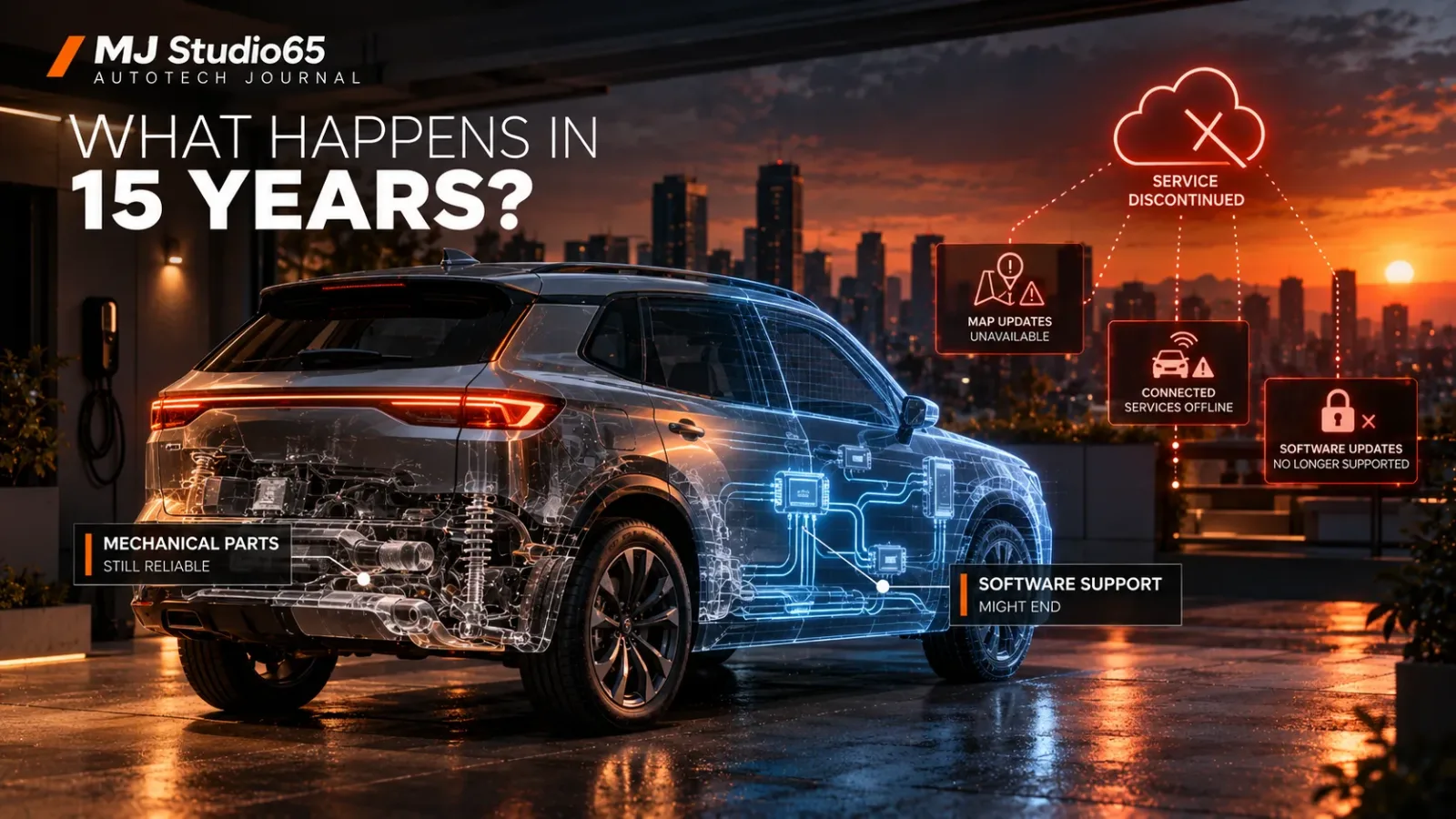 This may ultimately become one of the biggest questions surrounding software-defined vehicles. Cars and smartphones have very different lifespans. Many people replace a phone after several years. Cars routinely remain on the road for 10, 15 or even 20 years. That creates a difficult problem. What happens when a vehicle's processor becomes old? What happens when the operating system is no longer actively developed? How long will cybersecurity updates continue? What happens if the cloud service supporting a feature disappears? Will independent repair shops have the tools and information needed to maintain deeply software-integrated vehicles? And what happens if the manufacturer itself no longer exists? Mechanical components can often be repaired, reproduced or replaced decades after a vehicle was manufactured. Software is different. It can depend on encryption keys, digital certificates, proprietary servers, authentication systems and online infrastructure controlled by the manufacturer. A perfectly functional vehicle could theoretically outlive the digital ecosystem that was designed to support it. That doesn't mean today's software-defined cars will suddenly stop functioning when support ends. Different manufacturers and systems will behave differently. But it does mean software support life could eventually become part of the expected lifespan of a vehicle.
Tomorrow's specification sheet may look different
Car buyers already compare enormous numbers of specifications.
- Horsepower.
- Torque.
- Fuel consumption.
- Battery capacity.
- Charging speed.
- Cargo space.
- Ground clearance.
- Safety equipment.
But software-defined vehicles could add another category of questions. What processor architecture does the vehicle use? Can important systems receive OTA updates? How long does the manufacturer promise security support? Which functions work completely offline? Which functions depend on cloud servers? Can software features be transferred to the next owner? Which features require subscriptions? Can independent workshops diagnose and repair the electronic architecture? Those questions aren't normally printed beside horsepower and torque. Perhaps someday they should be.
Horsepower still matters
Calling the future vehicle “software-defined” can create the impression that mechanical engineering is becoming secondary. It isn't. Software cannot compensate for bad suspension geometry. A powerful processor cannot create tire grip that doesn't exist. An AI system cannot change the fundamental energy capacity of a battery. Brakes, chassis engineering, structural safety, steering, thermal management and powertrain design remain fundamental to what makes a good vehicle. The difference is that software increasingly connects those systems together. It interprets information from sensors. It manages energy. It controls displays. It coordinates driver-assistance functions. It communicates with cloud services. And increasingly, it determines how the driver interacts with the entire machine. The automobile is therefore not simply becoming a computer on wheels. It is becoming something more complicated: a mechanical machine built around an increasingly powerful digital nervous system.
The car is becoming a computing platform
The transition won't happen overnight. Millions of vehicles will continue using conventional distributed electronic architectures for years. Different manufacturers will also approach software-defined vehicles differently. Some will centralize aggressively. Others will transition gradually. And the balance between local computing, cloud services and traditional electronic control systems will continue changing. But the direction is becoming increasingly clear. Volkswagen Group, for example, said in January 2026 that its upcoming architecture developed with Rivian would use a zonal software-defined architecture, with new high-performance computing hardware planned for vehicles beginning in 2027. Technology suppliers are simultaneously developing increasingly powerful automotive processors specifically for centralized computing, AI and advanced driver assistance. That tells us something important about where vehicle development is heading. For generations, the engine was arguably the technological center of the automobile. In an electric vehicle, attention increasingly shifted toward the battery and electric motors. In the software-defined vehicle, another component joins them: the computer. The next time you look at the specifications of a new car, horsepower will still tell you something important. But increasingly, it won't tell you the whole story.
Comments
No comments yet. Be the first to join the discussion.