The Next EV Battle May Be Charging Speed, Not Driving Range
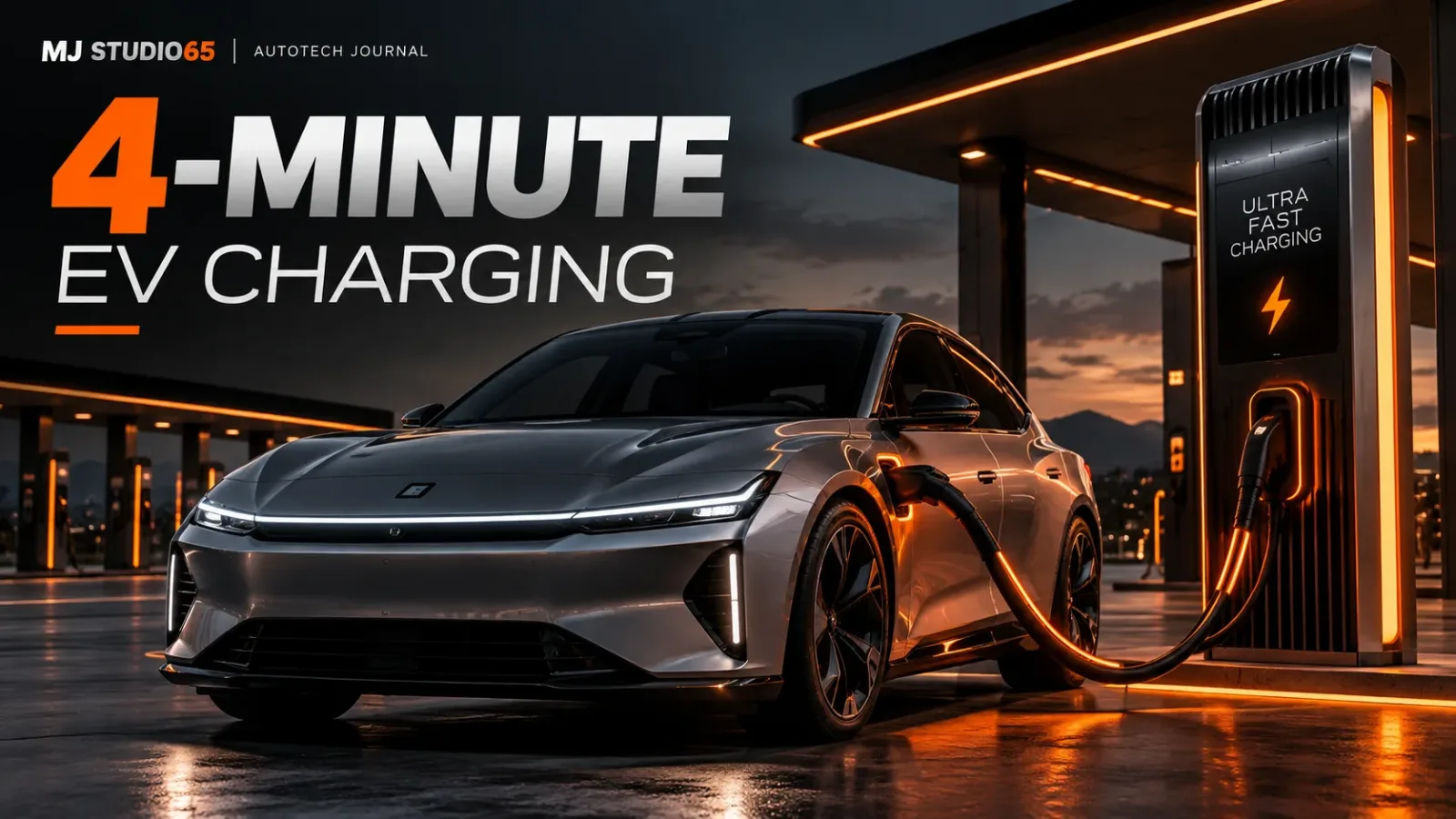
For years, one of the easiest arguments against an electric vehicle has been charging time. A gasoline or diesel vehicle can pull into a station, fill its tank in a few minutes and continue its journey. An EV may offer quiet driving, strong acceleration and lower day-to-day energy costs, but even the fastest modern charging stops still require considerably more time. That gap is suddenly getting much smaller. Geely has introduced a new ultra-fast charging system capable of delivering as much as 2,250 kW, or 2.25 megawatts, of peak charging power. More importantly, Geely says compatible vehicles equipped with its high-rate battery technology can charge from 10% to 70% in just 4 minutes and 30 seconds. Continue charging and the company says the battery can reach 97% in 8 minutes and 40 seconds under normal-temperature conditions. Those figures would have sounded unrealistic for a passenger EV only a few years ago. But Geely isn't developing this technology in isolation. BYD has been pushing its own megawatt-class Flash Charging technology, while battery manufacturers and other Chinese automakers are working toward similar goals. The EV industry's next major battle may therefore no longer be about who can build the car with the longest range. It may be about who can make charging almost as uneventful as stopping for fuel.
From Kilowatts to Megawatts
 To understand how significant the new system is, consider how we normally talk about EV charging. A typical home wall charger might deliver around 7 kW. Public DC chargers can deliver 50 kW, 100 kW, 150 kW or considerably more depending on the station and vehicle. Modern high-performance EV platforms have pushed those figures much higher, with some vehicles capable of accepting several hundred kilowatts. Geely's fifth-generation Smart Charging Station takes the discussion into an entirely different category. Its maximum output is 2,250 kW. That is 2.25 megawatts. But the charger's maximum rating shouldn't be confused with the amount of power continuously entering an EV battery. Actual charging power depends on the vehicle, battery temperature, state of charge, battery-management system and many other conditions. What matters more to drivers is the resulting charging time. In Geely's real-world tests, a Lynk & Co 10 and Zeekr 001 equipped with its Shendun Golden Battery were charged from 10% to 70% in 4 minutes 30 seconds and from 10% to 97% in 8 minutes 40 seconds. The battery itself supports a peak charging rate of as much as 12C. And that number deserves some explanation.
What Does 12C Charging Actually Mean?
Battery charging rates are often described using a figure called the C-rate. In simplified terms, a 1C charging rate corresponds to charging power equivalent to the battery's capacity. A 2C rate doubles that relationship, while increasingly high C-rates mean energy is being pushed into the battery much more rapidly. At 12C, the theoretical charging rate is extraordinarily high. But delivering that amount of energy is only part of the challenge. The much bigger problem is heat. Push enormous amounts of electrical power through a battery, charging cable, connector and power electronics and temperatures can rise rapidly. Excessive heat can reduce charging performance and potentially accelerate battery degradation. So Geely's announcement isn't simply about building a more powerful charger. Much of the engineering is about controlling what happens when that power reaches the car.
Keeping a Battery Cool While Charging in Minutes
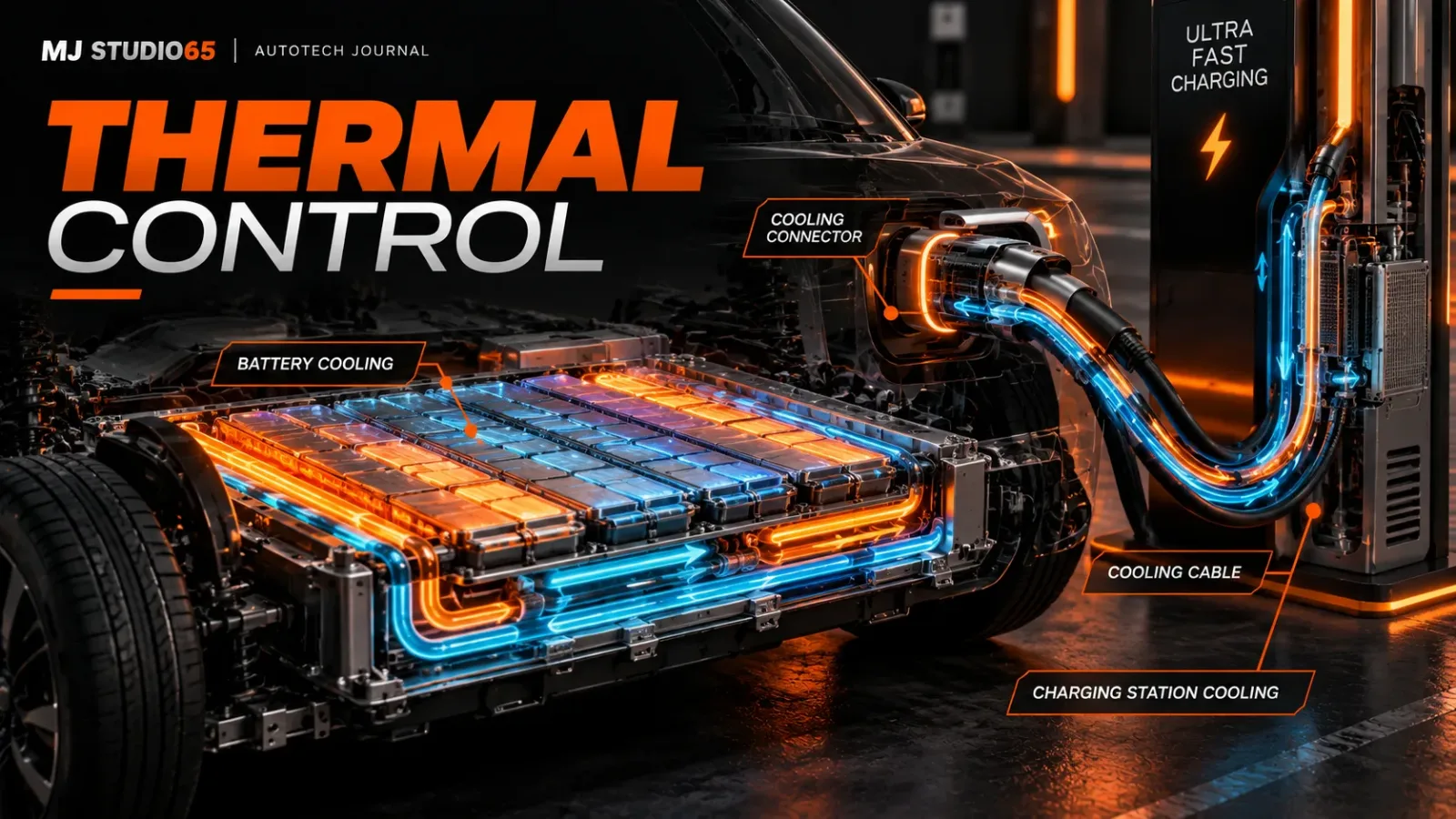
Geely says its new charging architecture uses artificial intelligence to coordinate the vehicle, battery, charging station, cloud services, energy-storage system and electrical grid. Its Xingrui PowerMind system can predict battery temperatures up to 30 seconds ahead, allowing charging power to be adjusted before temperatures become excessive. According to Geely, the system is designed to maintain average battery temperature at approximately 55°C or below during ultra-fast charging while limiting peak temperature to below 65°C. There is also a five-point liquid-cooling system covering the charging chain. Instead of concentrating cooling only on the battery pack, thermal management extends through components including the station's energy-storage battery, charging pile, cable, charging connector and vehicle battery. That distinction is important. As charging power climbs into megawatt territory, the battery isn't the only component producing heat. The cable and connector carrying that current also become significant engineering challenges. In other words, achieving a four-minute charging session requires considerably more than simply installing a larger charger.
Then There Is Battery Degradation
There is another obvious question. If an EV can repeatedly charge this quickly, what happens to the battery after several years? Battery longevity has long been one of the concerns surrounding extreme fast charging. High temperatures and aggressive charging conditions can accelerate degradation if they aren't carefully controlled. Geely says it has developed what it calls lithium-ion pulse restoration technology. The system uses micro-pulse currents intended to address lithium-ion accumulation at the battery's negative electrode. Combined with its AI-based charging management, Geely claims the technology can increase battery cycle life by as much as 20%. That is a manufacturer claim and long-term performance in everyday vehicles will ultimately matter more than laboratory or controlled demonstrations. But it reveals something important about where battery development is heading. Manufacturers aren't merely trying to charge batteries faster. They are simultaneously trying to solve the problems created by charging them faster.
BYD Started Another Race
Geely's announcement becomes even more interesting when viewed alongside BYD. BYD has spent years developing its own battery technology, particularly its Blade Battery architecture. In March 2025, the company introduced its Super e-Platform and megawatt Flash Charging system. BYD said the technology could reach 1,000 kW of charging power and add approximately 400 kilometers of driving range in five minutes under its stated conditions. The technology represented an important shift. Instead of asking EV buyers to accept long charging times in exchange for the advantages of electric propulsion, BYD argued that EV charging should eventually take approximately as long as refueling a combustion vehicle. The competition has continued to escalate. Geely's latest fifth-generation station is rated at 2,250 kW, while newer BYD infrastructure has also moved deeper into megawatt-class charging. The numbers will continue changing. But the direction is already obvious. Charging speed has become a competitive feature. Range was once one of the biggest numbers manufacturers used to sell EVs. Soon, charging time may be just as important.
The Infrastructure Problem Nobody Can Ignore
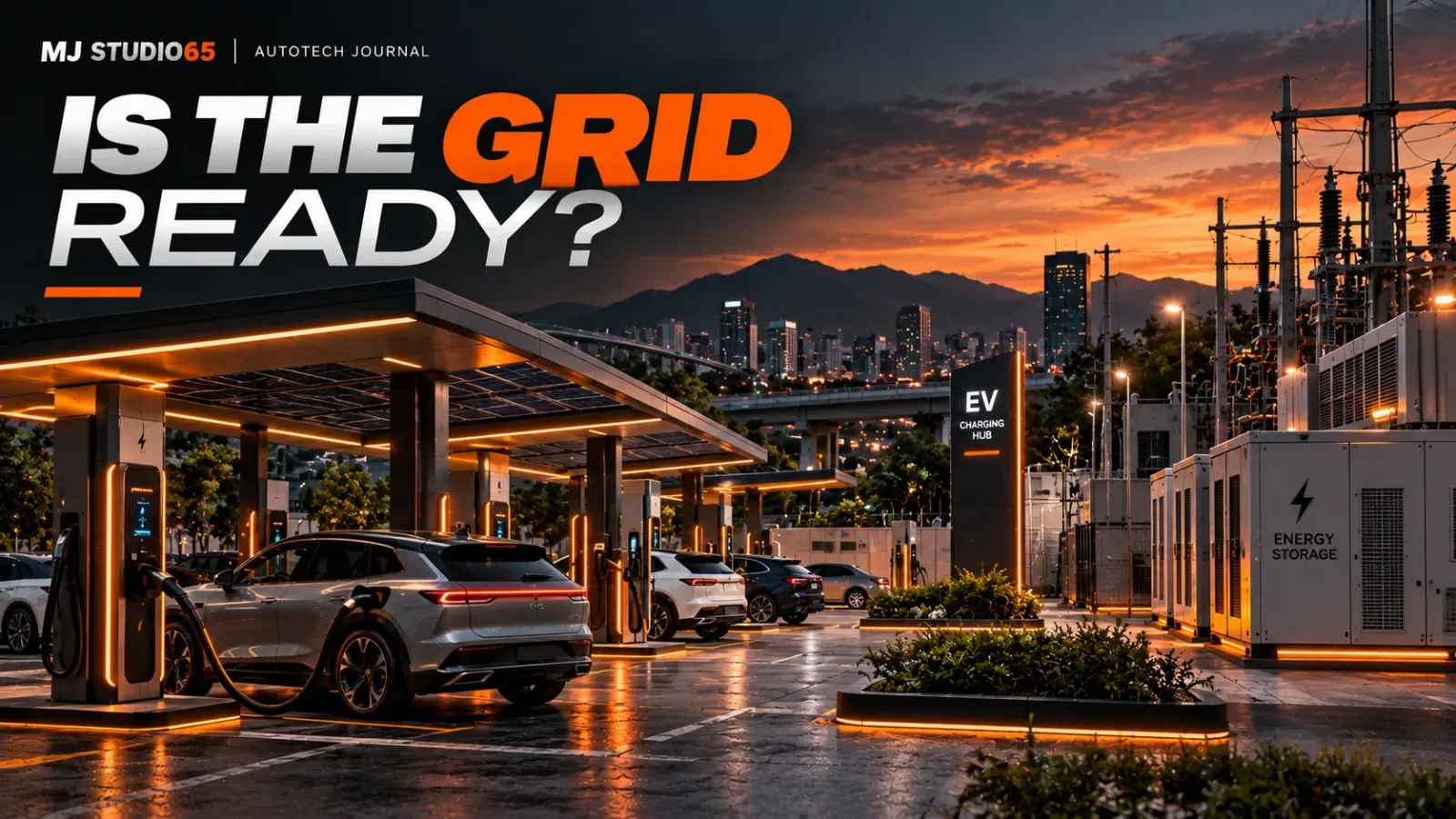 There is, however, a major difference between demonstrating megawatt charging and making it available everywhere. A charger capable of delivering more than two megawatts creates enormous demands on electrical infrastructure. Imagine several vehicles arriving at the same charging station. One vehicle pulling extremely high power is already significant. Multiple vehicles attempting to charge simultaneously could require an enormous amount of electricity from the local grid. That means future ultra-fast charging stations may require much more than powerful chargers. They could need dedicated transformers, upgraded grid connections, sophisticated power management and large stationary battery-storage systems. This is where the charging battle becomes an infrastructure story. A car may be capable of charging in four minutes, but that capability isn't particularly useful if compatible chargers are rare. China has an advantage here because manufacturers are not only developing vehicles they are rapidly building charging networks to support them. For other markets, deployment could take considerably longer.
What Would This Mean in the Philippines?
The technology is particularly interesting when viewed from a Philippine perspective. The local EV charging network continues to expand, but megawatt passenger-car charging is a completely different level of infrastructure from the chargers most Filipino EV drivers currently encounter. Bringing systems capable of supplying more than two megawatts to the Philippines would involve questions extending far beyond whether compatible cars are available. Where would these chargers be installed? Could existing commercial electrical connections support them? Would battery-storage systems be necessary to reduce peak demand? And perhaps most importantly, would enough compatible vehicles use them to justify the investment? For many Filipino EV owners, home charging will probably remain the most practical solution. A vehicle can be plugged in overnight and begin the following morning with enough energy for everyday driving. Megawatt charging becomes much more interesting for another situation: long-distance travel. Imagine driving an EV from Metro Manila toward destinations in Northern Luzon or Southern Luzon and stopping at an expressway charging station. If the vehicle could recover most of its usable battery capacity while its occupants use the restroom or buy coffee, charging would become much less disruptive to the journey. At that point, the traditional argument that an EV requires long stops begins to weaken considerably.
Faster Charging May Matter More Than Bigger Batteries
There is another consequence that isn't immediately obvious. If charging becomes extremely fast and chargers become widely available, manufacturers may not need to keep installing increasingly large batteries simply to reduce range anxiety. Large battery packs add weight and cost. They also require more raw materials and energy to manufacture. A vehicle with a moderate battery, efficient drivetrain and extremely fast charging could potentially be more practical than one carrying an enormous battery primarily because drivers fear being stranded. Think about smartphones. Most people don't demand a phone capable of operating for a week without charging because chargers are readily available and charging has become relatively convenient. EVs could eventually move toward a similar relationship with infrastructure.
Instead of asking:
“How far can this car travel without charging?”
buyers may increasingly ask:
“How quickly can I get back on the road?”
That would represent a fundamental change in how electric vehicles are designed and marketed.
But Four-Minute Charging Doesn't Solve Everything
The headline numbers are impressive, but they shouldn't be mistaken for the end of the EV charging problem. The vehicle needs a battery capable of accepting extremely high charging rates. The battery must be at an appropriate temperature. The charging station needs sufficient electrical capacity. The charging curve still changes as the battery approaches full charge. And the infrastructure needs to exist where drivers actually travel. There are also longer-term questions about cost, battery durability, grid demand and whether extremely powerful chargers make economic sense in every location. A 2.25 MW station would be unnecessary for many everyday charging situations. Home charging doesn't need it. Workplace charging doesn't need it. Cars parked for several hours at shopping centers probably don't need it either. Ultra-fast charging makes the most sense where time itself has value highway corridors, transportation hubs and locations where vehicles need to arrive, charge and leave quickly.
The EV Charging War Has Only Started
The significance of Geely's four-minute charging technology isn't simply that one EV can replenish its battery extraordinarily quickly. It shows how rapidly one of electric vehicles' biggest disadvantages is being attacked. First, EV manufacturers competed over range. Then battery cost. Then vehicle performance. Software and intelligent-driving systems followed. Now charging speed has become another technological battlefield. BYD wants EV charging to feel like refueling. Geely is pushing the same idea even further. Other manufacturers and battery companies are unlikely to stand still. There will still be major engineering and infrastructure challenges before four- or five-minute charging becomes something ordinary EV drivers encounter every day. But the trajectory is becoming difficult to ignore. The question may no longer be whether electric cars can eventually charge almost as quickly as gasoline cars can refuel. The more interesting question is:When the car can charge in four minutes, will the charging network be ready for it?
Comments
No comments yet. Be the first to join the discussion.