Nearly 1 in 4 Philippine Vehicle Sales Are Electrified But Most Aren’t Fully Electric
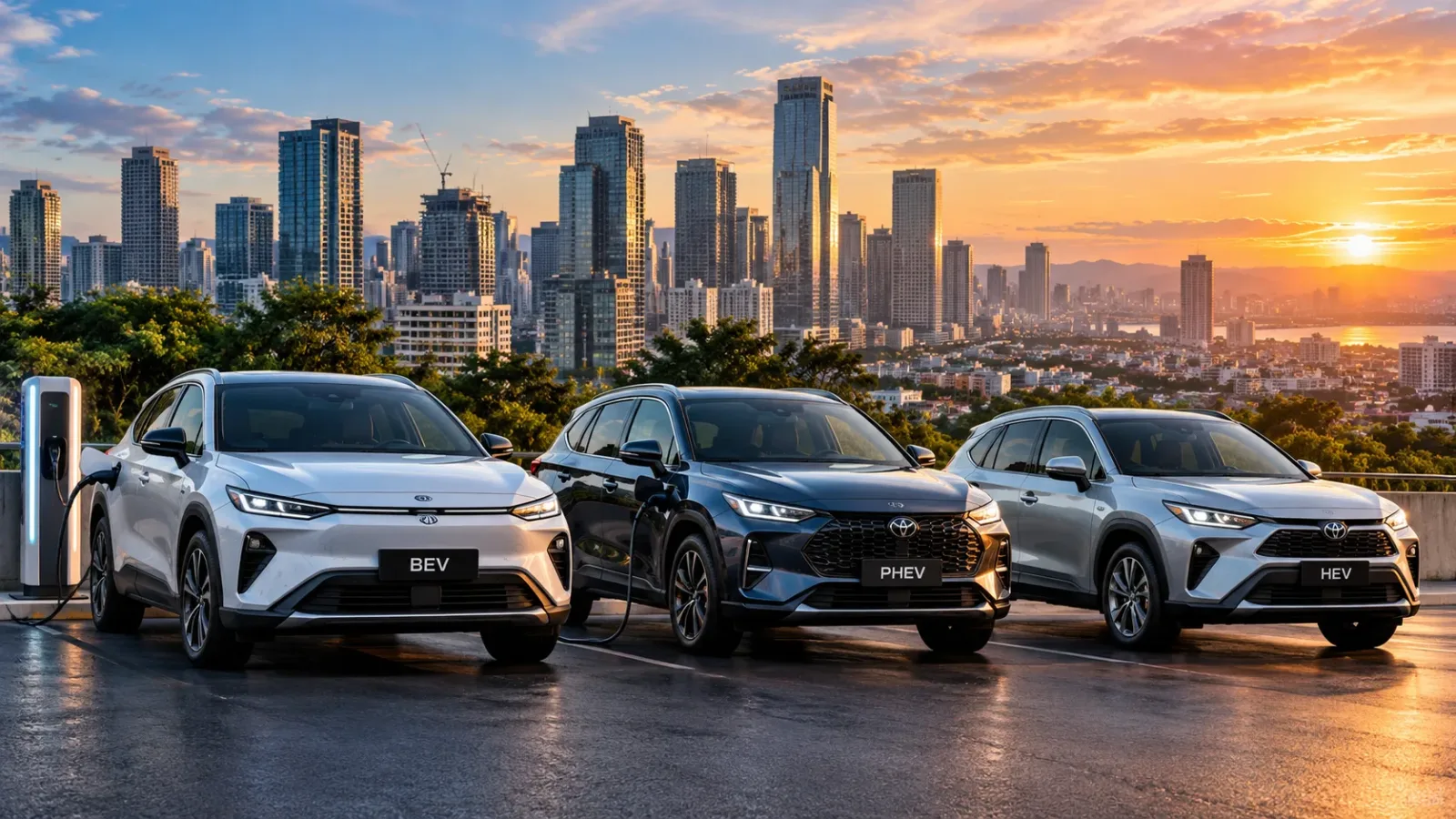
Electric vehicles are no longer a tiny corner of the Philippine automotive market. According to the Department of Energy, at least 66,685 electrified vehicles were sold in the Philippines from January through August 2026. Against an estimated 270,124 total vehicle sales during the same monitoring period, that puts electrified vehicles at approximately 24.7% of the market. Put another way, nearly one out of every four vehicles sold during the period fell under the DOE's electric-vehicle classification. That sounds like a remarkable milestone for a country where electric mobility was still considered a niche market only a few years ago. But there is an important detail behind that headline. Most of those vehicles aren't fully electric. And when we separate hybrids, plug-in hybrids and battery-electric vehicles, we get a much more interesting picture of how Filipinos are actually transitioning away from conventional gasoline and diesel vehicles.
What Makes Up That 24.7%?
The DOE's January-to-August 2026 figures break the 66,685 electrified vehicles into three major categories:
29,649 plug-in hybrid electric vehicles (PHEVs)
20,716 hybrid electric vehicles (HEVs)
16,320 battery electric vehicles (BEVs)
That means PHEVs accounted for roughly 44% of electrified vehicle sales, hybrids about 31%, and pure battery-electric vehicles approximately 24% of the electrified total. This distinction matters. When someone hears that nearly one in four vehicles sold in the Philippines is an EV, it would be easy to imagine that thousands of Filipino motorists are abandoning gasoline completely. The numbers tell a different story. Battery-electric vehicles accounted for only about 6% of the estimated overall vehicle market during the period. That's still meaningful growth, but it also shows that the Philippine transition toward electric mobility isn't simply a rapid switch from gasoline to batteries. Instead, Filipinos appear to be moving through several stages of electrification.
The Plug-In Hybrid Is Becoming the Middle Ground
Perhaps the most interesting number is the PHEV figure. With 29,649 units sold, plug-in hybrids were the largest category among the electrified vehicles included in the DOE data. It's not difficult to understand why. A PHEV gives drivers something that a conventional hybrid cannot: the ability to drive meaningful distances using electricity alone. Charge the vehicle at home and many daily commutes can potentially be completed with little or no gasoline consumption. But unlike a pure EV, the driver still has an internal-combustion engine available when the battery reaches a low state of charge or when a longer trip extends beyond convenient charging locations. For Philippine motorists, that combination addresses two very different concerns at the same time. Electric driving can reduce everyday fuel consumption, while the engine provides reassurance for provincial travel, unpredictable routes or places where public charging remains limited. That makes PHEVs particularly interesting in the Philippine market. They aren't necessarily the final destination of electrification, but they may be an important bridge toward it.
Pure EVs Are Growing But Charging Still Matters
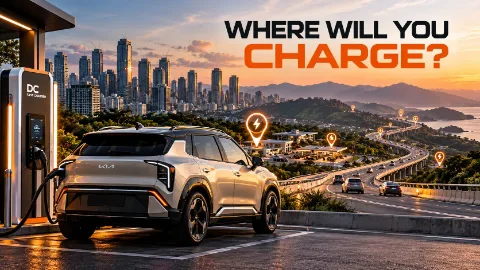
The 16,320 BEVs sold during the first eight months of 2026 show that fully electric vehicles are establishing a meaningful presence in the market. The charging ecosystem is expanding alongside them. The DOE reported 1,876 registered EV charging stations nationwide as of the end of August 2026, while the number of DOE-recognized EV models had reached 949. Those numbers would have looked very different only a few years ago. But the total number of chargers doesn't tell the entire infrastructure story either. Charging availability can vary greatly depending on location. A driver regularly traveling around major urban and commercial areas may have multiple charging options available. Someone driving through more remote areas may have a very different experience. And public charging is only one part of EV ownership. For drivers who can install a charger at home, an EV can begin every morning with a charged battery. In that situation, the owner may rarely need a public charger during normal daily driving. For motorists without reliable home charging, however, the public network becomes considerably more important. This is why the Philippine EV discussion isn't only about vehicle range. It's increasingly about where the vehicle can be charged.
The Infrastructure Is Trying to Catch Up
Charging development is accelerating. As of August 31, the DOE listed 422 accredited EV charging-station providers, covering operators, service providers and equipment suppliers. The government is also working on policies connected to charging infrastructure under the Electric Vehicle Industry Development Act (EVIDA) and the Comprehensive Roadmap for the Electric Vehicle Industry (CREVI). The long-term objective is considerably larger than today's market. Under the Clean Energy Scenario referenced by the DOE, the Philippines is targeting a 50% EV fleet share by 2040. Getting there will require more than selling electric cars. Charging stations will have to become easier to find outside major metropolitan areas. Condominium and apartment residents will need practical charging solutions. Electrical infrastructure must support increasing demand. Maintenance networks and technicians will have to develop alongside the vehicles themselves. And consumers will need confidence that owning an electrified vehicle won't make everyday transportation more complicated.
Hybrids Are Part of the Story Too
Traditional hybrids deserve some attention as well. Unlike PHEVs and BEVs, conventional hybrids don't need to be plugged into a charger. Their batteries are charged internally through regenerative braking and the vehicle's combustion engine. That makes them relatively easy for motorists to adopt. You drive to a gasoline station just as before, but the electric motor and battery can reduce how frequently the engine needs to do all the work. For consumers interested in better fuel efficiency but unwilling or unable to deal with charging, an HEV can be the easiest first step toward electrification. The 20,716 HEVs included in the DOE figures suggest that plenty of Filipino buyers still prefer that approach.
The Philippine EV Transition May Look Different
It's tempting to imagine the transition to electric vehicles as a simple progression:
Gasoline → Electric
The Philippine market is showing something more complicated:
Gasoline → Hybrid → Plug-in Hybrid → Battery Electric
Not every consumer will follow that sequence, of course. Some buyers can move directly from a gasoline vehicle to a BEV, particularly when they have home charging and predictable daily travel. Others may decide that a conventional hybrid makes more sense. And many appear to be finding PHEVs attractive because they offer electric driving without completely giving up the flexibility of an internal-combustion engine. There is no requirement that every market reach electrification in exactly the same way. Infrastructure, electricity access, vehicle pricing, driving distances and consumer behavior all influence what technologies make sense.
Competition Is Also Changing the Market
Another factor behind the transition is simply choice. The Philippine market now has significantly more electrified vehicles available than it did several years ago. Chinese manufacturers have been particularly aggressive in bringing BEVs and PHEVs into the country, while established Japanese, Korean, European and American manufacturers continue expanding their own electrified lineups. More competition means consumers are no longer choosing between only a handful of expensive electric vehicles. They can increasingly compare body styles, battery sizes, electric ranges, charging speeds, hybrid systems and prices. That competition may ultimately be just as important to EV adoption as government targets. Consumers don't necessarily buy a vehicle because it represents a particular technology. They buy it because the vehicle works for their needs and fits their budget.
Nearly One in Four With an Asterisk
So is nearly one in four vehicles sold in the Philippines now electric? According to the DOE's broad classification of electrified vehicles, yes: approximately 24.7% from January through August 2026. But the more useful conclusion isn't that the Philippines has suddenly become a predominantly battery-electric market. The more important development is that electrification itself is becoming mainstream. Traditional hybrids, plug-in hybrids and battery-electric vehicles are all competing for buyers who previously would have chosen almost exclusively between gasoline and diesel. And the biggest category in the DOE's latest figures isn't the pure EV. It's the plug-in hybrid. That may tell us something important about where the Philippine automotive market currently stands. Filipino motorists appear increasingly willing to drive on electricity. Many simply aren't ready or don't yet have the infrastructure to depend on electricity alone. For now, the Philippine EV transition may not be about choosing between gasoline or electricity. It may be about learning to use both. And if the latest numbers are any indication, that transition is already well underway.
Comments
No comments yet. Be the first to join the discussion.