Can the Kia EV3 Move Electric Cars Beyond Early Adopters in the Philippines?
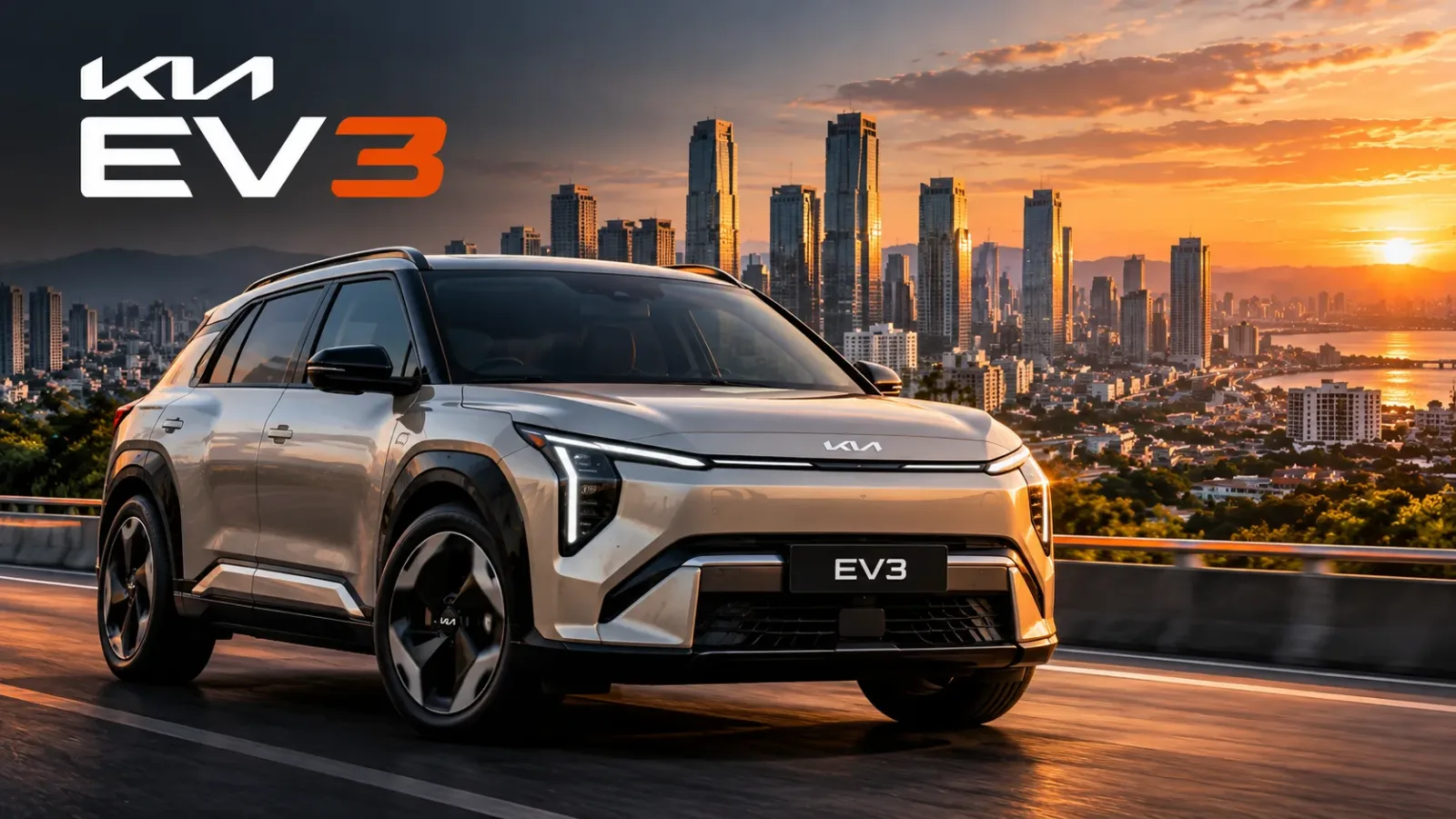
The Philippine electric vehicle market has changed remarkably quickly. Only a few years ago, buying an EV meant choosing from a relatively small group of vehicles, usually carrying a considerable price premium over their gasoline-powered counterparts. Today, the situation is very different. New electric crossovers are arriving regularly, charging infrastructure is expanding, and competition particularly from Chinese manufacturers is pushing prices and specifications in directions that would have been difficult to imagine just a few years ago. Now Kia wants a larger piece of that market. The Kia EV3 has officially arrived in the Philippines, bringing the technology and design philosophy of Kia's larger electric vehicles into a smaller and considerably more attainable package. At ₱1.898 million, with a limited introductory price of approximately ₱1.869 million, the EV3 enters one of the most interesting parts of the Philippine EV market. But there's a bigger question. Is this finally the Kia EV that can appeal beyond early adopters?
A Smaller Member of Kia's EV Family
One look at the EV3 and its family connection is obvious. The upright proportions, geometric bodywork and distinctive lighting borrow heavily from Kia's larger EV5 and EV9. But everything has been compressed into a much smaller vehicle. The EV3 measures approximately 4,300 mm long, 1,850 mm wide and 1,560 mm tall, riding on a 2,680 mm wheelbase. That makes it much easier to imagine using the EV3 around Metro Manila than something the size of an EV9. It is still a crossover, but one designed around urban practicality rather than sheer size. If electric vehicles are going to move beyond niche buyers, manufacturers need EVs that work as ordinary everyday cars. The EV3 is Kia's attempt to do exactly that.
58.3 kWh Battery and More Than 500 km of Claimed Range
The Philippine-specification EV3 comes with a 58.3 kWh lithium-ion battery feeding a single electric motor driving the front wheels. Output is 201 hp with 283 Nm of torque. Those aren't extreme performance numbers, and they don't need to be. The EV3 isn't trying to be an electric sports car. Its more important number is range. Kia claims as much as 511 km under the NEDC test cycle for the Philippine model. As always, laboratory range figures shouldn't be treated as a guarantee of what every owner will achieve. Traffic, speed, air-conditioning use, elevation, weather and driving style can all affect actual energy consumption. Still, a claimed range exceeding 500 km places the EV3 comfortably beyond the psychological 300- or 400-km barrier that once defined many mainstream EVs. For many urban drivers, that could mean several days of commuting before charging becomes necessary.
Charging Could Be One of Its Strongest Features
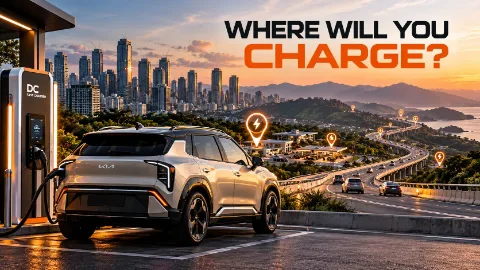
Range is only half of the EV equation. Eventually, every battery has to be charged. The EV3 supports up to 11 kW AC charging, with Kia indicating approximately five hours and 20 minutes to charge from 10% to 80% under the specified conditions. DC fast charging can take the battery from 10% to 80% in around 29 minutes when connected to a sufficiently powerful charger. That makes the EV3 potentially useful in two very different ways. At home, an owner could plug it in overnight and begin the next day with plenty of range. During longer journeys, DC charging provides a significantly faster way to replenish the battery. But as with every EV sold in the Philippines the vehicle's maximum charging capability and the charging station actually available to the driver are two different things. A car capable of accepting high charging power cannot charge at that rate if the charger itself cannot provide it. That distinction will become increasingly important as faster-charging EVs enter the Philippine market.
The Interior Shows How EVs Are Changing
Inside, the EV3 looks considerably more technological than its size might suggest. Across the dashboard is Kia's wide display arrangement. Two approximately 12-inch displays handle the digital instrument cluster and infotainment functions, with another smaller display positioned between them for climate information. Wireless Apple CarPlay and Android Auto are included, together with multiple USB-C ports and wireless charging. There's also something increasingly common among modern EVs: an interior designed around electronics almost as much as traditional automotive controls. For buyers moving from an older gasoline vehicle, that difference may initially feel significant. But it also illustrates how EV competition has changed consumer expectations. A modern electric vehicle is increasingly expected to offer not only an electric drivetrain, but a highly digital cabin as well.
Safety Technology Isn't Missing
Kia has also equipped the Philippine EV3 with its DriveWise driver-assistance suite. The package includes features such as adaptive smart cruise control, lane-keeping and lane-following assistance, blind-spot collision avoidance, rear cross-traffic assistance and forward collision avoidance with autonomous emergency braking. There are front and rear parking sensors and a reversing camera, although the Philippine GL specification does without a 360-degree camera. These systems matter because the EV3 isn't being positioned simply as an inexpensive entry point into Kia's electric range. It still needs to feel like a modern Kia.
Then We Get to the Price
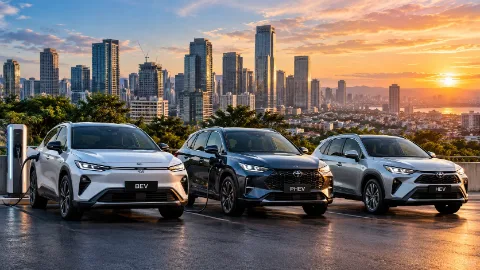
The regular Philippine price is ₱1.898 million for the EV3 GL. Kia introduced the vehicle with a promotional price of approximately ₱1.869 million, together with a limited free five-year preventive-maintenance package, available under the introductory offer through October 31, 2026. That's still a substantial amount of money for a compact crossover. But the context surrounding that price has changed. The EV3 enters a market containing increasingly competitive electric vehicles from brands such as BYD, Geely, GAC Aion and other manufacturers that have rapidly expanded their Philippine presence. Several Chinese EVs already compete in or below this price range. That means Kia cannot rely solely on the fact that the EV3 is electric. It has to compete on the entire ownership proposition.
Kia's Advantage May Be Familiarity
This is where the EV3 becomes particularly interesting. Chinese manufacturers have played an enormous role in accelerating EV adoption. They have pushed battery technology forward, introduced increasingly sophisticated plug-in hybrids and battery-electric vehicles, and put significant pressure on established manufacturers to respond. But some Filipino consumers remain more comfortable purchasing from brands they have known for years. Kia has been selling vehicles in the Philippines for decades. There is an established dealership and service network, existing brand recognition and a customer base already familiar with its products. For someone interested in switching to a battery-electric vehicle but hesitant about buying from a newer automotive brand, the EV3 offers another option. That doesn't automatically make it the better vehicle. But it changes the decision. The EV buyer is no longer choosing simply between conventional legacy brands and unfamiliar EV startups. Increasingly, both groups are competing in the same showroom price brackets.
The Warranty Matters Too
Kia Philippines provides the EV3 with a five-year/160,000 km vehicle warranty. The high-voltage battery receives separate coverage of eight years or 160,000 km. Battery warranties are particularly important for first-time EV buyers because battery longevity remains one of the most common concerns surrounding electric vehicle ownership. Modern EV batteries are designed to operate for many years, but having long-term manufacturer coverage provides additional reassurance particularly as the Philippine second-hand EV market begins to develop.
Is 511 km Enough?
For most everyday driving, the more useful question might actually be, How much range do you really need? A vehicle doesn't need 800 km of range if the typical owner drives only a fraction of that distance each day and can charge conveniently at home. The EV3's claimed 511 km NEDC range is therefore less important as an absolute number than as an indication that mainstream EVs are moving beyond the short-range compromises of earlier electric cars. The challenge increasingly isn't whether an EV can travel far enough. It's whether the owner has somewhere convenient to charge it. That is especially relevant in the Philippines, where homeowners with garages have a very different charging experience from residents of condominiums, apartments and properties without dedicated parking.
A More Difficult Market Than Kia Once Faced
There is some irony in the timing of the EV3. Kia has produced one of its most accessible global EVs at exactly the moment when the Philippine electric vehicle market has become fiercely competitive. That is good news for consumers. A few years ago, an electric crossover from a major global manufacturer priced below ₱2 million would have attracted attention simply because it existed. Today, buyers can compare battery capacity, range, charging speed, warranty, software, interior technology and price across multiple manufacturers. The EV3 therefore doesn't enter an empty market. It enters a fight. And that may ultimately be the best thing that could happen to electric vehicles in the Philippines.
More Than Another New EV
The significance of the Kia EV3 isn't simply that Kia has launched another battery-powered crossover. It's what the vehicle represents. Electric vehicles are gradually moving down from expensive flagship products toward the parts of the market where ordinary family vehicles compete. The EV3 still isn't inexpensive. At nearly ₱1.9 million, plenty of Filipino buyers will remain better served by less expensive gasoline-powered or hybrid alternatives. But the gap is narrowing. And as more manufacturers compete in this segment, battery technology improves and charging infrastructure expands, that gap could continue getting smaller. The Kia EV3 may not be the EV that suddenly makes every Filipino motorist abandon gasoline. It doesn't need to be. Its more important role may be showing that an electric vehicle from an established global manufacturer can increasingly be considered alongside conventional compact crossovers not simply as an alternative technology, but as another everyday car. And that is when the EV market really starts becoming mainstream.
Comments
No comments yet. Be the first to join the discussion.