China’s Carmakers Are Challenging Decades of Japanese Dominance in Southeast Asia
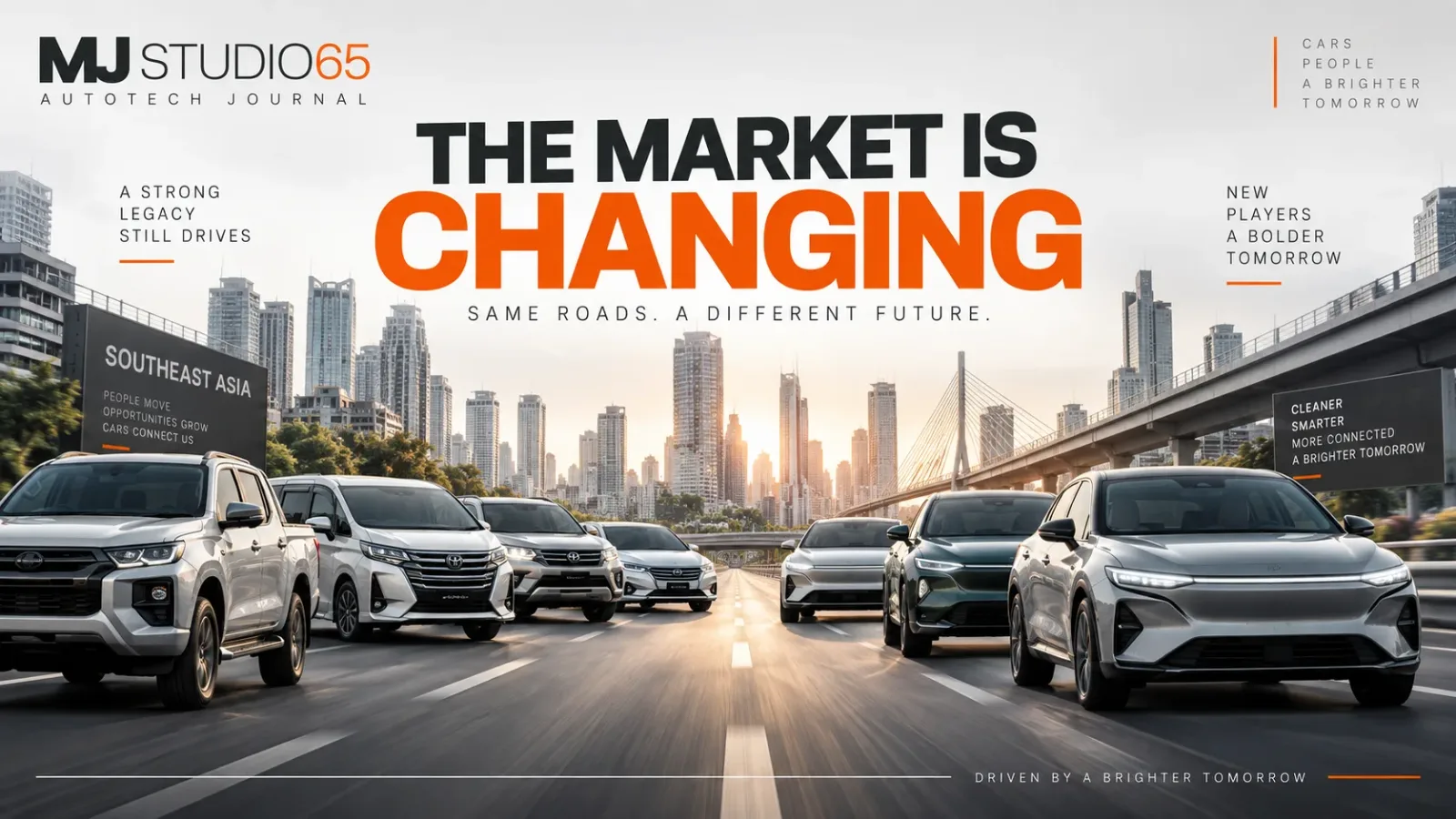
For decades, the roads of Southeast Asia told a remarkably consistent story. Toyota, Mitsubishi, Honda, Nissan and Isuzu became more than familiar badges. Their vehicles became taxis, family cars, company fleets, workhorses and, in many markets, the default choices for buyers who valued reliability, easy access to parts and established dealer networks. That dominance was built over generations. But drive through the region today and the picture is beginning to look very different. BYD, Geely, Chery, GWM, GAC and a growing list of Chinese manufacturers are appearing in showrooms and on Southeast Asian roads. Many are arriving with aggressive pricing, large digital displays, advanced driver-assistance systems, hybrid or electric powertrains and equipment that once belonged to considerably more expensive vehicles. The change does not mean Japanese manufacturers are disappearing. Far from it. They remain deeply established across Southeast Asia. What is changing is something more fundamental: for the first time in decades, their position can no longer simply be taken for granted. Japanese automotive dominance in Southeast Asia did not happen overnight. Manufacturers spent decades building factories, supplier networks, dealerships and service centers across the region. Toyota, Mitsubishi, Honda, Isuzu and others learned what local customers needed and developed vehicles suited to Southeast Asian conditions. Affordable sedans became everyday transportation. MPVs carried large families. Pickups became essential tools for businesses and agriculture. SUVs eventually combined those characteristics with the comfort buyers increasingly wanted. Models such as the Toyota Hilux and Innova, Mitsubishi L300 and Montero Sport, Isuzu D-Max, Honda City and countless others became familiar sights across the region. More importantly, an entire ecosystem developed around them. Parts became widely available. Independent mechanics learned how to repair them. Dealers expanded beyond major cities. Used-car buyers understood their values. That ecosystem created something extremely difficult for a new manufacturer to replicate, trust built over time. And that remains one of the strongest advantages Japanese manufacturers have today.
Then the Automotive Market Started Changing
The transition toward electrification disrupted the traditional formula. Instead of competing only over engines, transmissions, reliability and fuel economy, manufacturers increasingly had to compete in batteries, electric motors, charging technology, software, connectivity and advanced driver-assistance systems. These were areas where China's automotive industry had invested aggressively. Chinese manufacturers were also able to approach Southeast Asia without decades of conventional vehicle development defining their product strategies. Rather than trying to beat established manufacturers using exactly the same formula, many entered through a different door: electrification and technology. The numbers now show how quickly that door has opened. PwC estimates that Chinese manufacturers accounted for roughly 11% of the ASEAN-6 automotive market in 2025. During the first half of 2026, that had increased to approximately 15.7%. At the same time, electrified vehicles including different forms of hybrid and battery-electric vehicles reached approximately 32% penetration across ASEAN-6 during the first half of 2026. This does not mean Southeast Asia has suddenly become an electric-car market. It means the competitive landscape is changing alongside the technology powering the cars.
Thailand Shows How Quickly the Balance Can Shift
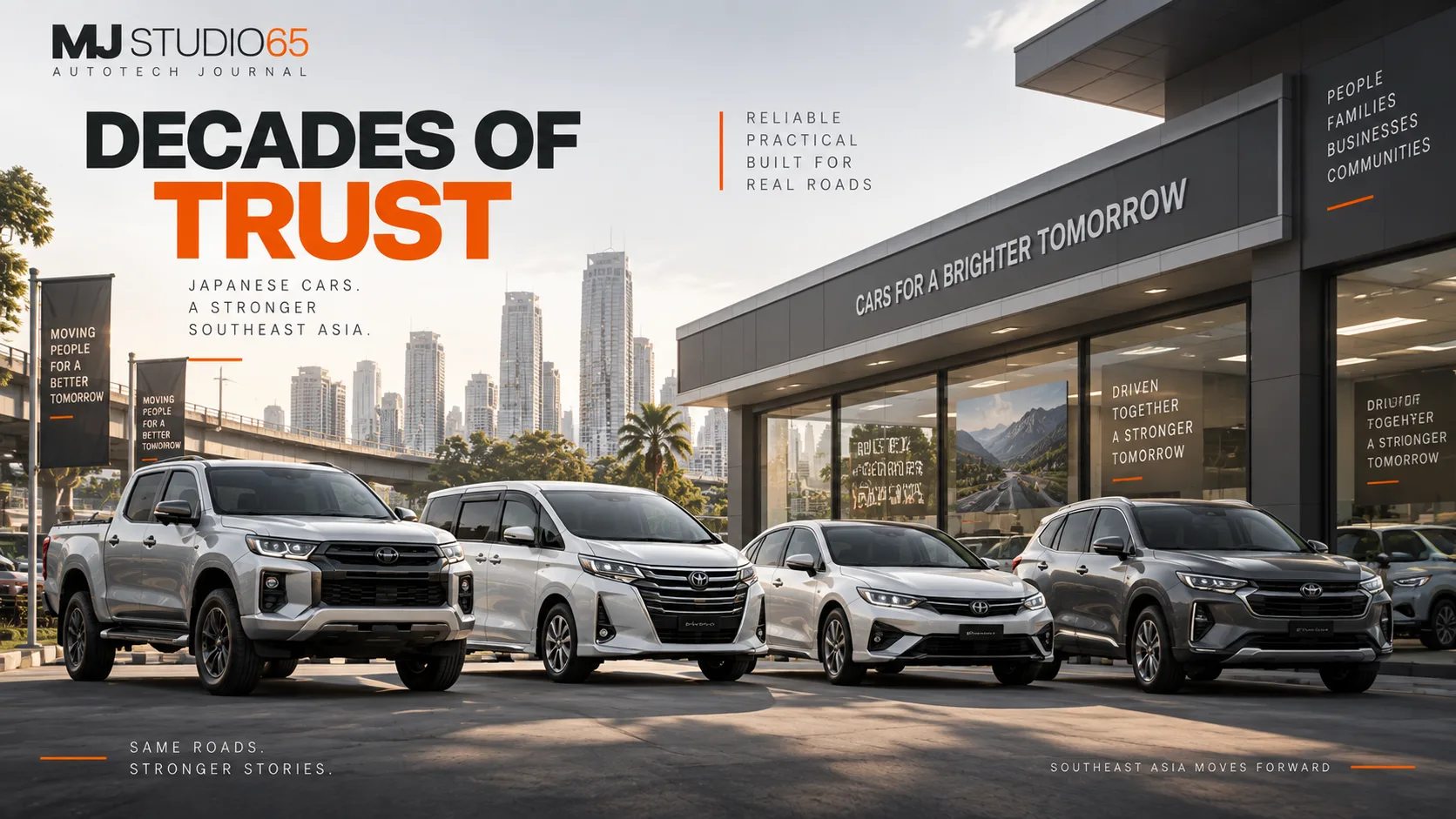 Thailand provides one of the clearest examples. The country has long been one of Southeast Asia's most important automotive manufacturing centers and a major stronghold for Japanese manufacturers. Yet registration data compiled by JETRO shows that during the first half of 2026, Chinese manufacturers accounted for approximately 33% of Thailand's new-vehicle registrations. Japanese manufacturers still controlled about 59%. Toyota alone held approximately 32%, demonstrating just how formidable the established Japanese presence remains. But the direction of change is difficult to ignore. Chinese manufacturers collectively held around 26% of Thailand's market in 2025. By the first half of 2026, that had risen to roughly one-third. BYD, MG, Jaecoo, Aion, Deepal and Geely are among the brands contributing to that expansion.
But Look Deeper and an Interesting Divide Appears
Thailand also demonstrates why describing the situation simply as "China replacing Japan" would be misleading. The market is splitting along powertrain lines. From January through July 2026, Chinese manufacturers accounted for approximately 90.3% of Thailand's passenger battery-electric vehicle registrations. But Japanese manufacturers overwhelmingly controlled another important electrified segment: hybrids. Toyota, Honda and Mitsubishi occupied the top three positions in Thailand's hybrid passenger-car registrations in July. Toyota and Lexus alone accounted for 53.7%, followed by Honda at 30.9% and Mitsubishi at 9.1%. In other words, Chinese manufacturers have become extraordinarily strong in battery-electric vehicles, while Japanese manufacturers remain extremely powerful in hybrids. That distinction could become one of the defining automotive battles in Southeast Asia. Indonesia tells a similar story, although its market remains heavily influenced by established manufacturers. Toyota was still the country's leading brand in August 2026, recording more than 20,000 wholesale units during the month. Daihatsu followed, while Suzuki remained among the country's largest manufacturers. But look specifically at electrified vehicles and Chinese brands become much more visible. GAIKINDO reported that BYD led Indonesia's electric and hybrid category in August with 7,870 wholesale units, followed by Jaecoo with 3,300 and Geely with 2,121. The traditional automotive hierarchy has not disappeared. A new one is developing alongside it.
The Philippines May Be One of the Most Interesting Battlegrounds
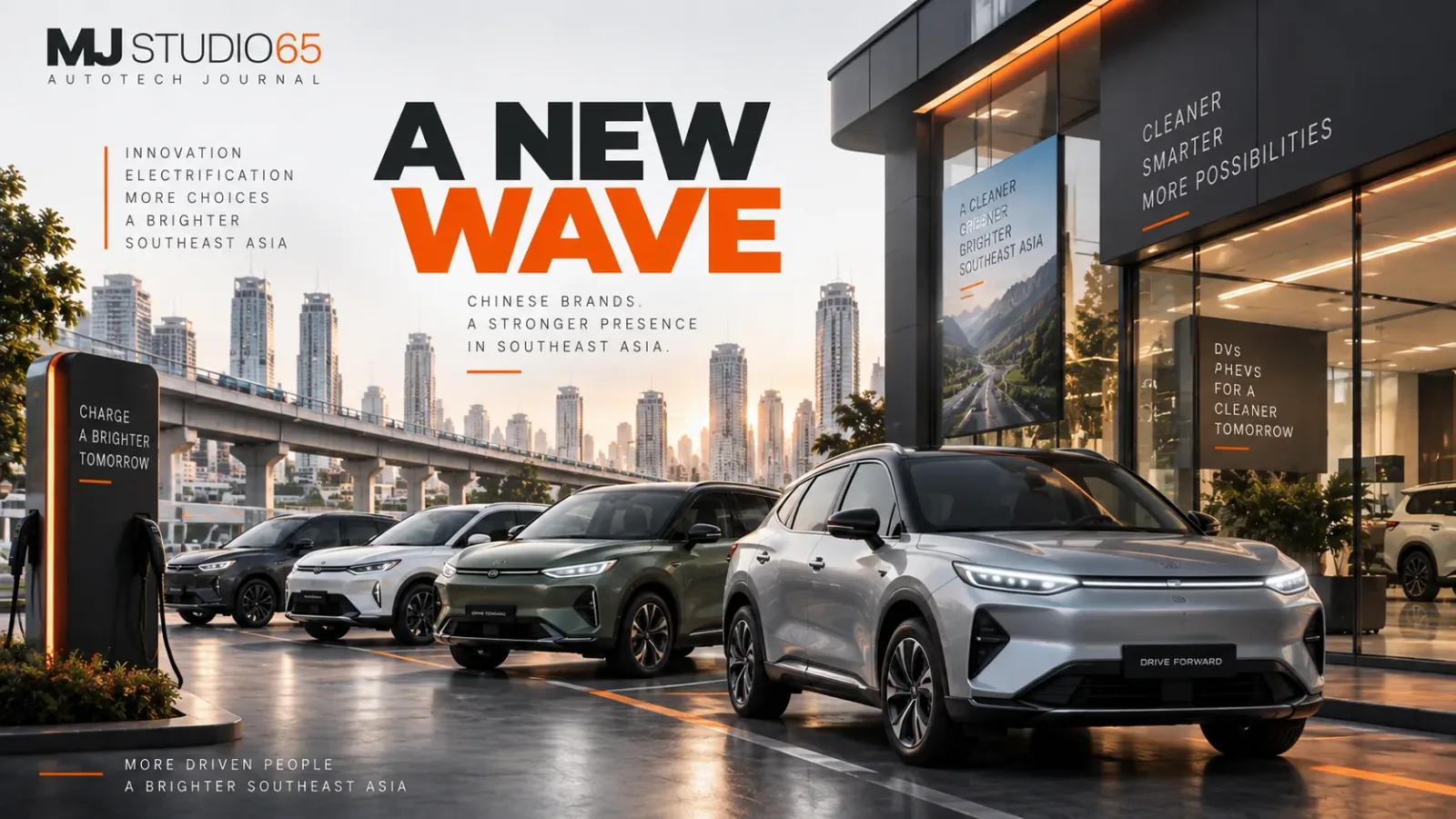
The Philippines presents an especially interesting case because Japanese manufacturers remain extraordinarily strong. CAMPI-TMA figures through July 2026 showed Toyota Motor Philippines holding approximately 49.1% of sales reported by those industry groups, with Mitsubishi at about 17.6%. Those are enormous positions. Japanese brands therefore aren't starting this competition from weakness. They are starting with decades of accumulated strength. Yet Chinese manufacturers are growing rapidly. BYD is perhaps the clearest example. During the first four months of 2026, BYD reportedly sold 13,723 vehicles in the Philippines, giving it approximately 9.4% of the broader market measured in the cited industry presentation, compared with 2.9% during the equivalent period a year earlier. That placed BYD behind Toyota and Mitsubishi but ahead of several long-established brands during that period. For Philippine buyers, this creates a competitive environment that barely existed several years ago. A customer shopping for an SUV or crossover may now compare a familiar Japanese model not only with another Japanese, Korean or American vehicle, but with several Chinese alternatives offering hybrid, plug-in hybrid or fully electric powertrains. Price matters, but price alone doesn't fully explain the change. Chinese manufacturers increasingly compete by offering more equipment for the money. Large infotainment displays, digital instrument clusters, panoramic roofs, 360-degree cameras, connected-car functions, advanced driver-assistance features and sophisticated interior lighting have become common selling points. Electrification adds another dimension. China has developed an enormous domestic electric-vehicle industry, giving its manufacturers experience with batteries, electric motors, power electronics and vehicle software. When those companies expand overseas, they bring that technological ecosystem with them. This changes what consumers expect from cars at a given price. And that pressure affects everyone. Japanese manufacturers have not ignored electrification. Toyota has spent decades developing hybrid technology. Honda continues expanding its hybrid portfolio. Mitsubishi has extensive plug-in hybrid experience, while Nissan was one of the early mass-market EV manufacturers. Their approach, however, has generally been broader than an immediate switch to battery-electric vehicles. Hybrids, plug-in hybrids, battery EVs and other technologies are increasingly being developed simultaneously. In Southeast Asia, that strategy may have particular relevance. Charging infrastructure remains uneven. Electricity systems, consumer incomes, driving patterns and government policies vary substantially from country to country. A powertrain that works extremely well in Bangkok may not necessarily be the ideal solution for a customer hundreds of kilometers from a major urban center. That gives hybrids an important role in the transition. And it helps explain why Japanese manufacturers still have significant room to compete.
The Battle Is About More Than Selling the First Car
 Chinese manufacturers face another challenge that sales charts cannot immediately answer. What happens after five years? Or ten? A strong automotive brand requires more than attractive specifications. Customers eventually discover whether replacement parts are readily available, whether dealerships remain open, whether technicians can diagnose problems quickly, how warranties are handled and how much their vehicle is worth when they decide to sell it. Japanese manufacturers have decades of history answering those questions in Southeast Asia. Many Chinese brands do not—at least not yet. Their long-term success will therefore depend not only on selling vehicles but on building the infrastructure surrounding those vehicles. Factories and local assembly plants can help. So can larger dealer networks, parts warehouses, training centers and long-term investment. The next stage of competition may therefore happen as much behind the showroom as inside it. For consumers, stronger competition can have an important consequence. It forces manufacturers to improve. If Chinese manufacturers offer more technology at lower prices, established manufacturers must respond. If Japanese brands continue delivering strong reliability, resale value and service support, newcomers must strengthen those areas. If one manufacturer improves battery warranties, another may have to follow. If one introduces a better hybrid system, competitors cannot simply ignore it. The result is an automotive market where buyers have more choices and where manufacturers can no longer rely solely on reputation. It would be premature to declare the Japanese automotive era in Southeast Asia over. Toyota alone remains enormously powerful across several major markets. Mitsubishi, Honda, Isuzu, Suzuki and other Japanese manufacturers retain large customer bases and extensive regional operations. Decades of manufacturing, dealerships, parts availability and consumer trust cannot be recreated overnight. But the opposite conclusion that nothing fundamental is changing would also miss what is happening. Chinese manufacturers have moved beyond being occasional newcomers.
The Real Shift in Southeast Asia Is From Dominance to Competition
Their regional market share is growing. Their factories are expanding. Their vehicles are becoming increasingly visible. And electrification has given them an opportunity to compete without first spending decades building reputations around conventional combustion-engine cars. The old automotive hierarchy therefore isn't necessarily disappearing. It is becoming contested. The most interesting question may not be whether Chinese manufacturers will replace Japanese manufacturers. That framing assumes there must eventually be one winner. The emerging Southeast Asian automotive market could be more complicated. Japanese manufacturers may continue dominating hybrids, pickups, commercial vehicles and large parts of the mass market. Chinese manufacturers may continue expanding through EVs, plug-in hybrids, technology-rich crossovers and increasingly competitive conventional vehicles. Some will succeed. Some newcomers may disappear. And established manufacturers will continue adapting. But one thing already appears clear. For decades, Japanese manufacturers helped define what a mainstream car looked like in Southeast Asia. Now another automotive powerhouse is helping redefine what buyers expect from it. And the competition between them may shape the cars Southeast Asians drive for the next generation.
Comments
No comments yet. Be the first to join the discussion.