
McLaren’s First SUV Will Test Everything the Brand Stands For
For most of its history, McLaren has represented almost everything an SUV is not. Low-slung bodies, lightweight construction, carbon-fiber engineering and aerodynamics shaped by decades of motorsport experience have defined the brand. McLaren's road cars have traditionally been built around a simple philosophy: put performance first and place the driver at the center of the experience. From the legendary McLaren F1 to the P1, Senna and 720S, and now the Artura generation, that philosophy has remained remarkably consistent. These are machines designed around speed, precision and the connection between the driver and the road. Now McLaren is preparing to enter territory it has never explored before. For longtime enthusiasts, those words may sound almost contradictory. But McLaren's decision involves much more than simply adding a taller, more practical vehicle to its lineup.
McLaren Is Actually Late to the SUV Party
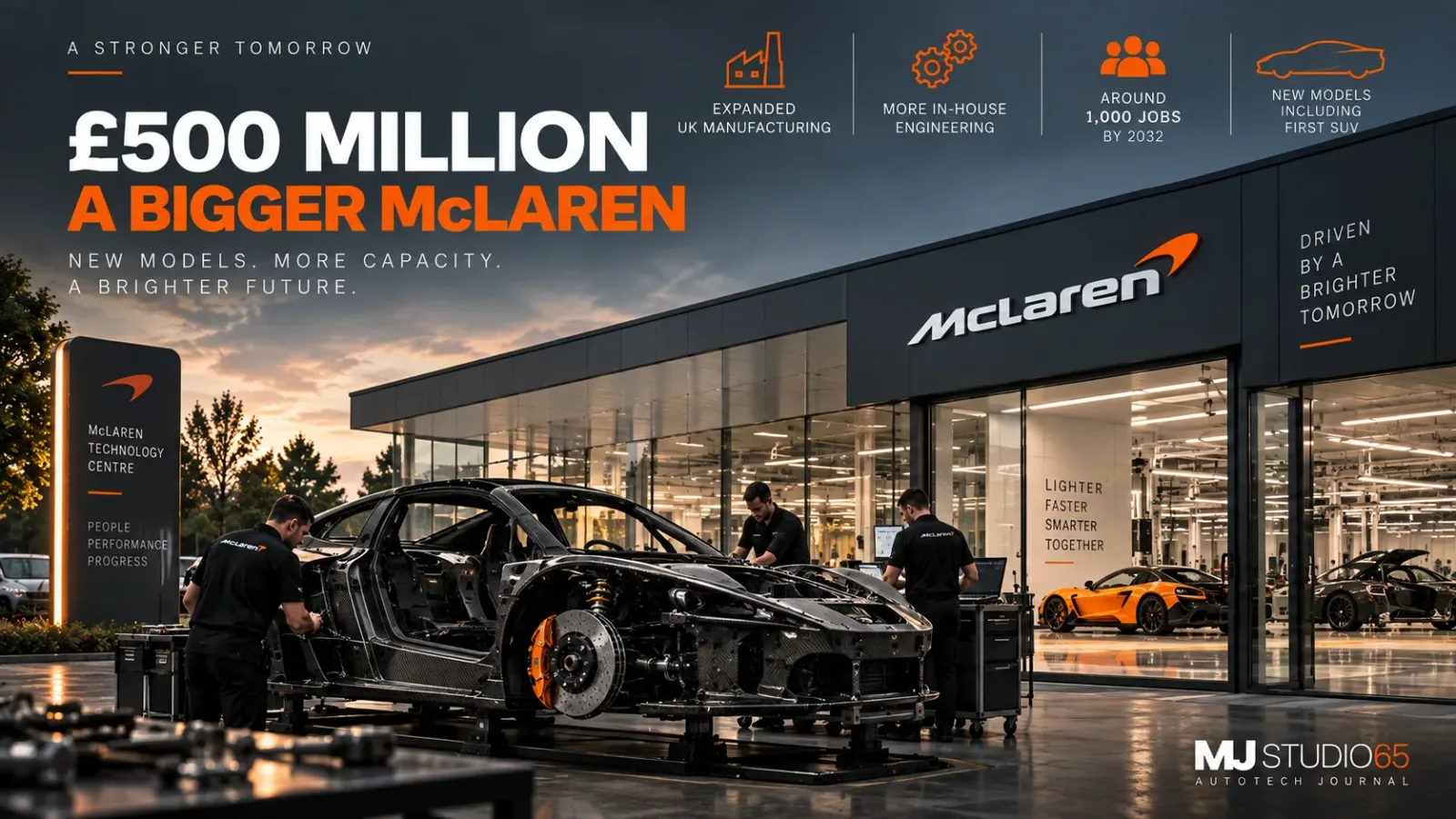
Behind the move is an approximately £500 million investment in the United Kingdom, aimed at expanding McLaren's manufacturing and engineering capabilities, supporting future products and strengthening the company's ability to develop more of its technology in-house. The expansion is also expected to include a new UK assembly operation and increased development of engines and transmissions, while potentially supporting the creation of around 1,000 jobs by 2032. At the center of this broader product strategy is something unprecedented for the company: McLaren's first SUV. The project arrives during an important period of transformation for the British performance-car manufacturer. Following restructuring and changes in ownership, McLaren is working to strengthen its financial position while expanding beyond the relatively narrow supercar market that has defined its road-car business for decades. Its production strategy is changing as well. McLaren is moving toward a more build-to-order approach, intended to better match production with customer demand, limit excess dealer inventory and potentially support stronger residual values. Seen in that context, the SUV is not simply an unexpected addition to the McLaren showroom. It represents part of a much larger effort to reshape the economics of the company and broaden the type of customers McLaren can reach. That makes the real question bigger than whether McLaren should build an SUV?
Twenty years ago, the idea of an SUV wearing the badge of an exotic performance manufacturer could have been almost unthinkable. Today, it has become an established part of the luxury-performance market. Porsche demonstrated the potential with the Cayenne. Lamborghini followed with the Urus, Aston Martin introduced the DBX, and Ferrari eventually entered the segment with the Purosangue. Each manufacturer interpreted the idea differently, but together they demonstrated something important: building an SUV does not necessarily mean abandoning sports cars. A performance brand can build both. McLaren has remained one of the most notable holdouts, which makes its decision to develop an SUV significant. But it also raises a different question. Instead of asking why McLaren is building an SUV, perhaps the more interesting question is why it waited this long. There is an obvious commercial limitation to concentrating almost entirely on exotic, low-volume supercars: the potential customer base is relatively small. Even someone wealthy enough to own a McLaren may not want to use a low-slung, two-seat performance car every day. Families need rear seats. Owners carry luggage. Drivers encounter traffic, poor roads, steep parking ramps and the ordinary demands of daily life. An SUV gives McLaren an opportunity to reach customers who admire its supercars but need something considerably more practical.
McLaren’s Biggest SUV Challenge Isn’t Speed It’s Identity
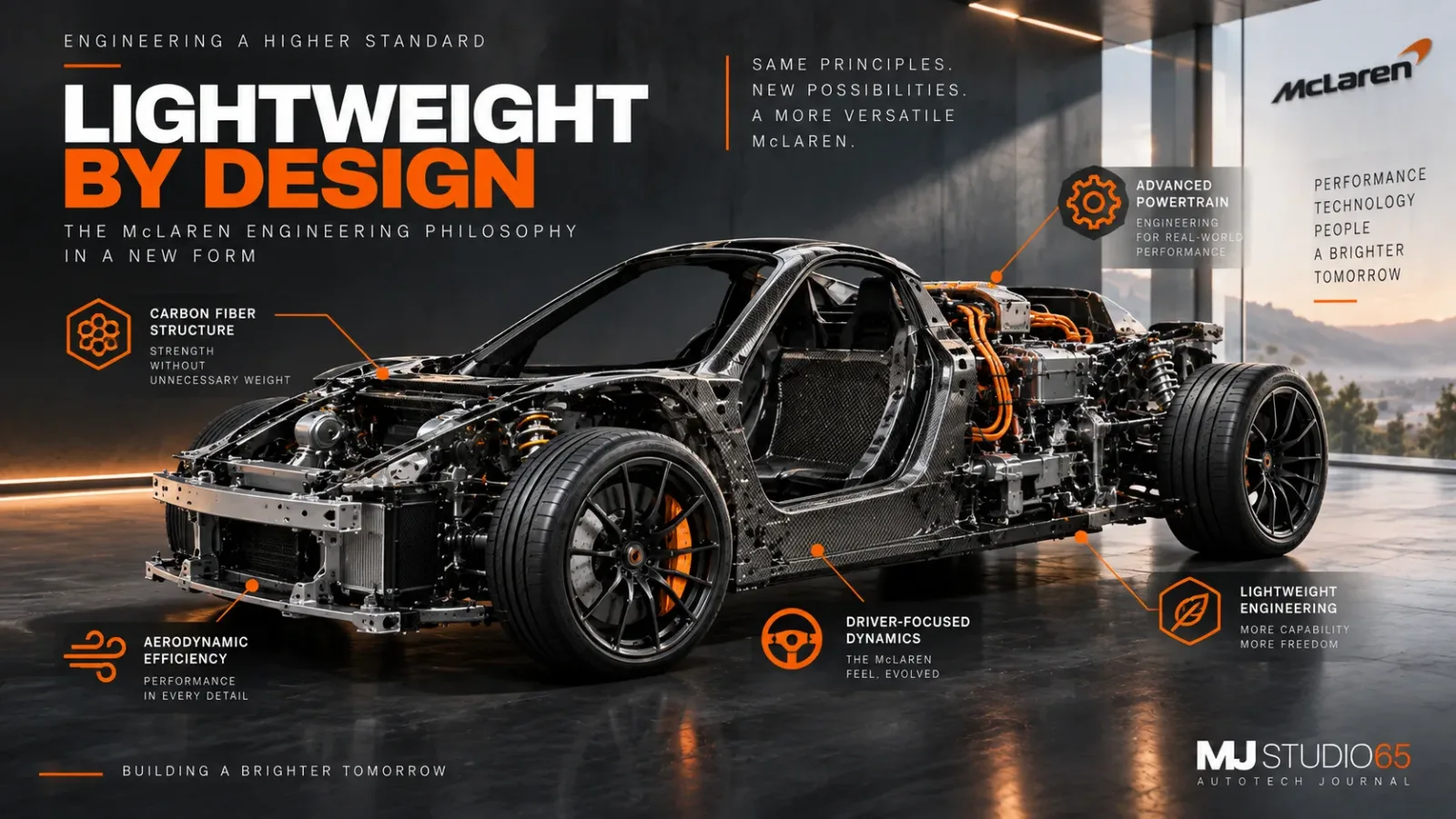
A broader customer base can potentially generate additional revenue, and that revenue can help support engineering, manufacturing, motorsport and the development of the extreme performance machines on which McLaren built its reputation. Seen this way, an SUV does not necessarily have to replace or dilute the traditional McLaren supercar. McLaren has not yet revealed detailed specifications for the vehicle, so claims about its exact powertrain, performance, dimensions or final design should still be treated cautiously. Anything wearing the McLaren badge will be judged against principles the company has spent decades developing: lightweight engineering, strong power-to-weight performance, precise steering, sophisticated aerodynamics and a cockpit designed around the driver. SUVs are naturally taller and generally heavier than sports cars. They require more passenger space, greater practicality, additional equipment and often more comfort-focused features. Many of those characteristics work directly against the traditional priorities of a lightweight supercar. The challenge, therefore, will not simply be making the SUV fast. Modern performance SUVs have already demonstrated that enormous power and supercar-like acceleration can be packaged into a larger vehicle. There is also a risk in trying too hard to make the SUV behave exactly like one of McLaren's existing supercars.
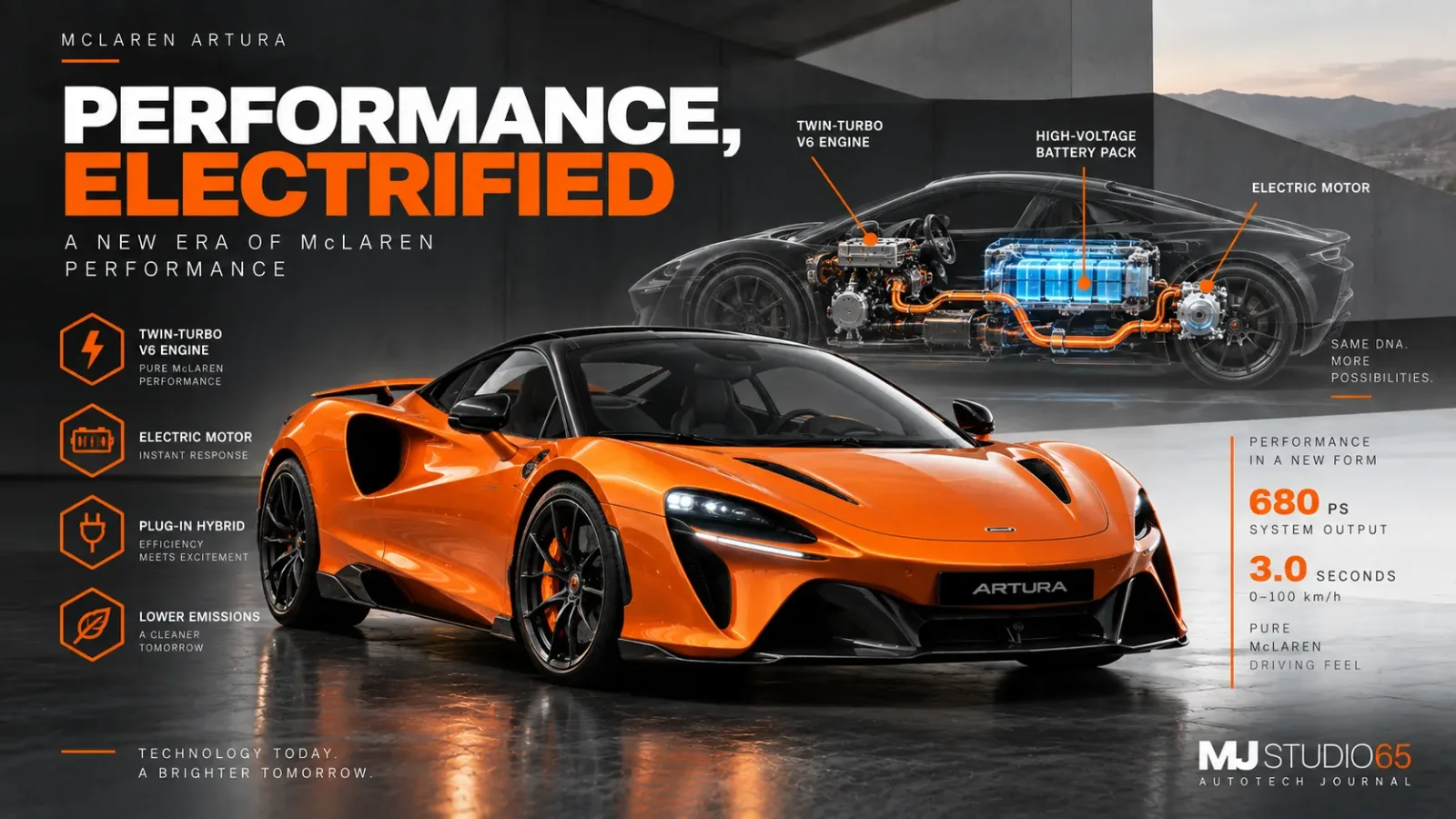
Customers may expect serious performance, but they will also expect passenger space, comfort, technology, luggage capacity and everyday usability. Ignoring those qualities simply to create the most aggressive SUV possible could miss the reason customers buy this type of vehicle in the first place. Instead, McLaren has an opportunity to reinterpret its engineering philosophy for a different category. That could mean reducing unnecessary weight rather than chasing an unrealistic supercar figure. It could mean preserving steering feel and driver involvement while delivering a more comfortable ride. Aerodynamics could improve stability and efficiency rather than simply maximizing downforce. Most importantly, practicality could become part of the engineering challenge instead of something the company reluctantly accepts. If McLaren gets that balance right, its SUV will not need to imitate the 750S, Artura or any other existing model. The company has already demonstrated through the Artura that hybrid technology can play an important role in a modern McLaren performance car. Electrification does not necessarily have to replace the combustion engine; it can also be used to improve response, performance and efficiency. At the same time, McLaren has indicated that it does not intend to rush into a fully battery-electric production model before it believes the technology and customer demand are right for the brand. On one side, the company is preparing to break with tradition by entering the SUV market. On the other, it appears determined not to abandon combustion-powered performance simply because much of the industry has been moving toward electrification. They suggest that the next era of McLaren could be less about choosing between combustion and electricity, or between supercars and SUVs, and more about deciding which technologies and vehicle formats best serve the company's performance philosophy.
Ferrari, Lamborghini and Porsche Already Changed the Argument
 McLaren doesn't have to look far to see what happens when a performance brand expands beyond traditional sports cars. Porsche remains one of the world's best-known sports-car manufacturers despite selling SUVs. Lamborghini still produces dramatic supercars alongside the Urus. Aston Martin continues building sports cars while selling the DBX. Ferrari's decision to develop the Purosangue didn't suddenly erase decades of sports-car history. The badge isn't defined by a single body style. What matters is whether the products reinforce or weaken what that badge represents. That may ultimately determine how enthusiasts judge McLaren's SUV. If it becomes simply another luxury SUV with enormous horsepower and a prestigious badge, critics will have an easy argument. But if McLaren genuinely translates its engineering philosophy into something different from existing performance SUVs, the reaction could be very different. There is another side to McLaren's transformation that makes the SUV story considerably more interesting. While expanding into a more practical vehicle segment, McLaren is simultaneously preparing to return to the highest level of endurance racing. In 2027, McLaren will return to the top class of the FIA World Endurance Championship and the 24 Hours of Le Mans. It will be 32 years since the McLaren F1 GTR famously won Le Mans on the company's debut in 1995. This time McLaren isn't adapting a road-going supercar. It has developed the MCL-HY, a purpose-built endurance Hypercar powered by a twin-turbocharged V6 hybrid powertrain. The program is already undergoing testing ahead of its 2027 competition debut. That creates an intriguing contrast. On one side of the company: A practical SUV designed to broaden McLaren's customer base. On the other: A purpose-built racing machine preparing to fight for overall victory at Le Mans. Those two projects may appear to pull McLaren in opposite directions. In reality, they could represent two parts of the same strategy. One strengthens the business. The other reinforces the identity.
 Can McLaren Build an SUV Without Diluting Its Supercar DNA?
That racing connection matters because McLaren isn't simply another luxury manufacturer that eventually became involved in motorsport. Racing came first. Bruce McLaren competed at Le Mans eight times as a driver and won the race in 1966. Decades later, the McLaren F1 GTR achieved one of the company's greatest victories when it won the 1995 24 Hours of Le Mans on its first attempt. McLaren's return in 2027 therefore isn't simply another racing program. It reconnects the modern company with one of the most important chapters in its history. And it arrives at almost exactly the same moment McLaren prepares for its biggest expansion beyond traditional supercars. That makes the timing especially symbolic. McLaren is moving outward while simultaneously reaching backward toward its roots. For some enthusiasts, an SUV wearing a McLaren badge will always feel strange. That reaction is understandable. McLaren built its reputation with machines that prioritized performance above practicality. An SUV represents almost the opposite starting point. But the automotive industry has already demonstrated that building an SUV doesn't automatically erase a manufacturer's sports-car identity. The greater risk would be producing a vehicle that has little connection to the engineering philosophy behind the badge. That is where McLaren's real test begins. The company doesn't need to prove that it can build a fast SUV. Modern engineering has already made that relatively common. It needs to prove that it can build a fast, practical vehicle that still communicates something distinctly McLaren. And perhaps that is the better way to interpret what is happening. McLaren isn't necessarily giving up on the supercar. It is attempting to build a larger business around it. At the same time, the company is investing hundreds of millions of pounds in new products, developing more technology internally and preparing a purpose-built Hypercar for its return to Le Mans. The McLaren of the future may therefore look very different from the company enthusiasts grew up with. There will be supercars. There will be racing. There will be hybrid technology. And soon, there will be an SUV. Whether those things can coexist under one badge will depend entirely on how McLaren executes the transformation. Because the real question isn't whether McLaren should be allowed to build an SUV. It's whether McLaren can build one without forgetting what made a McLaren special in the first place.


Comments
No comments yet. Be the first to join the discussion.