When people talk about buying an electric vehicle in the Philippines, one question almost always comes first:
“How far can it go on one charge?”
It's understandable. For decades, we've measured the practicality of a car partly by how far it can travel before needing fuel. When gasoline stations are almost everywhere, however, we rarely think seriously about where the next refill will happen. Electric vehicles have changed that conversation. Manufacturers now advertise 400, 500 and sometimes more than 600 kilometers of driving range. Every new generation seems determined to push that number higher. But I think we're focusing too much on the wrong number. For many Filipino drivers, the real question isn't:
- “How far can my EV travel?”
It's:
- “Where am I going to charge it?”
And the difference between those two questions can completely change whether an EV is convenient or frustrating to own.
Most People Don't Drive 400 Kilometers Every Day
Consider how most private cars are actually used. A typical weekday might involve driving from home to work, taking the children to school, stopping at a supermarket, going to a mall and eventually returning home. Even with Philippine traffic, the distance traveled may be relatively modest. The car might spend several hours crawling through traffic, but time behind the wheel isn't the same as distance traveled.
That's important when discussing EV range. If your normal daily driving requires only a fraction of a modern EV's battery capacity, having 500 or 600 kilometers of advertised range doesn't necessarily solve your biggest ownership concern. A 400-kilometer EV could already provide several days of ordinary commuting for some owners. The question becomes what happens when those kilometers have been used.
Imagine Having Your Own Gas Station at Home
This is where EV ownership becomes very different from owning a gasoline vehicle. Imagine arriving home every evening and having a small gasoline station inside your garage. You connect the car before going inside. While you're eating dinner, watching television and sleeping, the vehicle quietly refuels itself. The following morning, you leave with a replenished energy supply. That's essentially what home EV charging provides. And if you have reliable home charging, something interesting happens.
Range anxiety can become much less important.
You aren't necessarily waiting until the battery is almost empty before searching for somewhere to recharge. You're regularly adding energy whenever the car is parked at home. Instead of thinking like a gasoline-car owner drive until nearly empty, then refill you begin treating charging more like your mobile phone. Plug it in when convenient. Use it the next day.
A Smaller Battery With Home Charging Can Be More Convenient
Consider two hypothetical EV owners. Driver A owns an EV capable of traveling 600 kilometers on a charge but lives in a condominium where there is no convenient charging facility. Driver B owns an EV with only 350 kilometers of range but has a charger inside the garage at home. Which driver has the more convenient EV? My answer would probably be Driver B. The second driver may wake up every morning with plenty of available range. Driver A may have almost twice the battery range, but once that battery becomes low, charging requires a special trip to a public station. That's why I don't believe range should be considered independently from charging access. A battery stores energy. A charger gives you access to it. You need both.
The Home-Charging Divide
This is where I see one of the biggest challenges facing EV adoption in the Philippines. EV ownership can be remarkably convenient for someone who owns a house with a private garage and suitable electrical service. But what about someone living in a condominium? What about an apartment tenant? What about families sharing parking spaces? What about people whose vehicles are parked outside their homes or along residential streets? Installing a private wall charger may be difficult or impossible. Suddenly, the EV ownership experience changes.
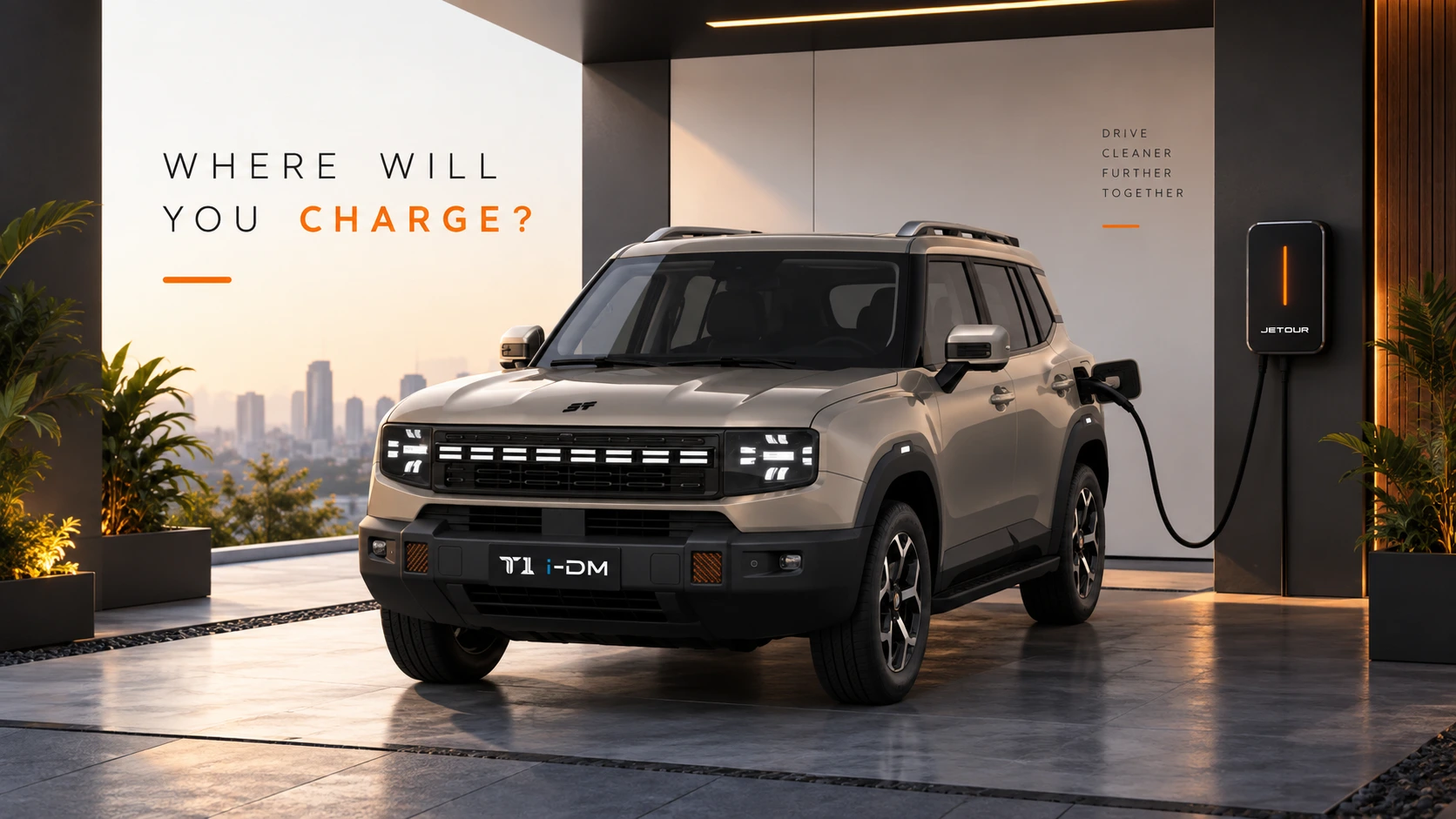
Instead of charging while sleeping, the owner has to find somewhere else to get electricity. That might mean a mall.
- A charging hub.
- A dealership.
- A workplace charger.
- Or a charging station along the route home.
The EV hasn't changed. The battery hasn't changed. But the ownership experience has changed completely because of where the owner lives.
Public Chargers Are Growing Rapidly
The good news is that Philippine charging infrastructure is expanding. Shopping malls, property developers, fuel retailers, charging-network operators and vehicle manufacturers are installing more stations. That expansion matters enormously. Public charging enables longer journeys, provides charging access for owners without private chargers and gives EV drivers another option when they need energy away from home. The network will continue becoming more useful as additional stations open. But simply counting charging points doesn't tell us everything we need to know.
A Charger on a Map Isn't Always a Charger You Can Use
Suppose an app tells you there are five chargers near your destination. That sounds excellent. But several questions still matter. Is the connector compatible with your vehicle?
- Is it AC or DC?
- How much power can it provide?
- Is another vehicle already using it?
- Is the charger working?
- Can you access the parking area at the time you arrive?
- Do you need an app or account?
- How much does charging cost?
- And perhaps most importantly:
- How long will you have to stay there?
A slow charger at a shopping mall can be extremely useful if you were already planning to spend two or three hours there. The same charger becomes inconvenient if you drove there specifically because your battery is nearly empty. This is why EV charging shouldn't be judged purely by the number of pins displayed on a map. The quality, speed, reliability and location of those chargers matter just as much.
Charging Speed Changes the Experience
Not every charging station is equal. An AC destination charger is excellent when a vehicle will remain parked for several hours. A DC fast charger serves a different purpose. It can replenish energy much faster, making it far more useful during a long-distance journey or when an owner needs to continue driving quickly. This distinction becomes especially important on Philippine expressways and provincial routes. A charger at your destination can take its time. A charger halfway through a long journey needs to get you moving again. As EV adoption grows, I think we need to stop discussing chargers as though they're all the same. We don't simply need more chargers. We need the right chargers in the right places.
Where Chargers Are Located Matters More Than the National Total
Imagine thousands of charging points across the Philippines. That sounds impressive. But if most of them are concentrated in places where EV adoption is already easiest, drivers elsewhere may still struggle. An EV owner doesn't experience the charging network nationally. They experience it personally. What matters is the route between their home, workplace and destinations. A charger 300 kilometers away doesn't solve their problem. Ten chargers on the opposite side of Metro Manila may not solve it either. The most useful charging station is often the one located somewhere the vehicle would already be parked.
- At home.
- At work.
- At a condominium.
- At a hotel.
- At a supermarket.
- At a mall.
- At a restaurant.
- Or at a highway stop during a long journey.
That's why destination charging deserves more attention.
Workplaces Could Become Part of the Solution
Home charging receives most of the attention, but workplace charging could become extremely important in the Philippines. Think about how long many cars remain parked during the working day.
- Six hours.
- Eight hours.
- Sometimes longer.
That's a perfect opportunity for slower AC charging. The vehicle doesn't necessarily need an expensive ultra-fast charger because the owner isn't waiting beside it. The car can gradually replenish its battery while the owner works. This could be especially valuable for employees who cannot install chargers where they live. If condominiums, offices and commercial buildings increasingly provide charging facilities, EV ownership becomes practical for a much larger group of people.
Condominiums May Be the Next Important Battleground
If EV adoption continues growing, I believe condominiums will become one of the most important parts of the charging discussion. Many urban Filipinos live in high-density residential developments. These are exactly the places where EVs make sense for city driving—but they can also be some of the most difficult places to install individual charging equipment.
- Electrical capacity has to be considered.
- Parking ownership has to be considered.
- Billing has to be considered.
- Fire and electrical safety standards have to be considered.
- Building management has to be involved.
And residents who don't own EVs may understandably ask who should pay for the infrastructure. These problems are solvable. But they require planning. A condominium designed twenty years ago wasn't necessarily built with dozens of cars simultaneously drawing electricity from its parking area. Future buildings should be.
Policy Is Beginning to Recognize the Problem
Philippine EV policy is increasingly moving beyond simply encouraging people to buy electric cars. The Electric Vehicle Industry Development Act includes provisions intended to expand charging infrastructure. The Department of Energy has also been working on requirements that would increase EV charging availability in public and private establishments with significant parking capacity. That's important because EV adoption and charging infrastructure have to develop together. Selling thousands of additional electric vehicles without increasing convenient charging access simply transfers the problem to public charging stations. Infrastructure needs to grow ahead of demand—or at least alongside it.
Public Charging Should Be the Backup, Not Always the Routine
For drivers who can charge at home, I believe public charging works best as an extension of EV ownership rather than its foundation. Home charging handles ordinary daily use. Public chargers handle longer journeys, unusual driving days and situations where additional energy is needed away from home. That's a very convenient system. But when an owner has no home or workplace charging, public infrastructure has to perform both jobs. Suddenly the driver may need to spend time every week deliberately visiting a charging station. That can make EV ownership feel less convenient than owning a gasoline vehicle. This doesn't mean someone without home charging can't own an EV. Many already do. But I think prospective buyers should understand how much their charging situation will affect the ownership experience before purchasing the car.
Stop Asking Only About Maximum Range
When reviewing EVs, we naturally talk about battery capacity and range. Those numbers still matter. Someone who regularly travels long distances has very different requirements from someone who primarily drives around the city. But I think EV buyers should add several questions to their checklist.
- Where will I normally charge?
- Can I install a charger at home?
- Can I charge at work?
- What charging stations exist along my regular routes?
- How fast are they?
- What connector does my vehicle use?
- And where will I charge during the occasional long-distance journey?
Answer those questions before becoming obsessed with whether one EV offers 450 kilometers and another offers 520. That extra 70 kilometers may matter far less than having a reliable charger waiting inside your garage.
The Best Charger May Be the One You Barely Notice
The future of EV charging probably shouldn't involve drivers constantly thinking about chargers. The best charging experience may eventually become almost invisible. You arrive somewhere you were already going.
- You park.
- You connect the vehicle.
- You continue with your day.

The car charges while you're doing something else. That's very different from the gasoline-station model we've lived with for generations. Instead of taking the vehicle somewhere specifically to obtain energy, energy becomes available wherever vehicles naturally spend time parked.
- Homes.
- Offices.
- Shopping centers.
- Hotels.
- Restaurants.
- Condominiums.
- Parking buildings.
That's when EV charging becomes truly convenient.
My View
I don't think the Philippines primarily has an EV range problem anymore. Modern electric cars are increasingly capable of traveling distances that comfortably cover the daily requirements of many drivers. What we have is a charging-access problem. And those aren't the same thing. Giving an EV another 100 kilometers of battery range can postpone the moment when it needs charging. It doesn't solve the question of where that charging happens. Building more public fast chargers will help. Installing destination chargers will help. Preparing condominiums and offices for EV charging will help. Making home charging easier and safer will help. And ensuring chargers are reliable, compatible and conveniently located will help. The transition to electric vehicles won't succeed simply because manufacturers build cars with larger batteries. It will succeed when charging an EV becomes so convenient that drivers stop worrying about it. So before buying your next electric vehicle, don't begin with the question:
“How far can it go?”
Start with something much simpler.
“Where will I plug it in tonight?”
Comments
No comments yet. Be the first to join the discussion.