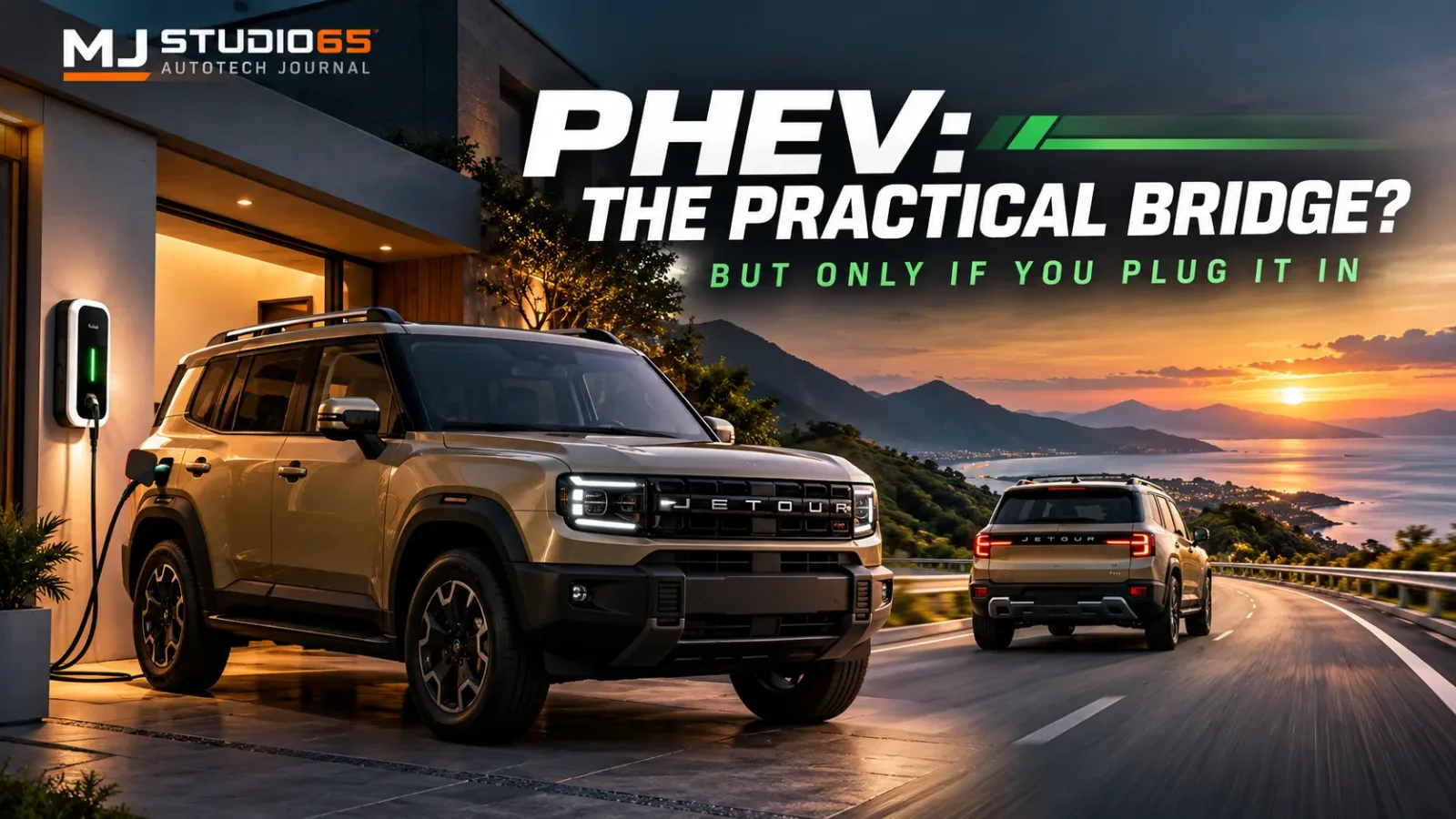
Electric vehicles are gaining momentum in the Philippines, but the transition is not happening in a straight line from gasoline directly to fully electric cars. Something interesting is happening in between. From January through August 2026, the Department of Energy recorded 29,649 plug-in hybrid electric vehicle sales, compared with 16,320 battery-electric vehicles and 20,716 conventional hybrids. PHEVs were therefore the largest of those three electrified categories during the period. It isn't difficult to understand their appeal. A plug-in hybrid promises much of what attracts people to an electric vehicle quiet electric driving, strong low-speed response, regenerative braking and the possibility of commuting without regularly burning gasoline while keeping an internal-combustion engine available when the battery becomes depleted or the journey extends beyond convenient charging. For a country where charging infrastructure is still developing, provincial journeys can be long and many drivers remain uncertain about going completely electric, that combination can appear almost tailor-made for the Philippine market. But there is a catch. A PHEV only makes full use of its defining feature if somebody actually plugs it in. And that seemingly obvious requirement may determine whether PHEVs become an effective bridge toward electric mobility or simply another way of carrying a large battery and an engine around at the same time.
Why PHEVs Make So Much Sense Here
Consider the driving environment in the Philippines. A vehicle might spend Monday through Friday crawling through Metro Manila traffic, then travel to Batangas, Baguio, Quezon, La Union or another province on the weekend. A battery-electric vehicle can certainly make many of those journeys today, particularly as ranges increase and charging networks expand. But the experience can still require more planning than driving a conventional gasoline vehicle, especially outside better-served charging corridors. The charging network is growing. The Department of Energy reported 1,569 charging points nationwide as of March 31, 2026, while the number of accredited EV charging-station providers increased from 258 at that point to 422 by August 31. Those figures show meaningful progress, but they also remind us that Philippine charging infrastructure is still developing. A PHEV largely removes that uncertainty. Electricity can handle the journeys where charging is convenient, while gasoline remains available when it isn't. That flexibility is difficult to dismiss in the Philippine context.
A PHEV Can Behave Like Two Very Different Cars
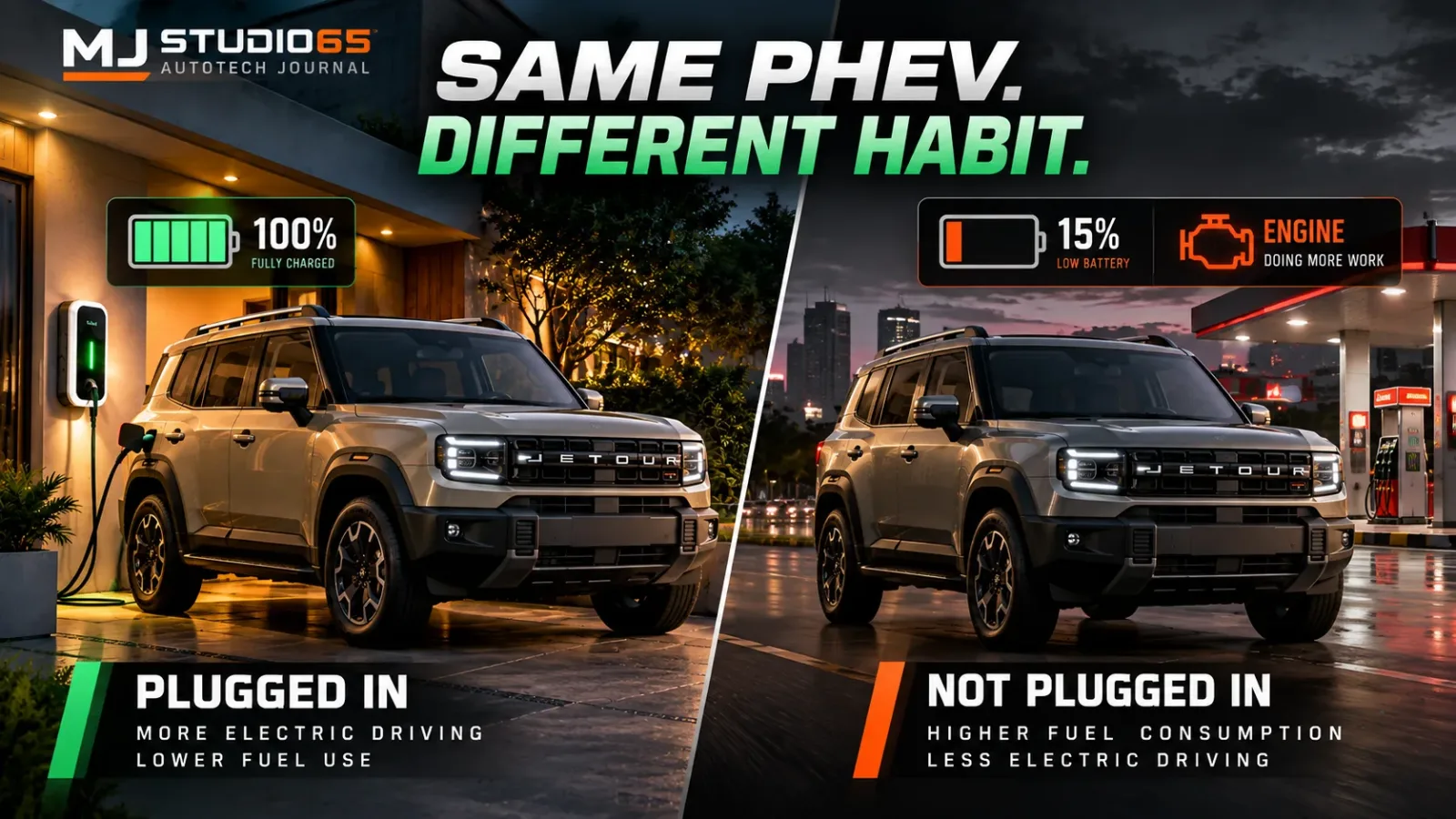 Imagine two owners purchasing exactly the same plug-in hybrid. The first owner has a charger at home. Every evening, the vehicle gets plugged in. The following morning it begins with a charged battery. If the owner's daily commute falls within the vehicle's practical electric range, much of the week's driving could potentially happen without the engine operating very much at all. Then comes a weekend road trip. The battery supplies part of the journey and the combustion engine provides the flexibility to continue without searching for a charger. Now consider the second owner. The vehicle is never plugged in. Perhaps the owner lives in a condominium without charging. Perhaps installing a charger is inconvenient. Perhaps the owner simply assumes the engine will recharge the battery anyway. The same PHEV is now being used very differently. The engine must provide considerably more of the vehicle's propulsion energy, while the owner is still carrying an electric motor, battery, power electronics and charging hardware alongside the combustion powertrain. It is the same vehicle, but the usage pattern is completely different. That is why discussions about whether PHEVs are efficient can miss one of the most important variables: the driver is part of the powertrain.
The Evidence From Other Markets Is a Warning
We should be careful about applying European driving data directly to the Philippines. Driving patterns, temperatures, distances, vehicle fleets, electricity systems and charging access differ. But Europe's experience demonstrates something important about the technology itself. Analysis published by the International Council on Clean Transportation in 2026, using European onboard fuel-consumption data covering vehicles registered from 2021 through 2023, found that real-world PHEV CO₂ emissions in 2023 averaged around five times their official values. Researchers attributed much of the discrepancy to PHEVs being driven electrically less than official testing assumptions expected. Earlier European Commission monitoring reached a similar conclusion. Its analysis of 2021 vehicles found real-world PHEV emissions averaging roughly 3.5 times laboratory values, with insufficient charging and electric driving identified as important contributors. These numbers should not be presented as predictions for Filipino drivers, but they provide an important lesson: putting a charging port on a vehicle does not guarantee that the vehicle will be plugged in.
Longer Electric Range Changes the Equation
There is another reason today's PHEV discussion is different from the one we were having several years ago. Electric ranges are getting substantially longer. A PHEV capable of only a short electric journey may frequently need its engine even during ordinary commuting. But once usable electric range becomes long enough to cover someone's normal daily travel, the role of the gasoline engine changes. Instead of thinking of the vehicle as an electric motor assisting a gasoline car, it can begin to operate more like an electric vehicle for everyday driving with gasoline available when necessary. That distinction matters. A Filipino who travels perhaps 30 or 50 kilometers on a normal day does not necessarily require several hundred kilometers of battery capacity sitting underneath the vehicle every morning. If a PHEV can comfortably cover that daily journey electrically and recharge overnight, a relatively modest battery can potentially perform much of the owner's routine transportation. The engine then becomes insurance for the journeys that do not fit the normal pattern. But once again, that model depends upon charging.
Home Charging Doesn't Have to Be Fast
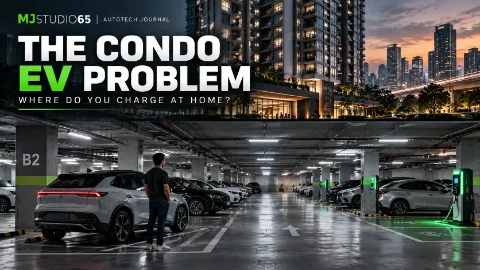
One misconception surrounding electrified vehicles is that charging must always be fast. For residential use, speed is often much less important than availability. A car might arrive home at 7 p.m. and remain parked until 7 a.m. That gives the battery roughly twelve hours to replenish before the vehicle is needed again. A PHEV generally carries a considerably smaller battery than a long-range battery-electric vehicle, so enormous DC charging power isn't necessarily the point. Reliable access to overnight AC charging can be far more valuable. The car does not need to receive all of its energy in twenty minutes if it is going to remain parked for most of the night. This connects directly with another problem facing Philippine electrification: condominium charging. A homeowner with a private garage may be able to plug in every evening. A condominium resident might own exactly the same vehicle and have nowhere to connect it. The PHEV therefore doesn't eliminate the home-charging problem. It merely makes the consequences of not having home charging less immediate because gasoline remains available. Ironically, that convenience could discourage some owners from solving the charging problem at all.
“The Engine Charges It Anyway” Isn't Quite the Same Thing
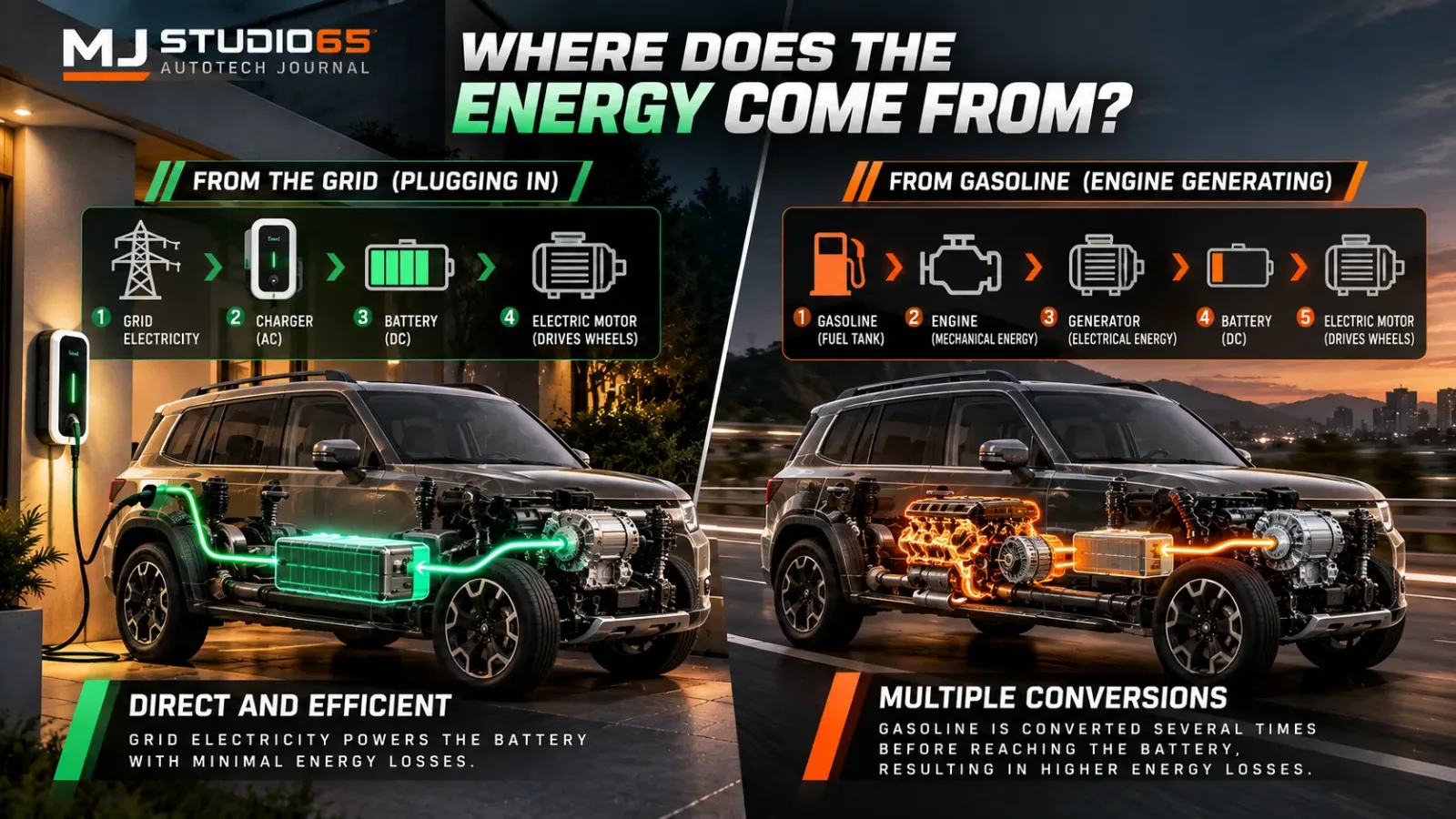 Many PHEVs can use their combustion engine to maintain battery charge or, in some operating modes, increase the battery's state of charge. That can be useful, particularly when the vehicle's energy-management system determines that electricity should be reserved for another part of the journey. But it does not make plugging the vehicle into the electricity grid irrelevant. When an engine generates electricity onboard, the energy ultimately originates from fuel. Chemical energy in gasoline becomes mechanical energy, which may then become electrical energy before eventually reaching the battery or electric motor. Every conversion introduces losses. There are situations where engine-generated electricity is an intentional part of a manufacturer's hybrid strategy, and sophisticated PHEV systems constantly decide how best to combine their power sources. But deliberately relying on gasoline to replenish a plug-in battery is fundamentally different from supplying that battery directly from the electrical grid. If an owner rarely connects the charging cable, one of the PHEV's biggest advantages the ability to bring energy into the vehicle from somewhere other than a fuel tank is being underused.
This Is Where PHEVs and Ordinary Hybrids Separate
A conventional hybrid asks very little of its owner. Put gasoline in it and drive. The vehicle handles regenerative braking, battery charging and electric assistance automatically. A PHEV asks for one additional behavior: plug it in. That small action changes the relationship between driver and vehicle. A conventional hybrid is designed around recovering and redistributing energy generated during driving. A plug-in hybrid adds another energy source: the electrical grid. That is precisely why comparing the two purely through advertised fuel-economy numbers can be misleading. The better question is how much of your driving will actually come from electricity. For someone who can charge every night and whose commute fits comfortably within electric range, the answer could be substantial. For someone who never plugs in, the calculation changes dramatically.
The Philippine PHEV Boom Makes Charging Behavior More Important
The sales figures make this more than a theoretical discussion. With almost 30,000 PHEVs sold in the first eight months of 2026, plug-in hybrids are already becoming a meaningful part of the Philippine vehicle market. That creates an interesting challenge for manufacturers and dealers. Selling the vehicle isn't enough. Customers should understand what they're buying. A PHEV owner should know how home charging works, what charging equipment is required, what happens when the battery reaches its lower operating state, how different driving modes affect energy consumption and why regularly plugging in changes the economics of ownership. Otherwise, manufacturers risk selling sophisticated electrified vehicles whose owners use only part of their capability.
We Need Philippine Real-World Data
This is where the discussion becomes particularly interesting. Imagine if we knew how Philippine PHEVs were actually being used. How often are they plugged in? What percentage of kilometers are driven electrically? How much gasoline do owners consume after the battery reaches its lower operating state? How different are the results between homeowners and condominium residents? How does Metro Manila traffic affect the electric share? What happens on provincial journeys? Those numbers would tell us far more about the role PHEVs are playing in the Philippine energy transition than registration numbers alone. European regulators are already using onboard fuel-consumption information to examine the difference between laboratory assumptions and real-world PHEV behavior. As the Philippine plug-in fleet grows, similar locally relevant research would be valuable. We shouldn't have to assume whether the technology works here. Eventually, we should be able to measure it.
PHEVs Could Teach Filipinos How to Live With an EV
There is another aspect of PHEVs that is easy to overlook. They can change people's habits. Someone accustomed to filling a gasoline tank every week may begin plugging a vehicle in every evening. The routine gradually becomes normal: arrive home, park, connect the cable, go inside and wake up with usable electric range. After several years of that behavior, moving from a PHEV to a full battery-electric vehicle may feel considerably less intimidating. The owner has already learned what charging at home feels like, how much range is normally needed and how an electrified vehicle fits into everyday life. In that sense, the PHEV isn't merely a technological bridge. It can also be a behavioral bridge. It introduces electric driving without immediately removing the familiar safety net of gasoline. For a developing EV market, that could be an important role.
But a Bridge Has to Lead Somewhere
There is also a legitimate question about how long that bridge should last. Battery prices continue changing, electric ranges are increasing and charging infrastructure is expanding. The Philippine government is also integrating charging demand into electricity-distribution planning while continuing to develop the broader charging framework under EVIDA and CREVI. The conditions that make PHEVs attractive today will not necessarily remain unchanged forever. At some point, a driver with reliable charging infrastructure may ask whether carrying an engine, exhaust system, fuel tank and associated mechanical components is still necessary. Others particularly those regularly traveling in areas with limited charging may continue finding the flexibility worthwhile much longer. There doesn't need to be one answer for every Filipino motorist. The transition can accommodate different technologies while infrastructure and consumer behavior evolve.
The Philippines May Be an Especially Interesting Test of the PHEV Idea
PHEVs occupy an unusual middle ground. They can deliver electric driving without demanding that every journey depend upon charging infrastructure. They can reduce gasoline use without requiring the enormous battery of a long-range BEV. They can make electrification less intimidating for drivers accustomed to conventional vehicles. And they can accommodate the mixture of dense cities, suburban homes, condominiums, provincial roads and long-distance travel that characterizes Philippine motoring. But their greatest strength is also their greatest weakness. The gasoline engine means owners don't have to charge. And because they don't have to, some won't. That makes the success of PHEVs unusually dependent upon something manufacturers cannot engineer into the battery pack: human behavior. Perhaps PHEVs really are one of the most practical bridges toward electric driving in the Philippines. But a plug-in hybrid that is rarely plugged in tells a very different story. The technology provides the opportunity to drive on electricity. The owner ultimately decides how much of that opportunity gets used.

Comments
No comments yet. Be the first to join the discussion.