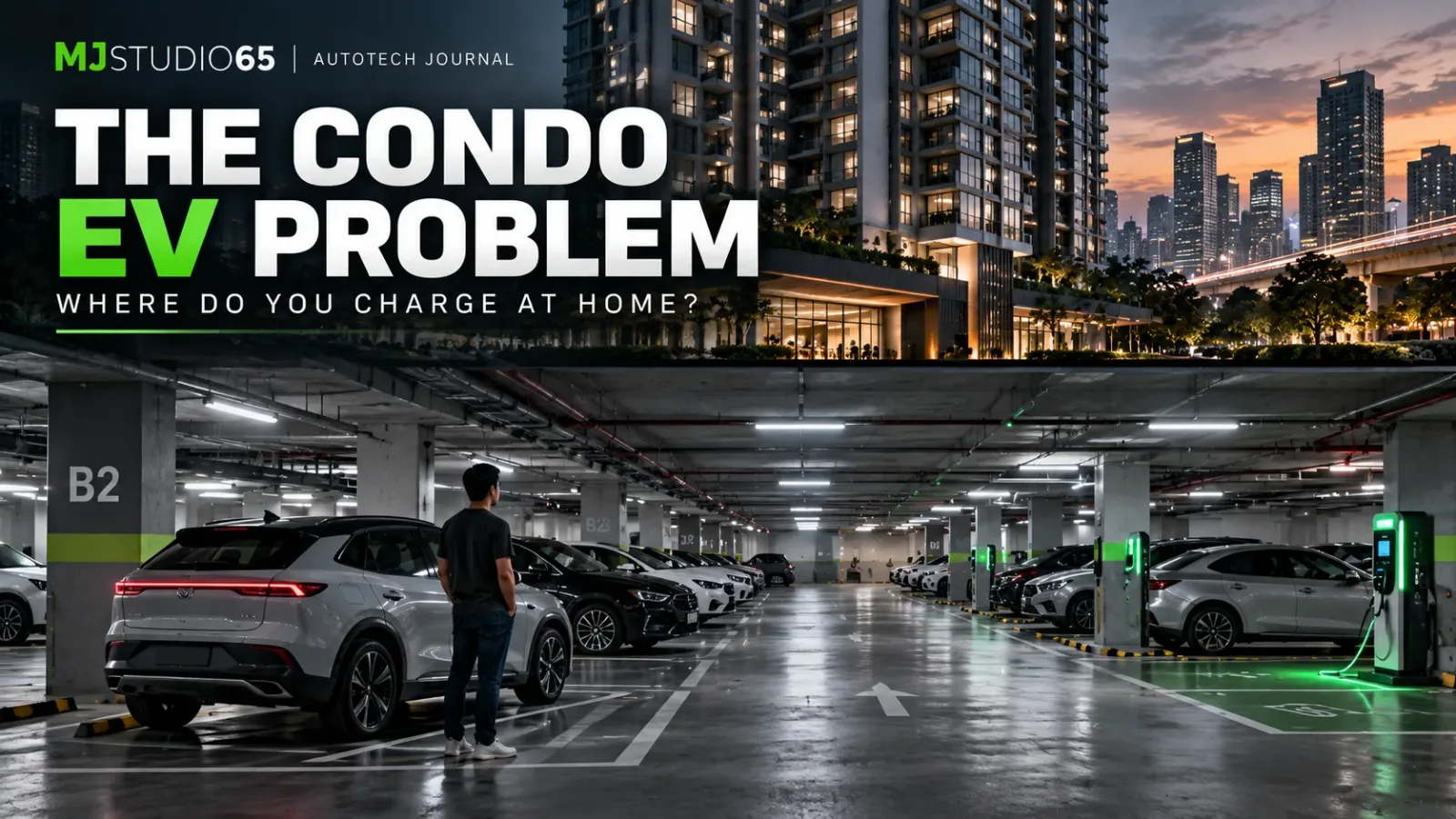
Electric vehicles are becoming easier to imagine owning in the Philippines. More models are arriving, battery ranges are improving, charging networks are expanding, and plug-in hybrids are giving drivers another path toward electrified driving. Yet there is a problem that receives far less attention than range, charging speed or vehicle price. Where will people charge when they get home? For a homeowner with a garage, that question can have a relatively straightforward answer. Install an appropriate charger, plug the vehicle in at night, and wake up with enough energy for another day. For someone living on the 20th floor of a condominium while their vehicle sits several floors underground, the situation can be completely different. They may own the parking space. They may have electricity inside their condominium unit. They may even be willing to pay for the charger themselves. But that doesn't necessarily mean electricity can simply be brought to their parking slot. And as the Philippines becomes more urbanized and more electric vehicles enter cities, this seemingly mundane problem could become one of the most important obstacles to widespread EV ownership.
Home Charging Is One of the EV's Greatest Advantages
Much of the discussion around electric vehicles focuses on public charging stations. How many are there? Where are the fast chargers? How long does charging take? Those are important questions, particularly for long-distance travel. But they can obscure one of the fundamental differences between an electric vehicle and a gasoline car. An EV doesn't necessarily need to visit a charging station every time it needs energy. If you can charge where you live, the vehicle can replenish its battery while you are doing something else eating dinner, spending time with your family or sleeping. That changes the entire ownership experience. A gasoline vehicle generally requires the driver to deliberately visit a fuel station. An EV with reliable home charging can instead begin most mornings with energy already available. But that advantage depends on something we rarely include when discussing EV specifications: Access to electricity where the vehicle is parked. And that is where housing type starts to matter.
The Homeowner Has an Advantage
Imagine two people buying exactly the same electric vehicle. One lives in a house in Cavite with a private garage. The other lives in a condominium in Metro Manila. The first owner may be able to have an electrician assess the property, install the necessary electrical protection and wiring, and place a charger beside the parking area. The condominium owner may face a much longer process. Where will the electricity come from? Can wiring be routed from the resident's meter to the parking space? Does the building have enough electrical capacity? Who owns the electrical infrastructure passing through common areas? Will the condominium corporation allow the installation? How will electricity consumption be measured? Who pays for upgrades to shared electrical equipment? What happens when ten residents want chargers? Fifty? Two hundred? Suddenly, buying the EV may be the easy part.
Philippine Law Already Recognizes EV Parking and Charging
The Philippines isn't starting completely from zero. Republic Act No. 11697, or the Electric Vehicle Industry Development Act (EVIDA), already establishes requirements involving EV parking and charging infrastructure. For private and public buildings with at least 20 parking spaces, the law provides for at least 5% of parking slots to be dedicated to EVs, subject to the framework and timelines established under the Comprehensive Roadmap for the Electric Vehicle Industry. EVIDA also provides a framework for installing charging stations in those dedicated spaces. The regulatory system is continuing to develop. DOE announced another public consultation in September 2026 concerning proposed guidelines for identifying establishments subject to mandated EV-charger installation. That matters. But having EV-designated parking spaces and solving residential charging for individual condominium owners aren't necessarily the same thing. A building might have several shared EV chargers while hundreds of residents own parking spaces. As adoption grows, the challenge changes from providing a few chargers to figuring out how a building supports potentially dozens or eventually hundreds of vehicles.
The Real Question Isn't One EV. It's One Hundred.
Installing the first charger in a condominium may be technically manageable. The harder question is what happens after everyone sees that it works. Imagine a condominium with 500 parking spaces. Today, perhaps five residents own plug-in vehicles. Several years from now, there could be fifty. Eventually there could be hundreds. If every resident independently requests a high-powered electrical connection, the building could face a completely different electrical load from the one its designers originally anticipated. Transformers, distribution panels, wiring, metering and building electrical systems were designed around assumptions about how residents would consume electricity. Hundreds of cars charging downstairs could alter those assumptions significantly. This is why condominium EV charging shouldn't be treated simply as an accessory installation. It is an infrastructure-planning problem. DOE itself has already moved toward this broader perspective. Its 2025 policy requires charging-infrastructure development planning to be integrated into distribution utilities' development planning under EVIDA and CREVI.
But Every Parking Space Doesn't Need a Fast Charger
There is an important misconception here. Making condominiums EV-ready doesn't mean installing an expensive DC fast charger beside every vehicle. In many cases, that would make little sense. A car parked overnight may remain stationary for eight, ten or even twelve hours. That gives the building something public charging stations don't have: time. A highway charging station needs to deliver energy quickly because drivers want to continue their journey. A residential parking space has a completely different job. If a vehicle only needs to replace the energy consumed during normal daily driving, slower overnight charging can often be perfectly practical. That difference could dramatically change how condominiums approach the problem. Instead of asking:
- “How do we provide maximum charging power to every car?”
The better question may be:
- “How do we distribute the electricity we already have intelligently?”
Smart Charging Could Be More Important Than Bigger Electrical Systems
Imagine 100 EVs arriving at a condominium between 6:00 and 9:00 in the evening. They don't all need maximum charging power immediately. One car may only need 10 kWh. Another may need 25 kWh. Another owner may not need the vehicle until 8:00 the following morning. A smart charging system could distribute available electrical capacity among those vehicles throughout the night instead of allowing every charger to demand maximum power simultaneously. Charging could also be shifted toward periods when building electricity demand is lower. This turns EV charging partly into a software problem. The building still needs sufficient electrical infrastructure, of course. But intelligent load management could potentially reduce the amount of additional capacity required. That becomes increasingly important as EV ownership scales.
Existing Condominiums Face the Hardest Problem
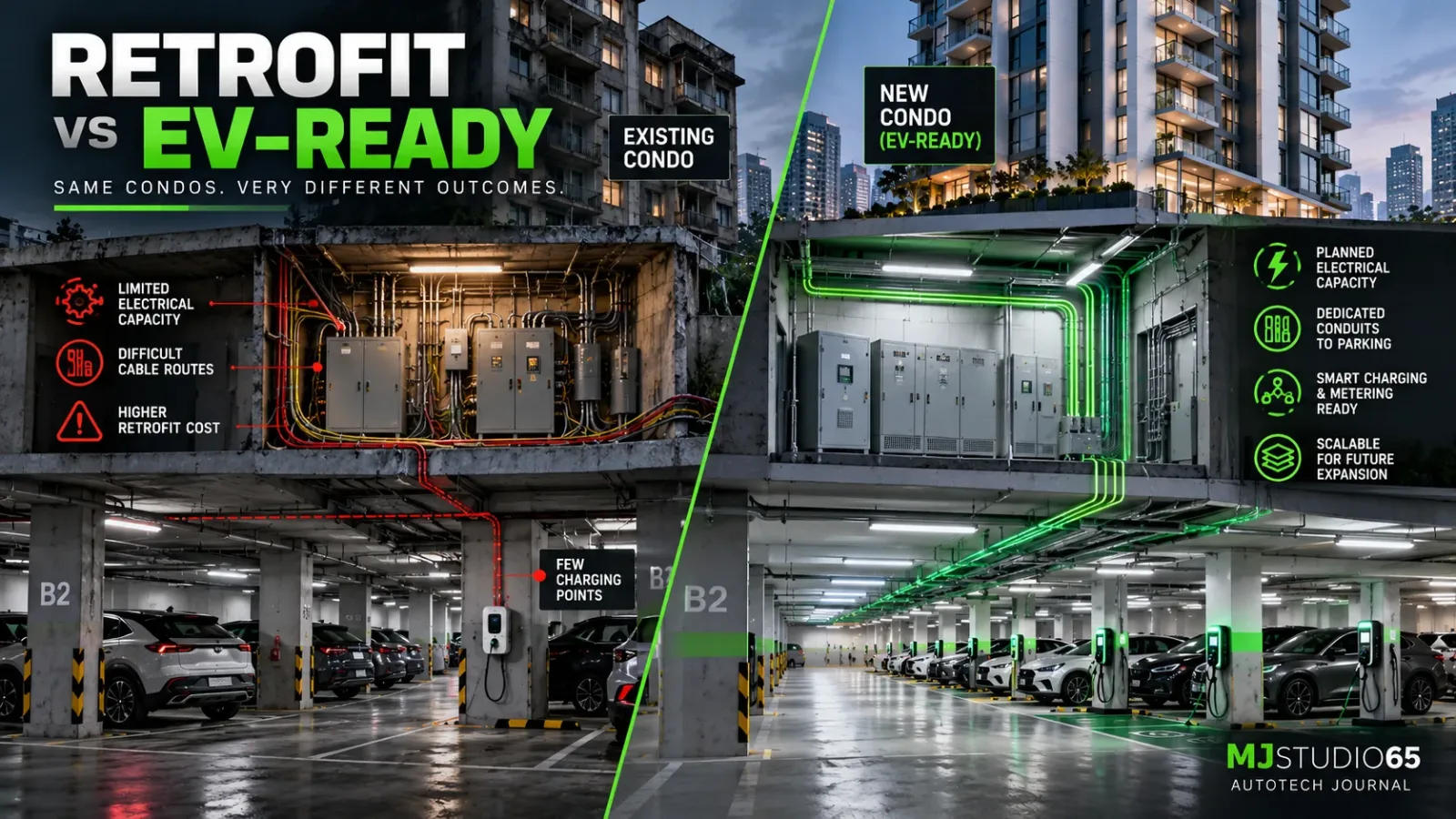 New buildings have an enormous advantage. Developers can anticipate EV charging before concrete is poured. Electrical rooms can be sized appropriately. Cable pathways can be planned. Parking layouts can accommodate charging equipment. Metering systems can be designed around individual users. Communication infrastructure for smart chargers can be included from the beginning. An existing condominium might have none of those advantages. Running a cable to a basement parking slot could involve walls, ceilings, common property, fire-rated spaces and considerable distances between the electrical supply and the vehicle. Increasing electrical load may also require changes beyond the parking area. Meralco, for example, states that requests to increase electrical service load can require a new electrical plan, while multi-metering systems for condominiums and other multi-unit buildings require dedicated infrastructure and civil works. That doesn't mean retrofitting older buildings is impossible. It means planning matters considerably more than simply buying chargers.
New Condominiums Should Be EV-Ready Before They Are EV-Filled
This is where the Philippines has an opportunity to avoid a much more expensive problem later. A new condominium doesn't necessarily need a charger installed at every parking space on opening day. Perhaps only a small percentage of residents will initially own an EV. But there is a major difference between EV-equipped and EV-ready. An EV-equipped building has chargers. An EV-ready building has been designed so that chargers can be added economically as demand grows. That might mean adequate electrical capacity, appropriately sized panels, conduits reaching parking areas, space for additional electrical equipment, network infrastructure for charger management and a clear system for billing individual users. Installing conduit while a building is under construction can be relatively straightforward. Trying to create the same pathway through a finished building years later can be considerably more complicated. The cheapest EV charger may therefore be the infrastructure that developers prepare before the charger is even needed.
Then Comes the Question Nobody Likes: Who Pays?
Suppose a condominium needs a substantial electrical upgrade to accommodate EV charging.
Who should pay for it?
- The EV owner?
- The condominium corporation?
- The developer?
- All residents?
- A charging provider?
There isn't necessarily one correct answer. If one resident wants a charger today, asking hundreds of non-EV owners to finance that individual's installation could understandably create resistance. But the equation changes if the upgrade creates infrastructure that will eventually serve a significant portion of the building. This is why condominiums may need a phased approach. Early users could pay for individual charging equipment while shared infrastructure is developed according to expected demand. Later users could contribute through connection charges or other mechanisms determined by the property. Commercial charging providers could also become part of the solution. EVIDA specifically recognizes both own-use and commercial-use charging stations, while DOE maintains an accreditation system for EV charging-station providers. As of August 31, 2026, DOE reported 422 accredited EVCS providers across operator, service and supplier categories. The important thing is establishing the rules before disputes begin.
Renters Have an Even Bigger Problem
Condominium owners at least have a long-term financial interest in their property. Renters face another calculation. Why would someone spend a significant amount installing permanent electrical infrastructure in a parking space belonging to somebody else? And what happens when the lease ends? This creates another potential barrier to EV adoption that vehicle manufacturers cannot solve by increasing battery range. Apartment buildings and rental condominiums may eventually need charging arrangements that belong to the property rather than the individual tenant. The charger then becomes another building amenity, much like internet infrastructure, security systems or allocated parking. Without solutions like that, EV ownership could become significantly easier for people who own houses than for people who rent apartments even if both can afford exactly the same vehicle.
Safety Should Be Taken Seriously Without Turning It Into Fear
Building administrators are right to take electrical safety seriously. EV chargers can operate for hours and handle substantial electrical loads. Installation therefore needs proper wiring, circuit protection, equipment and inspection. That is very different from concluding that EVs simply shouldn't be allowed in condominium parking areas. DOE encourages stakeholders to use accredited charging-station providers specifically to help ensure installations comply with minimum technical and safety standards. Clear standards are actually one of the best ways to prevent unsafe behavior. If residents cannot obtain a legitimate path to charging, some may eventually look for improvised solutions. Extension cords running through inappropriate areas are not an EV infrastructure strategy. Properly engineered charging systems are. The goal should therefore be neither to ignore safety concerns nor exaggerate them. It should be to establish safe, repeatable installation standards that building administrators can understand and residents can follow.
Public Fast Charging Cannot Solve Everything
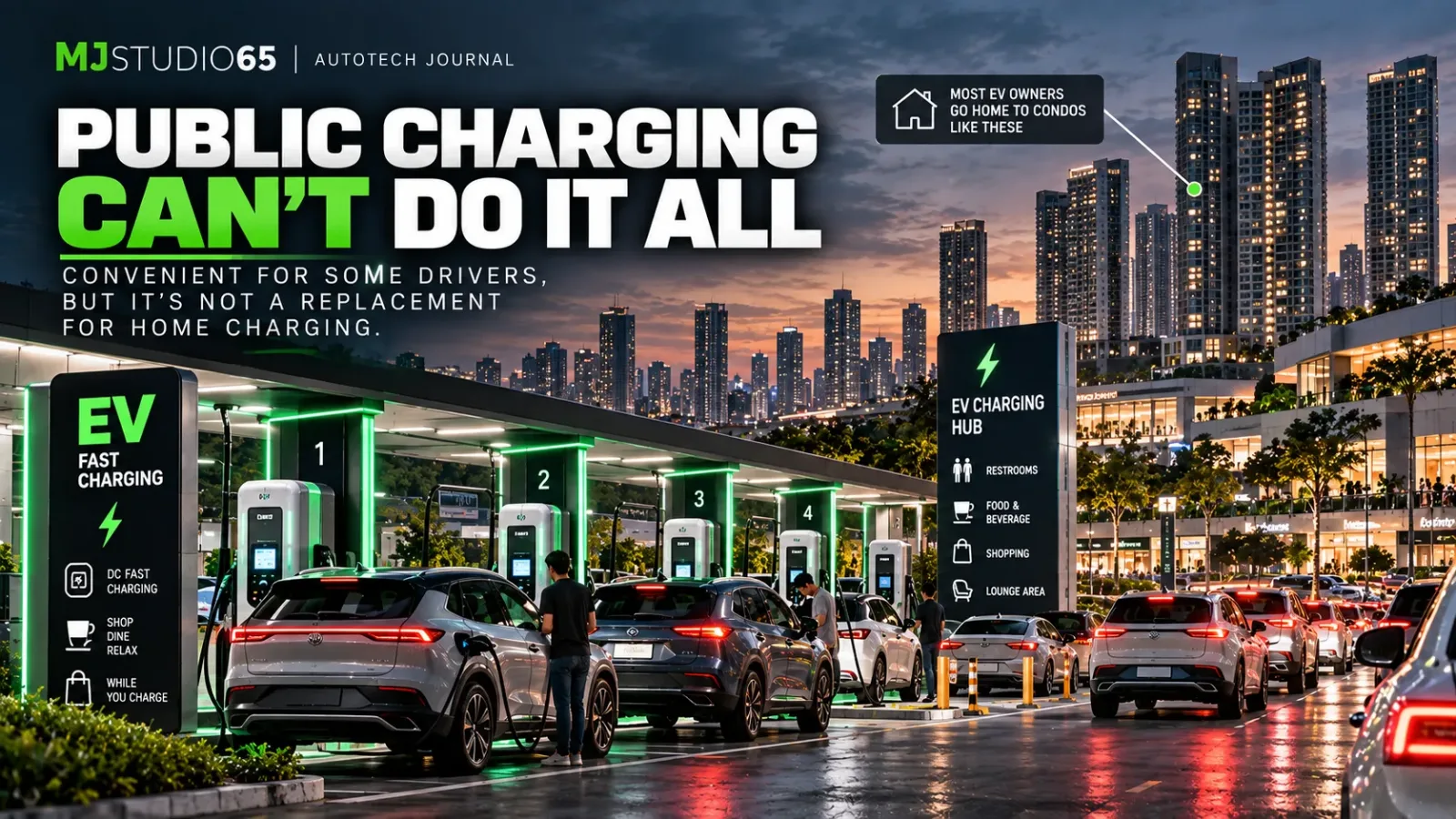 The obvious alternative is to tell condominium residents to use public charging stations. That certainly can work for some owners. But if EV ownership eventually reaches hundreds of thousands or millions of vehicles, requiring a large portion of urban residents to depend entirely on public chargers would reproduce one of the inconveniences EVs were supposed to eliminate. Drivers would travel somewhere specifically to obtain energy. They would wait. They might queue during busy periods. Then they would drive home to a parking space where their vehicle might sit unused for another ten hours. Public charging remains essential. Highway chargers enable long-distance travel. Destination chargers serve shopping centers, hotels and workplaces. Fast chargers provide energy when drivers need it quickly. But residential charging serves another purpose entirely. The two systems complement each other. They shouldn't be treated as substitutes.
Maybe We Are Measuring EV Infrastructure the Wrong Way
Whenever EV infrastructure improves, we tend to ask one question: How many charging stations does the Philippines have? It's an understandable metric because it's easy to count. But it doesn't tell us everything. One thousand chargers located where drivers rarely need them may be less useful than fewer chargers positioned where vehicles naturally remain parked. Perhaps another metric should eventually matter: What percentage of Filipino EV owners can reliably charge where they live? That number would tell us something fundamentally different about EV readiness. Because an electric vehicle doesn't spend most of its life driving. Like every other car, it spends most of its time parked. Infrastructure should take advantage of that fact.
The Philippines Can Address This Before It Becomes a Crisis
There is an advantage to confronting this issue now. The transition is still developing. DOE is still refining charging-infrastructure rules, utilities are integrating EV demand into planning, charging providers are expanding, property developers are learning what EV owners require, and many condominiums still have relatively few electric vehicles. That gives the Philippines time to develop a framework before demand becomes much larger. Developers can make new buildings EV-ready. Utilities can anticipate concentrated residential charging loads. Condominium corporations can establish installation and billing procedures. Charging companies can develop shared residential systems. Government can establish consistent technical and safety requirements. And existing buildings can begin assessing what upgrades they may eventually need rather than waiting until dozens of residents request chargers simultaneously. None of this requires every condominium parking space to receive a charger tomorrow. It requires accepting that many of those parking spaces may eventually need access to electricity.
The EV Transition Doesn't End at the Parking Garage Entrance
Electric vehicles are often presented as a transportation transition. But widespread electrification eventually becomes a housing, building, electricity and urban-planning issue as well. Manufacturers can build EVs with 500 kilometers of range. Battery companies can develop faster-charging cells. Charging networks can install powerful highway chargers. Governments can offer incentives. But none of those things completely solves the problem of an EV owner arriving home at night and discovering that the parking space where the vehicle will remain for the next ten hours has no practical way to supply it with electricity. That may become particularly important in Metro Manila and other increasingly dense Philippine cities. The country's EV future therefore won't be determined only on highways, dealership floors or public charging maps. Part of it will be decided several floors underground, inside ordinary condominium parking garages. And perhaps the way we judge whether the Philippines is truly ready for electric vehicles should eventually become very simple: Don't just count how many public chargers we have. Count how many Filipinos can plug in where they sleep.



Comments
No comments yet. Be the first to join the discussion.