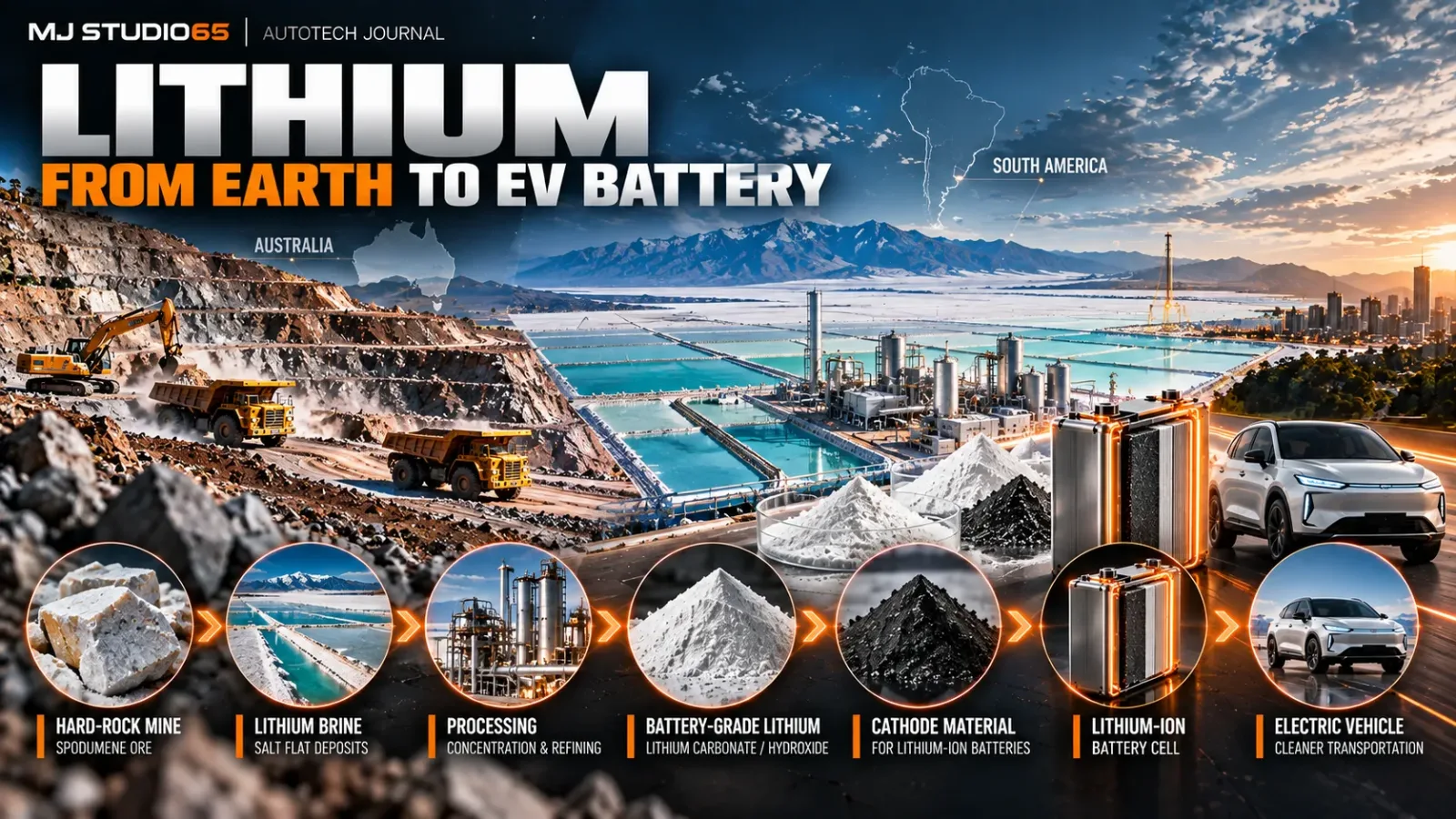
From the Earth to the EV Battery: The Hidden Journey of Lithium
Electric vehicles are often described as battery-powered cars, but inside almost every modern EV battery is an element whose importance extends far beyond the name “lithium-ion.” Lithium is one of the fundamental materials that makes today's rechargeable battery technology possible. Whether an electric vehicle uses nickel-manganese-cobalt chemistry, nickel-cobalt-aluminum chemistry or lithium iron phosphate, lithium remains part of the electrochemical system that stores and releases energy. That makes lithium different from some of the other materials we have discussed. An EV manufacturer can switch from an NMC battery to LFP and eliminate nickel and cobalt from the cathode. But it has not eliminated lithium. As electric vehicles and stationary energy storage have expanded, lithium demand has risen rapidly. The International Energy Agency reported that lithium demand increased by around 25 percent per year on average during the previous two years, and its 2026 outlook projects lithium demand to more than triple by 2040 under stated policies. But lithium does not begin its life as a clean white powder inside a battery factory. It can begin inside hard rock beneath an Australian landscape, dissolved within brine underneath a South American salt flat, or potentially within geothermal water and other emerging resources. Before it becomes part of an EV battery, lithium must be extracted, concentrated, chemically processed, purified and transformed into battery-grade material. That journey creates its own environmental and human questions. To understand what lithium really means for electric vehicles, we need to follow it from the earth all the way to the battery.
Why Lithium Matters to an EV Battery
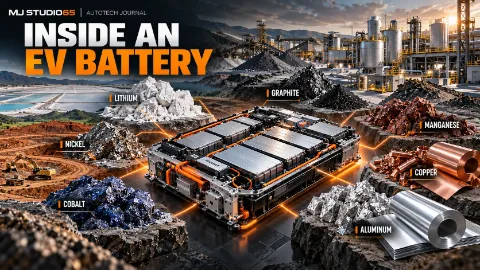
The name “lithium-ion battery” gives us an important clue about what happens inside the cell. During charging and discharging, lithium ions move between the battery's positive and negative electrodes through an electrolyte. Electrons travel through the external electrical circuit, providing the electrical energy that ultimately powers the vehicle. When the battery charges, lithium ions move toward the anode, where they are stored. When the battery discharges, those ions move back toward the cathode while electrons flow through the external circuit. This reversible movement is what allows the battery to be charged again and again. Lithium is particularly useful because it is the lightest metal on the periodic table and has electrochemical properties that make it highly suitable for rechargeable batteries with high specific energy. But lithium does not work alone. A typical lithium-ion cell contains an anode commonly based on graphite, a cathode whose composition depends on battery chemistry, an electrolyte through which lithium ions move, a separator preventing direct electrical contact between the electrodes, and copper and aluminum current collectors. Lithium is therefore part of a much larger engineered system. And unlike nickel, its importance extends across several of today's dominant EV battery chemistries.
- NMC batteries contain lithium.
- NCA batteries contain lithium.
- LFP batteries contain lithium.
That makes lithium one of the common threads connecting much of the modern EV battery industry.
Where Does Lithium Come From?
Lithium is relatively abundant in the Earth's crust, but economically useful concentrations are much less common. The material can come from several geological sources, but today's industry is dominated by two broad categories: hard-rock mineral deposits and lithium-rich brines. Hard-rock lithium commonly comes from pegmatite deposits containing lithium-bearing minerals such as spodumene. Australia has become particularly important in this part of the supply chain. The second major source is brine. In certain arid regions, lithium becomes concentrated in highly saline underground waters associated with closed geological basins and salt flats known as salars. Some of the world's best-known lithium brine resources are found in South America. There are also other potential sources. Lithium can occur in clay deposits, geothermal brines and oilfield brines, and companies and researchers continue exploring technologies capable of recovering lithium economically from these resources. The U.S. Geological Survey estimates that measured and indicated global lithium resources now total around 150 million tonnes. But having lithium underground does not automatically make a deposit economically or environmentally practical to develop. Concentration, chemistry, geology, water availability, infrastructure, processing requirements, energy costs and environmental conditions all influence whether a resource can become an operating lithium project.
Two Very Different Roads to Lithium
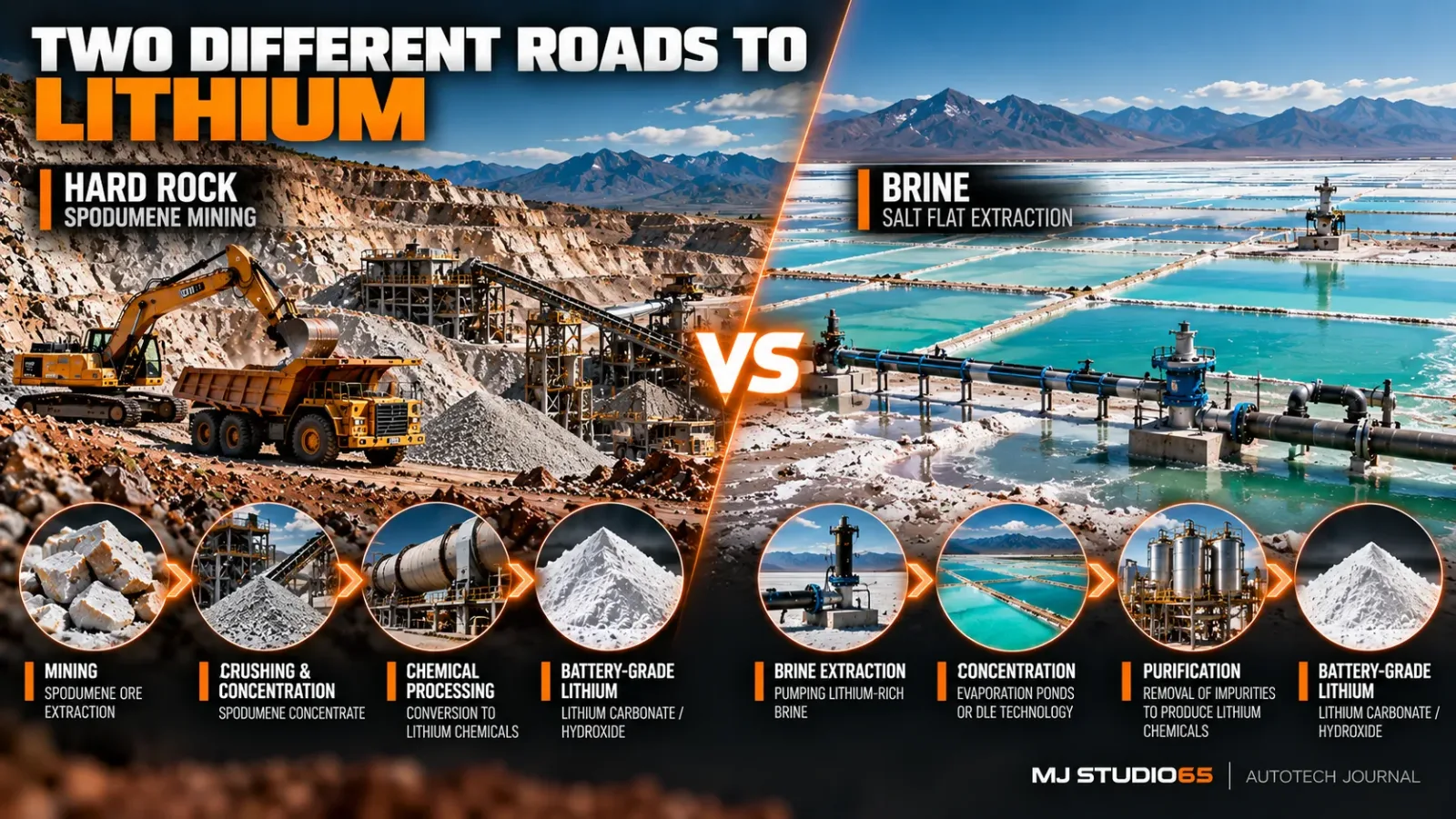 One of the biggest misconceptions surrounding lithium is the idea that there is a single process called “lithium mining.” There isn't. Consider two lithium atoms that eventually end up inside identical EV batteries. One might begin locked inside a piece of spodumene-bearing rock extracted from a mine in Australia. The other might begin dissolved in highly saline brine beneath a salt flat in South America. Both eventually become battery-grade lithium chemicals, but their journeys to reach that point can be completely different. Hard-rock lithium extraction looks much more like conventional mining. Rock containing lithium-bearing minerals is drilled, blasted or excavated and transported to a processing facility. The ore is crushed and ground before mineral concentration processes separate spodumene or other lithium-bearing minerals from unwanted material. The resulting concentrate still isn't ready for a battery. It must undergo additional thermal and chemical processing to extract the lithium and convert it into compounds such as lithium carbonate or lithium hydroxide. Brine extraction follows another route. Wells are drilled into underground brine reservoirs, and lithium-bearing brine is brought to the surface. Conventional operations can use large evaporation ponds where solar energy gradually removes water and concentrates dissolved salts over an extended period. Additional processing then separates unwanted elements and ultimately produces lithium compounds suitable for further purification. Same element. Very different landscapes. Very different processing routes. And potentially very different environmental footprints.
Australia, South America, China and a Global Supply Chain
Lithium production is geographically concentrated, but the countries with the largest resources are not necessarily the same countries producing the most lithium today. According to the U.S. Geological Survey's 2026 estimates, Australia remained the world's largest lithium mine producer in 2025, producing approximately 92,000 tonnes of contained lithium. Chile produced about 56,000 tonnes, while China produced approximately 62,000 tonnes. Argentina's rapidly expanding industry produced about 23,000 tonnes. The resource picture looks different. USGS estimates Argentina has around 28 million tonnes of measured and indicated lithium resources, Bolivia approximately 23 million tonnes and Chile around 13 million tonnes. Together, these countries form the region commonly known as the Lithium Triangle. Australia, meanwhile, has around 10 million tonnes of identified resources and a mature hard-rock mining industry that has allowed it to become a leading producer. But mining is only the beginning. Lithium concentrate or intermediate material can cross international borders before being chemically refined. Cathode materials may then be manufactured somewhere else, cells produced in another factory, battery packs assembled elsewhere and vehicles finally built in yet another country. The lithium inside an EV can therefore accumulate thousands of kilometers of travel before the car itself has driven its first kilometer.
From Rock or Brine to Battery-Grade Lithium
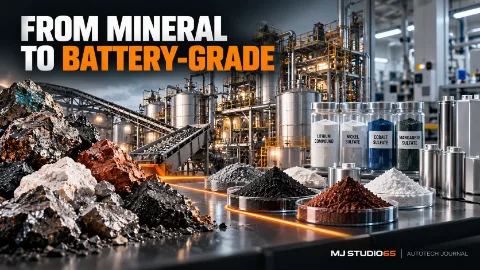
Finding lithium is not the same as producing battery material. Battery manufacturers require highly purified chemicals manufactured to tightly controlled specifications. For hard-rock material, spodumene concentrate undergoes additional processing after leaving the mine. The concentrate can be heated to alter its crystal structure and make the lithium easier to extract. Chemical treatment then separates lithium from the mineral matrix before further purification and conversion. Eventually, producers can manufacture lithium carbonate or lithium hydroxide. Brines take a different route. After lithium concentration or extraction, unwanted elements such as magnesium, calcium and other dissolved substances must be separated. The lithium is then purified and converted into a usable chemical product. Which lithium compound is preferred can depend partly on the battery chemistry and cathode-manufacturing process. What begins as rock or salty underground water has now become an extremely controlled industrial chemical. From there, lithium compounds enter cathode-material manufacturing.
The chain becomes:
LITHIUM RESOURCE → EXTRACTION → CONCENTRATION → REFINING → BATTERY-GRADE LITHIUM → CATHODE MATERIAL → CELL → BATTERY PACK → EV
By the time the lithium reaches the vehicle, almost nothing about its appearance reveals where it began.
The Water Question
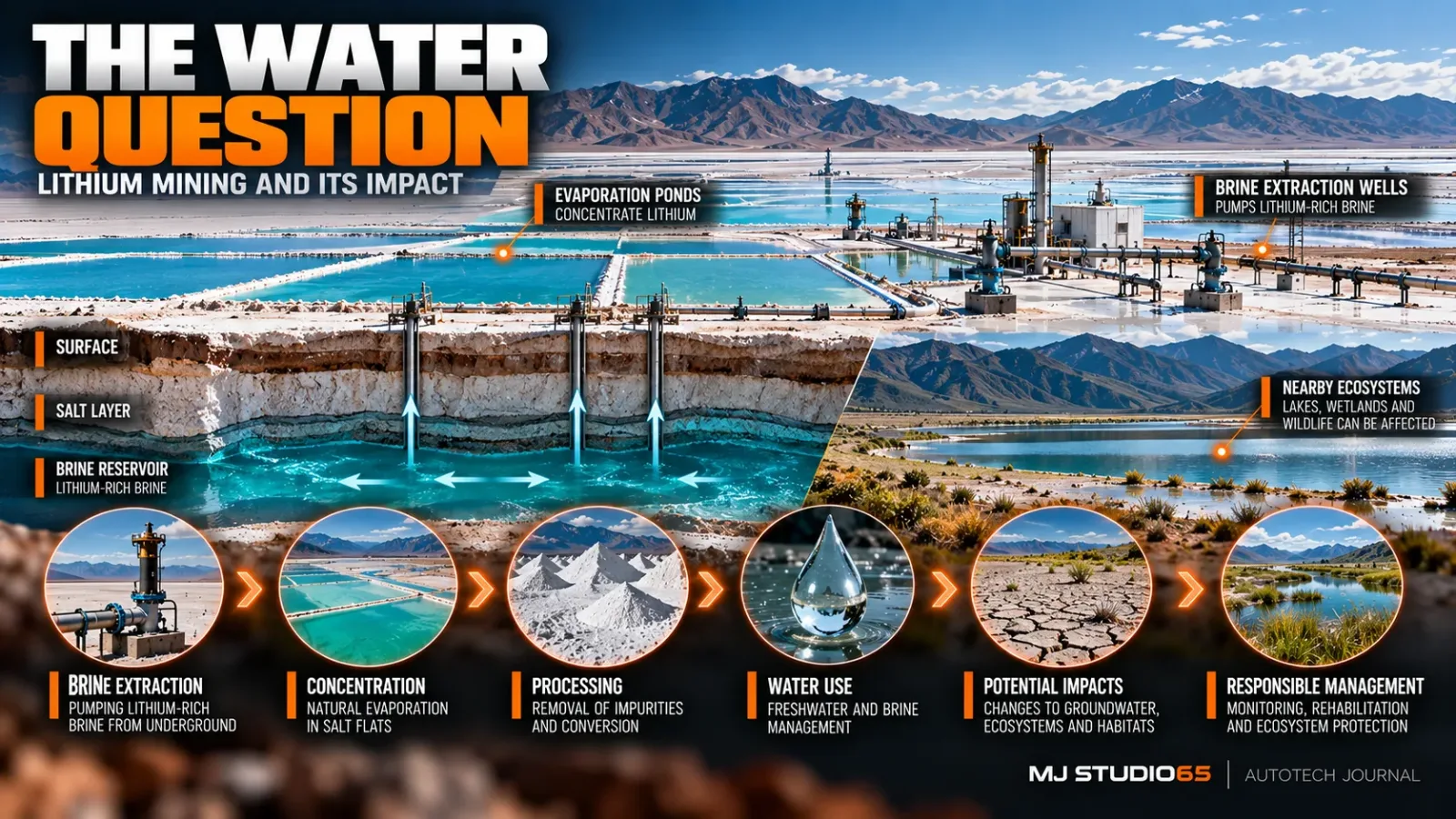 Few environmental issues surrounding lithium have received as much attention as water. But the subject is frequently oversimplified. Statements about how much “water” lithium extraction requires can mix together several very different things: freshwater consumption, saline brine extraction, evaporation, process water and changes to underground hydrological systems. Those distinctions matter. Many South American lithium brine deposits occur in extremely dry environments where water is already scarce and ecosystems can depend on delicate relationships between precipitation, groundwater, freshwater and saline brines. Conventional brine operations pump mineral-rich water from beneath salt flats and concentrate it through evaporation. The environmental question is therefore not simply how many liters of freshwater are directly consumed. Researchers are also studying how removing large volumes of brine may affect subsurface hydrology and whether freshwater and brine systems interact. That relationship can vary significantly from one salar to another. This is why responsible assessment requires detailed local hydrological information rather than one universal number describing the “water footprint” of lithium. Hard-rock lithium mining creates a different water story. Water may be required for mineral processing, dust suppression and other mine operations, while tailings and mine-water systems need to be carefully managed. Once again, the phrase “lithium mining” hides very different processes.
What Happens to the Land?
Hard-rock lithium mining produces the familiar physical footprint of a large mineral operation. Land may be cleared to access ore bodies. Open pits, waste-rock storage areas, roads, processing facilities and tailings-storage systems can occupy substantial areas. Ore extraction also means moving considerably more material than the final amount of lithium produced. After crushing and mineral concentration, much of the original rock remains as waste or tailings that require appropriate management. Brine operations look completely different. A traditional salar project can include production wells, pipelines, processing infrastructure and enormous geometric evaporation ponds stretching across an otherwise sparse landscape. Those colorful ponds have become one of the most recognizable images associated with lithium production. But visually striking does not necessarily tell us everything about environmental impact. The more important questions involve how extraction changes groundwater and brine movement, how waste streams are managed, how much freshwater and energy are required, and what happens to surrounding ecosystems over decades of operation. The environmental footprint of lithium therefore cannot be judged simply by which mining method looks more dramatic from the air.
What About the People?
Mineral deposits do not exist separately from society. Communities live around them. This is particularly important in parts of the South American lithium industry, where salt-flat regions overlap with territories used by Indigenous and local communities. Water can support livestock, agriculture, wetlands, wildlife and traditional livelihoods in environments where it is already extremely scarce. Questions about lithium extraction can therefore become questions about who has access to water, who participates in decisions, who receives economic benefits and who carries environmental risk. The International Labor Organization highlighted these issues in Chile in late 2025 when representatives of more than 20 Colla, Quechua and Aymara communities participated in discussions surrounding the country's lithium strategy. The discussions emphasized consultation, participation, environmental concerns and responsible business conduct. But lithium development can also bring employment, infrastructure, investment and government revenue. As with nickel mining, presenting communities only as victims or only as beneficiaries misses the complexity. The more useful questions are whether consultation is meaningful, environmental information is transparent, communities participate in decisions affecting their territories and benefits are distributed fairly. The energy transition may be global. Its consequences are often intensely local.
The Workers Behind Lithium
There is also a human story inside the mine and processing plant. Hard-rock lithium operations share many hazards found throughout the mining industry: heavy machinery, blasting, vehicle movements, dust, noise, working at height and interaction with large processing equipment. Chemical conversion and refining introduce different industrial hazards. High temperatures, acids, alkaline chemicals and other reagents may be used depending on the processing route. Workers therefore require appropriate engineering controls, training, protective equipment and exposure monitoring. Brine operations create their own working environments involving wells, pumping systems, processing plants, chemical handling and remote desert conditions. None of this means that lithium itself makes an electric vehicle dangerous to its occupants. The industrial environment where lithium is extracted and processed is completely different from the sealed battery system installed underneath a finished vehicle. Understanding that distinction is important. The occupational question concerns how the material is produced, not simply whether lithium exists inside the battery.
Is Direct Lithium Extraction the Answer?
A newer family of technologies could significantly change how some lithium brines are processed. It is commonly known as Direct Lithium Extraction, or DLE. Instead of relying primarily on years or months of solar evaporation to gradually concentrate lithium, DLE technologies attempt to selectively remove lithium ions from brine. Different approaches use technologies such as adsorption materials, ion exchange, membranes or solvent-based separation. The potential advantages are significant. DLE could potentially recover lithium much faster than conventional evaporation, achieve higher recovery rates and reduce the enormous surface footprint associated with evaporation ponds. Some technologies may also allow lithium-depleted brine to be returned underground. That has led to DLE sometimes being presented as a cleaner solution to lithium extraction. But “direct” does not automatically mean environmentally harmless. A major review in Nature Reviews Earth & Environment found that DLE systems still need to be evaluated for freshwater requirements, energy consumption, chemicals and waste production. Some processes require heating or chemical adjustments, and relatively few experimental studies at the time had been performed using real-world brines. Returning depleted brine underground also raises questions about chemistry, pressure and subsurface hydrology that must be understood for each site. DLE could become an important part of a lower-impact lithium industry. But its environmental performance should be measured rather than assumed.
Lithium Demand Is Growing Even When Battery Chemistry Changes
Battery technology is changing rapidly. Nickel provides a good example. An automaker switching from NMC to LFP can remove nickel and cobalt from the cathode entirely. But lithium remains. That makes lithium unusually difficult to substitute within today's dominant battery technologies. The International Energy Agency reported that global lithium demand has recently been increasing by around 25 percent annually, driven heavily by batteries for electric vehicles and stationary energy storage. Its 2026 outlook expects lithium to experience the strongest demand growth among major critical minerals, rising more than threefold by 2040 under current stated policies. Battery chemistry can still affect how much lithium is required per unit of storage, and future technologies could change the equation. But simply replacing NMC with LFP does not remove lithium from the supply chain. This is one reason securing lithium resources, refining capacity and recycling infrastructure has become strategically important for governments and manufacturers.
Can Lithium Be Recycled?
There is something fundamentally different about lithium compared with gasoline or diesel. When gasoline powers a combustion engine, the fuel is chemically transformed and its carbon ultimately leaves primarily as gases through the exhaust. Lithium inside a battery does not disappear when the vehicle is driven. After years of charging and discharging, the battery may degrade until it is no longer suitable for automotive use, but many of its materials remain physically present. That creates the possibility of recovery. A recycling facility can discharge and dismantle battery packs before mechanically processing cells into concentrated material commonly called black mass. That mixture can contain lithium along with nickel, cobalt, manganese, graphite and other battery materials, depending on chemistry. Hydrometallurgical and other refining processes can then separate valuable elements and convert them back into usable chemical products. Historically, nickel and cobalt provided particularly strong economic incentives for recycling because of their value. The rise of LFP changes that equation because LFP contains neither nickel nor cobalt in its cathode. Recovering lithium efficiently therefore becomes increasingly important if enormous numbers of LFP batteries eventually enter the recycling stream. The IEA says lithium recycling remains at an early stage but expects it to expand rapidly. Across critical energy minerals more broadly, secondary supply could roughly double its contribution by 2040 under today's policy settings. Recycling cannot eliminate mining in the near term because EV and energy-storage markets are expanding faster than old batteries are becoming available. But eventually, increasing quantities of lithium could come from batteries rather than exclusively from geological deposits.
That changes the long-term material chain from:
EARTH → LITHIUM → BATTERY → VEHICLE → WASTE
toward:
EARTH → LITHIUM → BATTERY → VEHICLE → RECYCLING → NEW BATTERY
The closer the industry gets to that second model, the more value can be extracted from lithium that has already been mined.
Is Sodium-Ion a Threat to Lithium?
Lithium-ion is not the only battery technology under development. Sodium-ion batteries replace lithium ions with sodium ions, using an element that is far more abundant and widely distributed. That creates an interesting possibility. If sodium-ion technology captures significant portions of stationary energy storage, inexpensive city vehicles and other applications where maximum energy density is less important, some future battery demand could be met without lithium. But this does not mean lithium-ion batteries are about to disappear. The lithium-ion industry already has enormous manufacturing infrastructure, mature supply chains and decades of technological development behind it. Lithium-based chemistries also continue improving. Sodium-ion is therefore better understood as another branch of an increasingly diverse battery industry rather than an immediate replacement for lithium-ion technology. We may eventually see different chemistries optimized for different jobs. Long-range vehicles might use one chemistry. Affordable city EVs another. Grid storage another. Premium performance vehicles could use something different again. Battery technology may become less about finding one universal chemistry and more about using the right materials for each application.
The Metal That Moves Between Two Worlds
Lithium illustrates one of the central realities of electric transportation. An electric vehicle may drive through a city without producing exhaust from a tailpipe, but the materials enabling that vehicle to move have already passed through mines, wells, processing plants, refineries, factories and global transportation networks. Some lithium begins inside hard rock beneath an Australian landscape. Some begins dissolved in brine beneath a South American salt flat. From there, it can travel thousands of kilometers, become lithium carbonate or lithium hydroxide, enter a cathode factory, become part of a battery cell, join hundreds or thousands of other cells inside a battery pack and finally arrive underneath an electric vehicle. That journey has environmental consequences. Land can be disturbed. Water systems can be affected. Energy is consumed. Waste is generated. Workers encounter industrial hazards. Communities can receive economic opportunities while also facing questions about water, land, consultation and long-term environmental change. Recognizing those impacts does not require rejecting electric vehicles. It requires understanding that cleaner transportation still depends on physical materials and therefore on how responsibly we obtain, process, use and eventually recover those materials. Lithium also offers something fossil fuels cannot. It can remain inside the material economy. After years of moving back and forth inside an EV battery, lithium can potentially be recovered, purified and placed into another battery. That makes recycling one of the most important parts of lithium's future. The goal should not simply be to extract enough lithium to electrify transportation. It should be to build a system where less material is wasted, environmental impacts are carefully managed, communities participate meaningfully in decisions, workers are protected and increasingly more lithium circulates from one generation of batteries into the next. Every time an electric vehicle charges, lithium ions move inside its battery. But their longest journey happened before the vehicle ever reached the road.
Comments
No comments yet. Be the first to join the discussion.