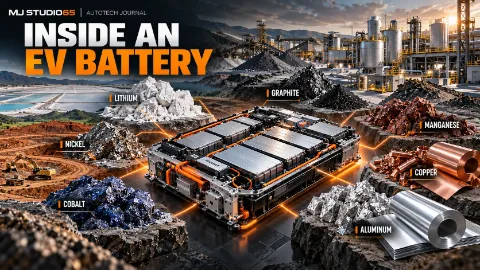
The battery sitting beneath the floor of an electric vehicle looks like a finished piece of modern technology. It arrives at the vehicle factory sealed inside a carefully engineered enclosure containing battery cells, electronics, cooling systems and numerous safety components. Once installed, most drivers will never actually see what is inside it. Yet the story of that battery does not begin in a battery factory. It begins much earlier, often thousands of kilometers away, with materials extracted from the earth. An electric vehicle battery does not begin its life inside a high-tech factory. Long before it becomes a battery pack beneath an EV, its materials have already gone through a complicated journey involving geology, mining, chemical processing, manufacturing and transportation. Lithium, nickel, cobalt, manganese, graphite, copper, aluminum, iron and other materials may all contribute to that journey, depending on the battery chemistry being used.
To understand the real environmental impact of an EV battery, it helps to follow that journey from beginning to end:
Where the Battery Really Begins
Every EV battery ultimately starts with materials found in the earth. Lithium can be obtained from mineral-rich hard rock or lithium-containing brines. Nickel, cobalt, manganese, copper and aluminum begin with mineral deposits that must be extracted and processed. Graphite, the material commonly used in lithium-ion battery anodes, can come from natural deposits or be manufactured synthetically from carbon-rich materials. These resources are not evenly distributed around the world. Different countries possess different mineral deposits, while processing capacity may be concentrated somewhere else entirely. This means that even before a battery cell is manufactured, its raw materials can already be part of a global supply chain. The environmental story of a battery therefore starts before anything has actually been mined. Mineral deposits exist within landscapes, ecosystems and sometimes areas inhabited or used by local communities. Deciding where and how these resources are extracted is the first point at which battery production can interact with the environment and people.
Getting the Materials Out of the Ground
Once a commercially useful deposit has been identified, the materials have to be extracted. The method depends heavily on the mineral and geology involved. Some battery minerals are obtained through open-pit or underground mining, while some lithium is produced from brines that are pumped from underground reservoirs and processed at the surface. Mining is one of the most visible environmental impacts associated with battery production. Removing vegetation and soil, excavating rock, constructing roads and operating heavy machinery can alter landscapes and habitats. Mining can also generate large quantities of waste rock and tailings because the valuable material may represent only part of the material removed from the ground. Water is another important issue. Mining and mineral processing can require water, and poorly managed operations can potentially affect surrounding water systems through sediment, waste or chemical contamination. Workers may also encounter dust, noise, heavy machinery and other occupational hazards. The scale of these impacts varies significantly depending on the mineral, mining technique, location, environmental safeguards and how individual operations are managed.
A Rock Is Not Yet a Battery Material
Removing ore from the ground is only the beginning. A piece of nickel-bearing rock, lithium ore or copper ore cannot simply be placed inside a battery. The desired material has to be separated, concentrated, chemically processed and purified. This stage is less visible to consumers but is extremely important when discussing the environmental footprint of batteries. Crushing and grinding rock requires energy. Chemical processing may require heat, electricity, acids or other reagents. Refining can also produce wastewater, emissions and solid residues that have to be properly managed. The energy source matters as well. Two batches of the same battery material can have different carbon footprints depending on the ore grade, processing method, efficiency of the facility and whether the electricity and heat used during refining come primarily from coal, natural gas, renewable energy or other sources.
Turning Minerals Into Precise Chemicals
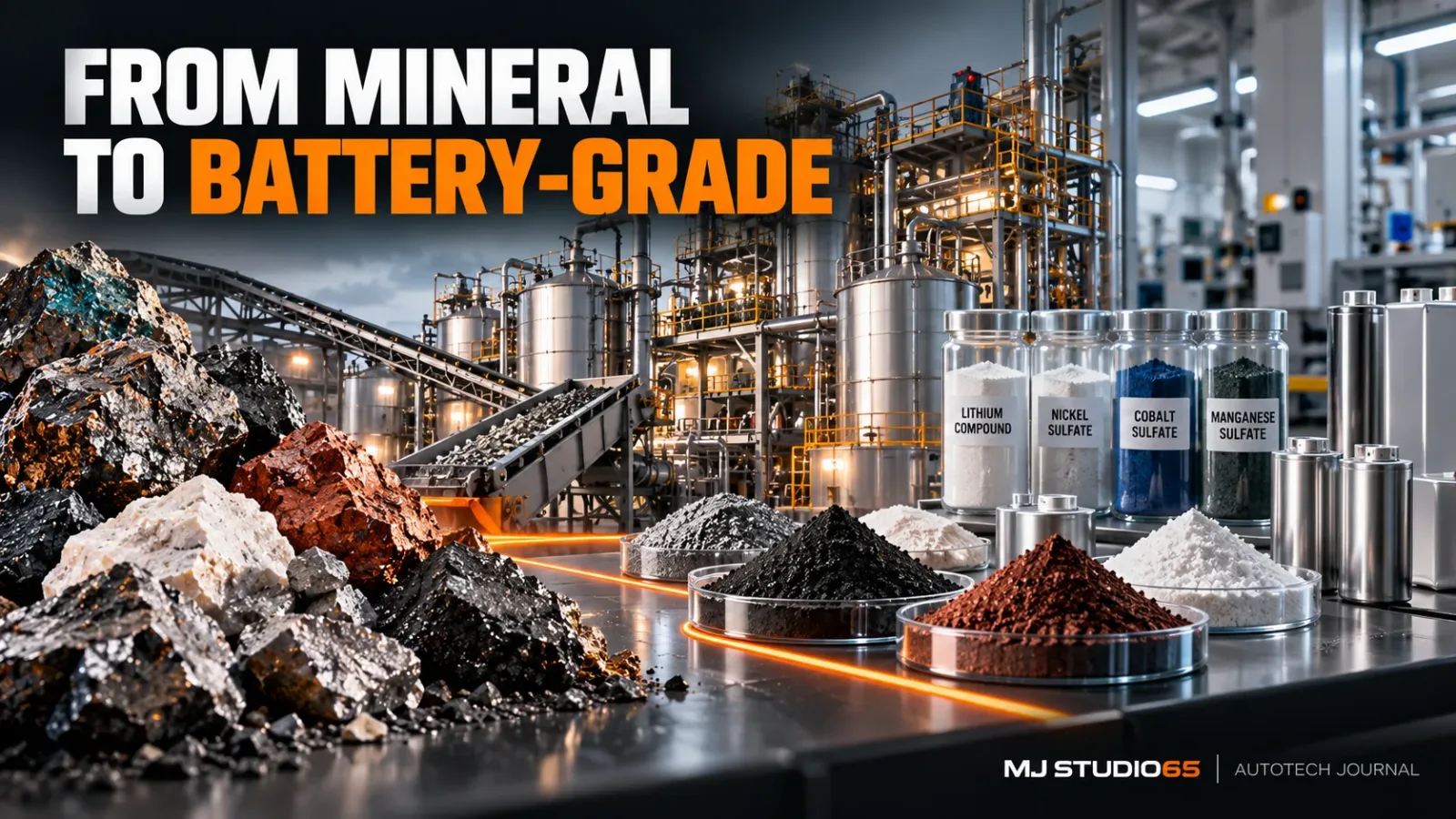
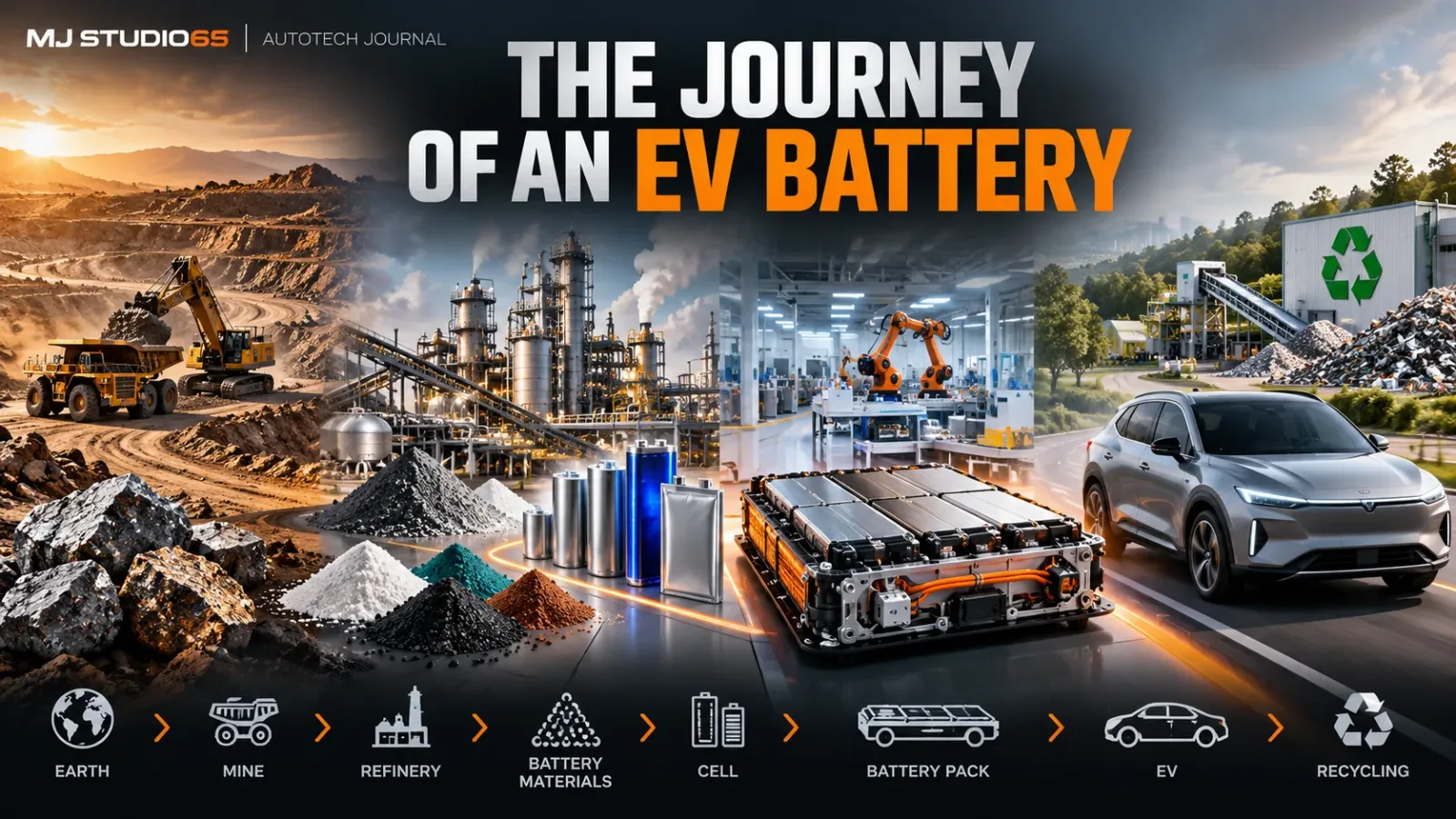 After refining, the materials begin to resemble what battery manufacturers actually need. Lithium, for example, can be converted into battery-grade lithium carbonate or lithium hydroxide. Nickel, cobalt and manganese can be processed into highly purified compounds used to manufacture certain cathode materials. Graphite must also be processed and purified before it can become suitable for an anode. Battery manufacturing demands extremely controlled material properties and high levels of purity. Small amounts of unwanted material can affect battery performance, lifespan or safety. Consequently, producing battery-grade material involves considerably more than simply extracting a mineral from the ground. This is also where battery chemistry starts making a major difference. An NMC battery uses nickel, manganese and cobalt in its cathode, while an LFP battery instead relies primarily on lithium, iron and phosphate for the cathode and does not require nickel or cobalt there. Different chemistries therefore create different demands on mining and processing industries and carry different environmental and supply-chain considerations.
Where the Battery Finally Takes Shape
Only after this long material journey do we reach what most people would recognize as a battery. Inside a lithium-ion cell are several key components: a cathode, an anode, electrolyte, separator and current collectors. The cathode stores lithium within a material whose composition depends on the battery chemistry. The anode is commonly graphite-based. Between them is a separator that keeps the electrodes physically apart while allowing lithium ions to move through the electrolyte. Copper and aluminum foils commonly act as current collectors, carrying electrical current into and out of the electrodes. Manufacturing these components requires highly controlled industrial processes. Electrode materials are mixed, coated onto thin metal foils, dried and compressed before being assembled into cells. Cell manufacturing also requires strict control of moisture and contamination. All of this requires energy, sophisticated machinery and carefully controlled factory environments.
Hundreds of Components Become One System
A single battery cell cannot normally power an entire electric vehicle. Cells are combined into larger structures, although modern battery designs increasingly differ in whether conventional modules are used or cells are integrated more directly into the pack. The finished battery pack contains far more than cells. It can include structural components, electrical connections, cooling channels, sensors, protective systems and a battery management system that constantly monitors voltage, temperature and other operating conditions. The enclosure must protect the battery from water, debris, vibration and impacts while also helping manage the considerable heat generated during charging and driving. By this stage, materials extracted from the earth have been transformed into one of the most technologically sophisticated and expensive components of an electric vehicle.
Years of Use Begin
Once installed in an EV, the battery begins the longest phase of its journey. Instead of being consumed during every trip, the materials remain inside the battery while lithium ions repeatedly move between the electrodes as the vehicle charges and discharges. This distinction is important when comparing an EV with a combustion vehicle. Producing an EV battery carries an upfront environmental cost from mining, refining and manufacturing. A gasoline or diesel vehicle also requires materials to manufacture, but it additionally depends on a continuous supply of petroleum throughout its life. Oil must repeatedly be extracted, transported, refined, distributed and eventually burned. The environmental impact of the EV during this stage depends heavily on where its electricity comes from, how efficiently the vehicle uses that electricity, how large its battery is and how long the vehicle and battery remain in service. The manufacturing footprint therefore represents only one part of a much larger lifecycle.
Can the Journey Become a Circle?
Eventually, every EV battery will reach the end of its automotive life. That does not necessarily mean its materials have reached the end of theirs. Some batteries may first be considered for second-life applications where their remaining capacity can still be useful for less demanding stationary energy storage. Eventually, however, batteries can be dismantled and processed so valuable materials can be recovered. Several recycling approaches are being developed and used, including processes based on high-temperature treatment and chemical recovery. The objective is to recover useful materials such as lithium, nickel, cobalt, copper and other components so that they can potentially return to manufacturing instead of being permanently discarded. This is one of the fundamental differences between battery materials and fossil fuels. Gasoline burned inside an engine cannot be recovered from the exhaust and turned back into gasoline. Metals and other useful battery materials, however, can potentially circulate through the economy multiple times if batteries are properly collected, processed and recycled.
That does not make batteries environmentally free. Mining still affects land. Refining still consumes energy. Manufacturing still creates emissions and waste, and recycling itself also requires energy and industrial processing. But recycling creates the possibility of gradually reducing the amount of newly extracted material required for each generation of batteries. The EV battery beneath a vehicle, therefore, is not simply a large box that stores electricity. It represents an entire industrial chain stretching from geological deposits beneath the earth to mines, refineries, chemical plants, battery factories and vehicle assembly lines and, eventually, potentially back into another battery. Understanding that journey is necessary before asking the bigger question: What environmental and human cost is created at each step along the way?
Comments
No comments yet. Be the first to join the discussion.