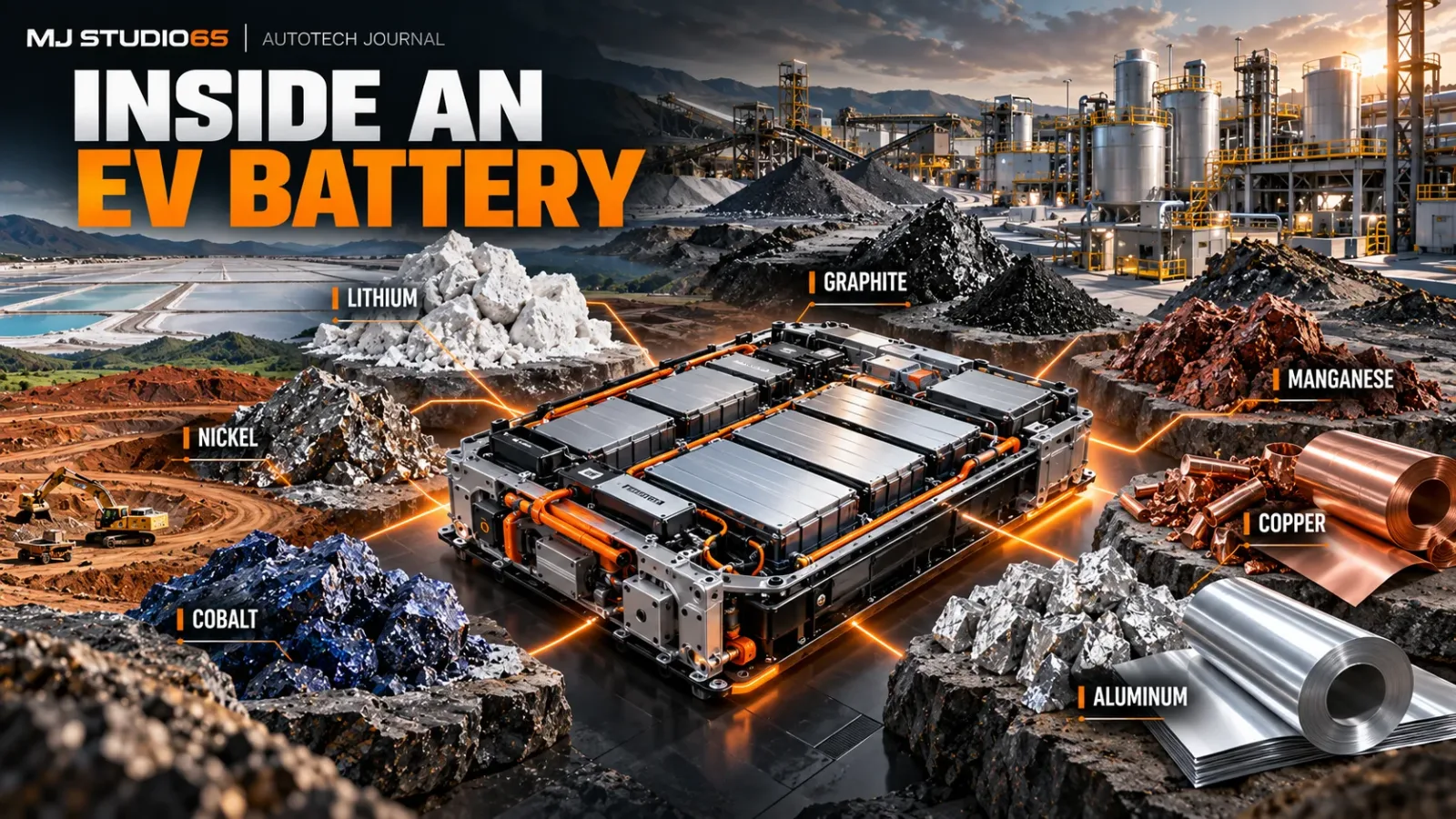
When we look at an electric vehicle, the battery is usually described as a single component: a 60 kWh battery, an 80 kWh battery, an LFP battery or perhaps an NMC battery. That makes the technology sound relatively simple. Beneath the metal enclosure, however, is a collection of materials that may have travelled through mines, refineries and chemical-processing facilities across several countries before becoming part of a battery cell. Lithium gets most of the attention, but an EV battery can also depend on nickel, cobalt, manganese, graphite, copper and aluminum. Some battery chemistries eliminate certain materials entirely. Lithium iron phosphate, or LFP, batteries, for example, do not require nickel or cobalt in their cathodes, while many NMC batteries depend on both. Graphite remains the dominant anode material in conventional lithium-ion batteries, while copper and aluminum are used extensively as current collectors, conductors and structural materials. Demand for these materials has increased alongside EV and energy-storage production. According to the International Energy Agency, lithium-ion battery deployment across applications increased more than sixfold between 2020 and 2025. This has driven increasing demand for lithium, nickel, cobalt and graphite. But where do these materials actually come from, and what happens before they become part of a battery?
Lithium The Material That Gives the Battery Its Name
Lithium is the defining element of today's lithium-ion battery. During charging and discharging, lithium ions move between the battery's positive and negative electrodes. But lithium does not emerge from the ground looking anything like the material eventually used inside a battery. Two important sources are hard-rock deposits and lithium-rich brines. Hard-rock lithium mining involves extracting ore, crushing and concentrating it, followed by chemical processing to produce compounds such as lithium carbonate or lithium hydroxide. Brine production follows a very different route. Lithium-containing brines beneath salt flats can be pumped to the surface and traditionally concentrated through evaporation before further chemical processing. Both methods have environmental trade-offs. Hard-rock mining physically disturbs land and requires mining, crushing and processing large quantities of material. Brine operations raise different questions, particularly around water and the hydrology of often-arid environments. Research published in Nature Reviews Earth & Environment emphasizes that the effects depend heavily on local hydrogeology and that results from one salt-flat operation should not simply be assumed to apply to another. Water deserves particular attention. Brine itself is not the same as drinking water, but extracting and processing lithium can interact with freshwater systems and water availability. Newer direct lithium extraction, or DLE, technologies could avoid the enormous evaporation ponds traditionally associated with brine production, but they are not automatically impact-free. Depending on the technology, DLE can still require freshwater, chemicals and energy. For people living near lithium operations, therefore, the important question is not simply how much lithium is produced. It is how water is managed, how waste is handled, how ecosystems are monitored and how local communities participate in decisions affecting the resources around them.
Nickel The Philippine Connection
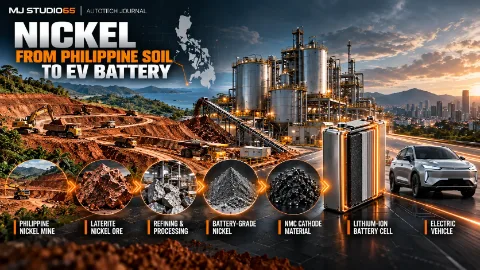
Nickel deserves special attention for readers in the Philippines because this part of the EV battery supply chain can begin much closer to home. Nickel is used in several high-energy battery cathodes, including nickel-manganese-cobalt, or NMC, chemistries. Increasing the proportion of nickel in some cathode designs can help increase energy density, making nickel particularly useful for vehicles where manufacturers want substantial range without making the battery excessively heavy. Much of Southeast Asia's nickel occurs in laterite deposits. These ores are relatively close to the surface and are commonly extracted using open-pit methods. Producing battery-suitable nickel from laterite can then involve considerably more processing. The Philippines remains an important nickel producer. The country's Mines and Geosciences Bureau reported 12.12 million dry metric tons of nickel direct-shipping ore during the first half of 2025, with Caraga alone accounting for 36.6% of that production. Not all of this nickel goes into batteries the stainless-steel industry remains the dominant consumer but EV and energy-storage batteries represent an important source of nickel demand.
This gives the battery transition a direct Philippine dimension. An electric vehicle may be assembled somewhere else, its battery cells may come from China, Korea or another manufacturing center, yet part of its mineral supply chain can originate in places such as the Philippines or neighboring Indonesia. Laterite mining can disturb significant areas of land because deposits occur relatively near the surface. Vegetation removal, soil disturbance, erosion, sediment management and rehabilitation therefore become important environmental considerations. Converting some laterite ores into battery-grade nickel can also be energy- and processing-intensive. One processing route is high-pressure acid leaching, commonly known as HPAL. The IEA has highlighted both the potential of HPAL to produce battery-grade nickel from laterite resources and concerns including carbon emissions, acid production and tailings disposal. Nickel illustrates why asking only where a mineral was mined is insufficient. How it was processed and what energy powered that processing can also significantly influence its environmental footprint.
Cobalt The Most Difficult Human Question
Few battery materials have attracted as much controversy as cobalt. Cobalt helps provide stability and performance in several lithium-ion cathode chemistries, although battery manufacturers have been working to reduce cobalt content and LFP batteries avoid cobalt in their cathodes altogether. A large portion of the world's cobalt supply comes from the Democratic Republic of the Congo. The concentration is striking: the IEA reported that the DRC accounted for almost two-thirds of global cobalt mining in 2023, while much of the subsequent refining took place in China. Cobalt's most serious concerns are not merely geological or environmental. They involve people. The International Labor Organization has documented child-labor risks in the DRC's artisanal cobalt-mining sector and continues to operate programs intended to address the problem. The ILO says more than 100,000 artisanal and small-scale miners work in the country's cobalt sector, where hazardous working conditions and child labor remain concerns. It is important, however, not to describe every Congolese cobalt mine as though it operates under identical conditions. Industrial mining and artisanal mining are different, and individual operations have different practices and oversight. The existence of serious documented abuses should lead to greater traceability and accountability rather than the assumption that every piece of cobalt has exactly the same history. Cobalt therefore demonstrates something that specifications on a battery pack cannot tell us. Two batteries containing the same chemistry can have very different supply-chain stories depending on where their materials originated and under what conditions they were produced.
Graphite The Battery Material We Rarely Talk About
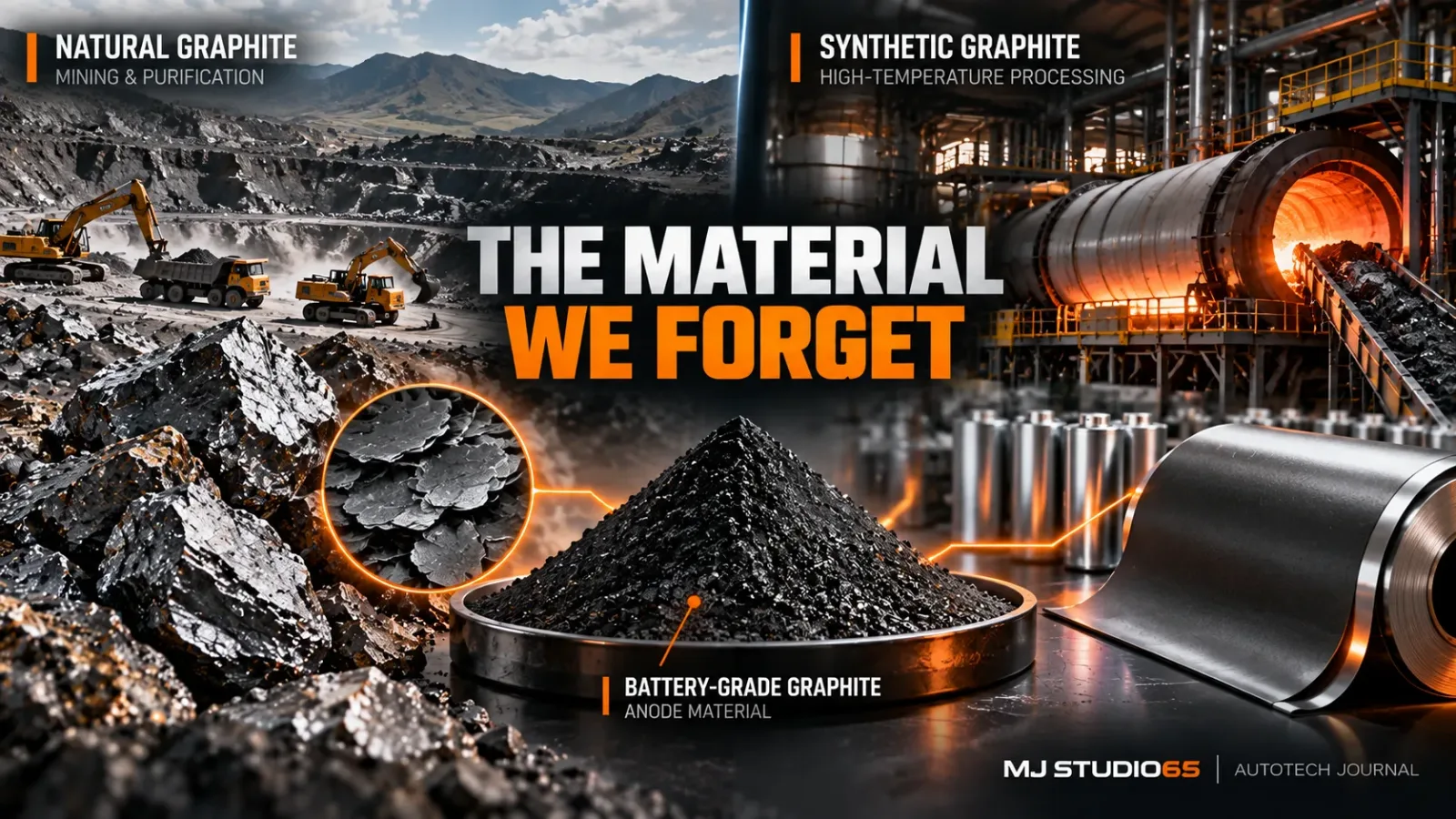 Lithium receives the name recognition, but graphite is just as important to understanding today's lithium-ion battery. Graphite is commonly used as the active material in the anode. During charging, lithium ions travel through the electrolyte and are stored within the graphite structure. That means large-scale battery manufacturing requires enormous quantities of highly processed graphite. Graphite can be natural or synthetic. Natural graphite begins with mining and must then undergo concentration, purification and shaping before becoming suitable for battery use. Synthetic graphite follows a different route, using carbon-rich feedstocks processed at very high temperatures to produce a material with the properties required for battery anodes. The supply chain is also highly concentrated. The IEA reported that China accounted for around 80% of graphite mining and more than 90% of graphite refining in 2023. More recent IEA analysis continues to identify graphite anodes as one of the most geographically concentrated portions of the battery supply chain. The environmental questions differ depending on which route is used. Natural graphite requires mining, purification and waste management. Synthetic graphite avoids graphite mining itself but can require substantial energy during high-temperature manufacturing. Consequently, simply calling one "natural" does not automatically make it environmentally preferable, nor does manufacturing graphite synthetically remove environmental impacts. Graphite reminds us that some of the most important battery materials are also the ones consumers hear least about.
Manganese The Supporting Material with a Growing Role
Manganese appears in several cathode chemistries, particularly NMC batteries, where it works alongside nickel and cobalt. It generally receives less public attention because its supply chain has historically been less associated with EV-specific shortages than lithium, nickel or cobalt. That does not mean it comes without an environmental footprint. Manganese ore still has to be mined, crushed, concentrated and processed into highly purified battery-grade material. Mining operations can create many of the same broader challenges associated with mineral extraction: land disturbance, dust, waste rock, tailings, water management and energy consumption. Its role could also evolve as battery manufacturers experiment with cathodes that use more manganese while reducing reliance on more expensive or supply-constrained materials. Battery chemistry is not static. Changes in cathode design can shift demand from one mineral toward another. That is an important point when discussing the environmental impact of EV batteries: improving one supply-chain problem can sometimes move material demand somewhere else rather than eliminating extraction altogether.
Copper The Electrical Pathway
Copper is not usually described as a "battery metal" in the same way as lithium or cobalt, but an electric vehicle would be extremely difficult to build without it. Inside lithium-ion cells, thin copper foil commonly serves as the current collector on the anode side. Beyond the cells, copper is used in cables, busbars, motors, power electronics, charging equipment and the electrical infrastructure needed to supply the vehicle with energy. Copper begins as ore that must be mined and concentrated. Depending on the deposit, subsequent processing can involve smelting and refining or hydrometallurgical routes. Because copper concentrations in ore can be relatively low, producing refined copper can require moving and processing large quantities of rock. Mine waste, tailings, energy consumption, water use and potential contamination therefore remain important environmental considerations. Occupational exposure to dust and fumes can also be relevant in mining and metallurgical workplaces when controls are inadequate. The World Health Organization identifies mines and metallurgical industries among potential sources of elevated copper exposure. Copper demand also extends far beyond the vehicle itself. Electrification requires more power networks, charging infrastructure and renewable generation, all of which can increase demand for electrical conductors. The IEA projects copper demand to continue increasing as energy systems electrify.
Aluminum Lightweight, Abundant and Energy Intensive
Aluminum appears throughout an electric vehicle. Inside many lithium-ion cells, aluminum foil serves as the cathode current collector. At the pack level, aluminum may also be used for housings, cooling structures and other components where low weight and corrosion resistance are valuable. It is also widely used throughout the vehicle body and chassis. The journey begins mainly with bauxite. The ore is processed to produce alumina, which is then converted into aluminum metal through electrolysis. That final stage requires large amounts of electricity. This means the environmental footprint of primary aluminum can depend strongly on the source of the electricity used by the smelter. Aluminum produced using lower-carbon electricity can have a very different emissions profile from aluminum produced using carbon-intensive power. Mining bauxite also creates its own environmental challenges, including land disturbance and rehabilitation, while refining bauxite into alumina produces a highly alkaline residue commonly known as red mud that requires careful management. Aluminum nevertheless has an important advantage at the other end of its life: it can be recycled. Recovering aluminum from existing products generally avoids much of the energy required to produce primary metal from ore, making collection and recycling an important part of reducing its lifecycle footprint.
The Battery Chemistry Changes the Mining Story
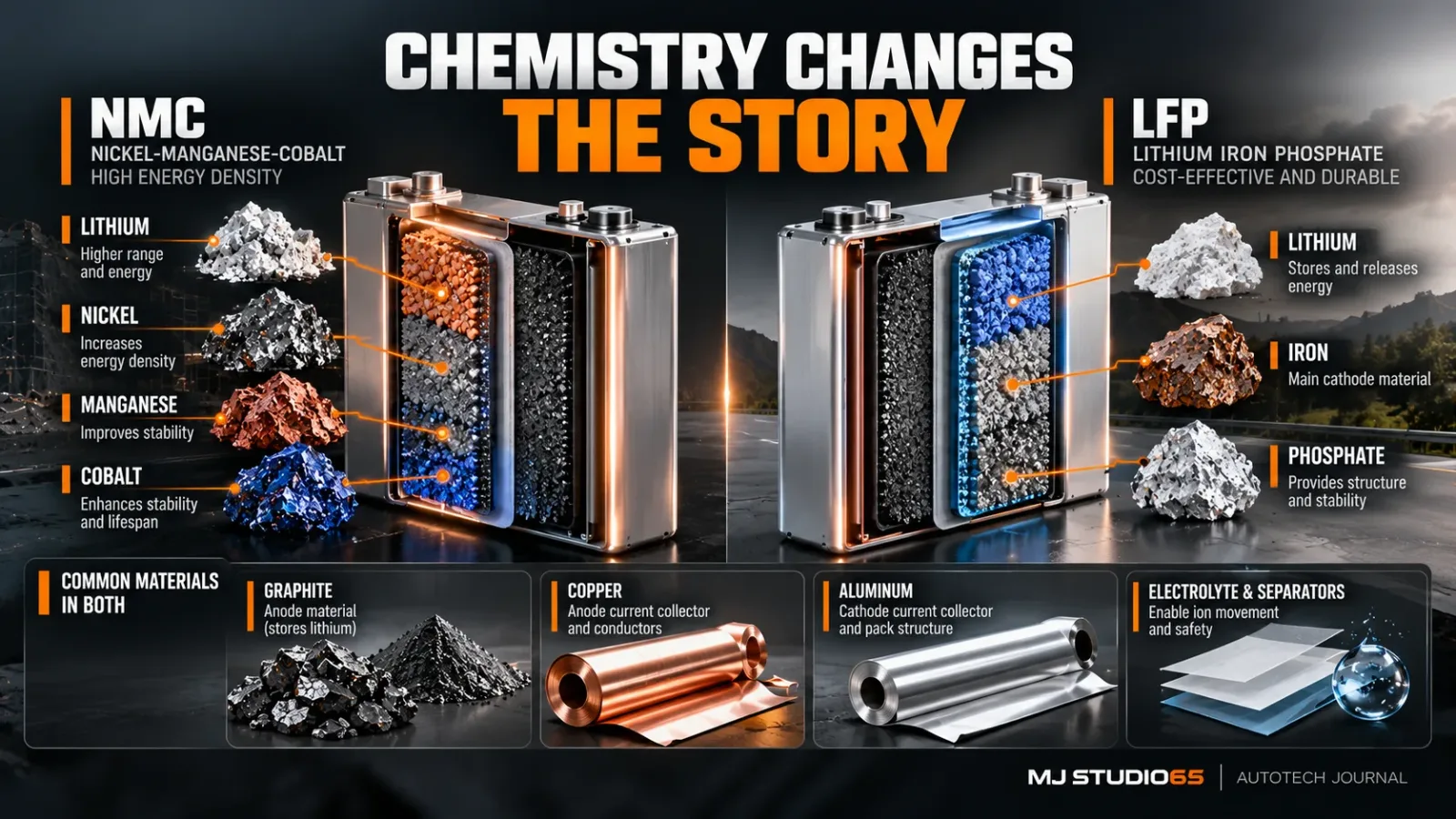 Looking at these materials individually reveals why there is no single environmental footprint that applies to every EV battery. An NMC battery may depend heavily on nickel, manganese and cobalt. An LFP battery replaces those cathode materials with iron and phosphate, removing nickel and cobalt from the cathode supply chain but not eliminating lithium, graphite, copper, aluminum and the industrial processes required to manufacture the battery. Future chemistries could shift the picture again. Sodium-ion batteries can reduce or eliminate dependence on lithium and may use more abundant materials, while solid-state batteries could change the quantities and types of materials required depending on their eventual chemistry and design. This means statements such as "an EV battery requires cobalt" are increasingly too broad. Some do. Others do not. The correct question is: What battery chemistry are we talking about?
Mining Is Only Half of the Story
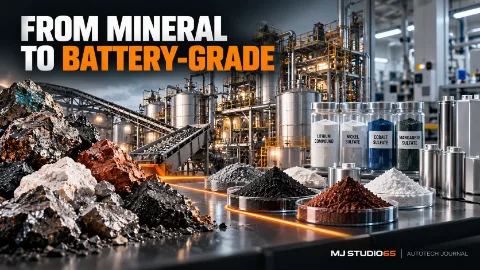
There is another important detail hidden behind all these minerals. The country that mines a material is not necessarily the country that turns it into something a battery factory can use. Lithium can be mined in Australia and refined elsewhere. Cobalt can leave the DRC before being processed into battery chemicals. Nickel can originate in Southeast Asia before entering another country's cathode-material industry. Graphite can pass through multiple processing stages before becoming anode material. This midstream portion of the supply chain is highly concentrated. According to the IEA, China produced about 85% of global cathode active material and more than 90% of anode active material used in electric-car batteries in 2025. So when we ask where an EV battery "comes from," there may be no single answer. The mine may be in one country. The refinery may be in another. The cathode and anode materials may be produced somewhere else. The cells may then be manufactured in another factory before the completed battery pack finally reaches the vehicle assembly plant.
The Human Cost Cannot Be Reduced to One Mineral
Cobalt receives the most attention because documented child-labor problems in artisanal mining are particularly serious. But responsible sourcing should not stop at cobalt. The ILO identifies broader risks across critical-mineral supply chains including hazardous working conditions, toxic exposures, unsafe mine structures, informality and insufficient social protections. Large industrial mines can provide jobs, infrastructure, government revenue and economic opportunities. At the same time, poorly managed mining can affect communities through land-use changes, water impacts, pollution, displacement or unsafe working conditions. Those realities can exist alongside each other. The transition to electric transportation therefore does not remove society's responsibility for how resources are extracted. If anything, growing demand makes responsible mining, transparent supply chains, environmental regulation and worker protection increasingly important.
Does This Mean EV Batteries Are Bad for the Environment?
The environmental impacts of mining are real, but stopping the analysis at the mine creates an incomplete comparison. Every vehicle requires materials. A combustion vehicle also requires steel, aluminum, copper, plastics and many other resources to manufacture. More importantly, it needs a continuous stream of petroleum throughout its operating life. Oil has to be extracted, transported, refined, distributed and finally burned, after which the fuel itself is gone. Battery materials behave differently. Lithium, nickel, cobalt, graphite, copper and aluminum are used to build a device that can store and release energy thousands of times. At the end of the battery's useful life, several of those materials can potentially be recovered. This does not erase the environmental cost of producing them. It changes the nature of the problem. Instead of asking whether mining can disappear, the challenge becomes how much new mining is necessary, how responsibly it can be conducted and how many materials already in circulation can eventually be recovered. The IEA estimates that successfully scaling recycling could reduce the need for new mining by between 5% and 30% by 2040 depending on the mineral. By 2050, the potential reduction becomes substantially larger for several materials. The agency also estimates that recycled lithium, nickel and cobalt typically carry substantially lower greenhouse-gas emissions than producing those materials from newly mined resources.
The Real Question
An EV battery is neither simply a clean technology nor merely a collection of environmental problems. It is an industrial product built from physical resources, and every one of those resources has a history before it reaches the vehicle. Lithium brings questions about water and processing. Nickel connects EV batteries directly with mining regions in Southeast Asia, including the Philippines. Cobalt raises some of the industry's most serious human-rights and labor concerns. Graphite exposes another highly concentrated supply chain. Manganese, copper and aluminum remind us that electrification depends on far more materials than the ones appearing in headlines. The goal should not be to hide those impacts because EVs are part of the transition away from fossil fuels. Nor should those impacts be used without context to suggest that electrification simply replaces one environmental problem with another. The more useful approach is to understand where the materials come from, demand better standards for how they are produced, use batteries efficiently and recover as much of their material as possible when they reach the end of their lives. Because the future of the EV battery may depend not only on finding more minerals beneath the earth, but on learning how to keep the materials we have already extracted circulating for much longer.
Comments
No comments yet. Be the first to join the discussion.