BMW’s Next 3 Series Shows Its Future Won’t Be Electric-Only
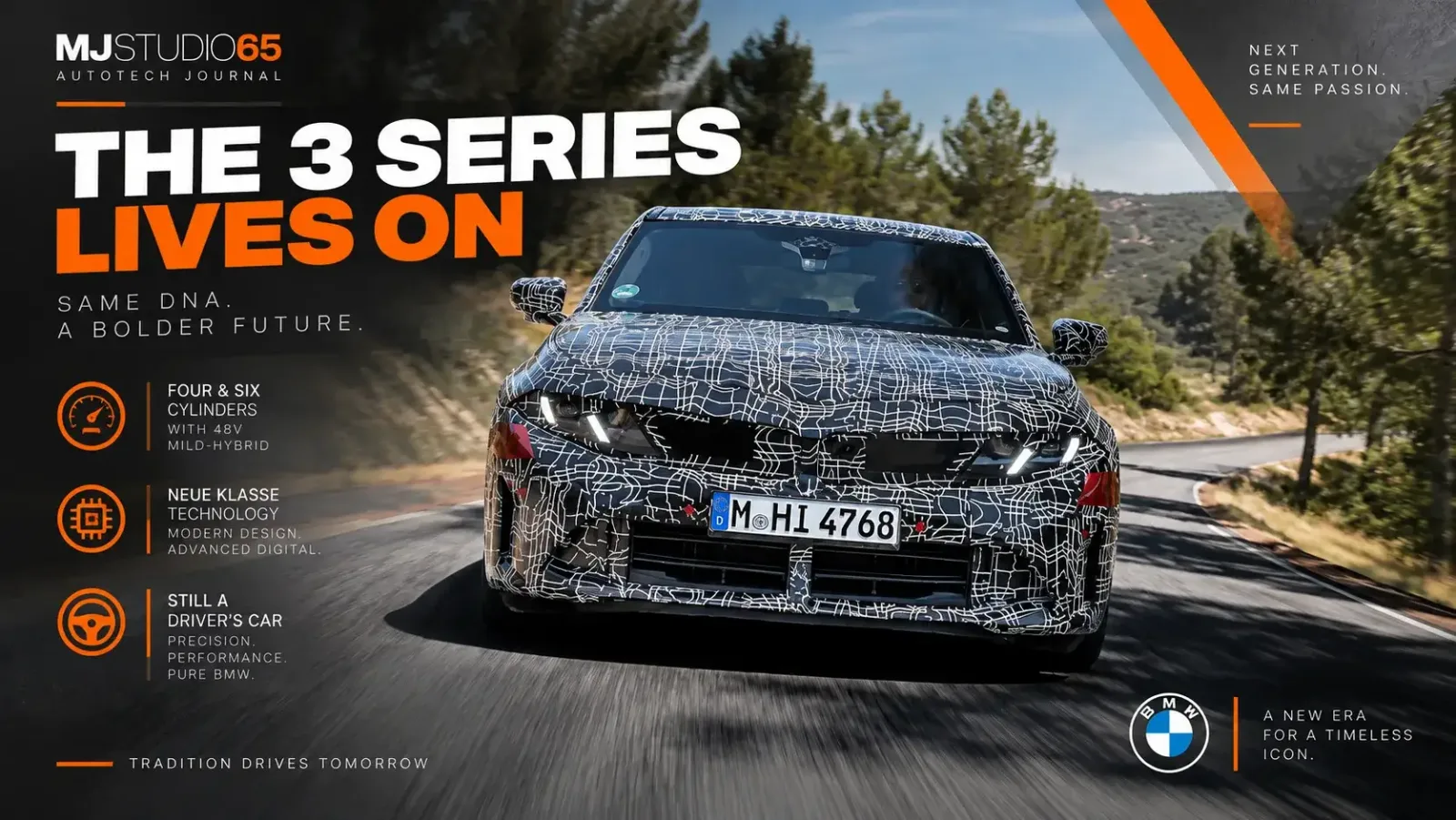
For several years, the direction of the automotive industry appeared increasingly predictable. Electric vehicles were becoming central to product planning. Automakers were investing billions in dedicated battery platforms, software and manufacturing facilities, while some of the world's most familiar combustion-powered cars seemed destined either to disappear or become increasingly marginal. BMW is firmly participating in that transition. Its Neue Klasse program represents one of the biggest technological changes in the company's modern history. The new BMW iX3 introduced the generation, while the electric BMW i3 has since entered production at BMW's historic Munich plant. Neue Klasse brings more than a new electric platform. It introduces a new design philosophy, digital architecture, user interface and vehicle-control technologies that BMW intends to spread across much of its lineup. But BMW is not abandoning one of the cars that helped establish the modern identity of the brand. The combustion-powered BMW 3 Series is getting another generation. And that may tell us more about BMW's strategy than another electric-car launch. Rather than creating one future for its EVs and leaving its combustion cars in the past, BMW is bringing many of the ideas developed for Neue Klasse into both. For the 3 Series, the immediate future will not be simply electric or combustion. It will be both.
The 3 Series Still Matters to BMW
Few vehicles are as closely associated with BMW as the 3 Series. Across multiple generations, its formula has remained recognizable: a relatively compact premium sedan, rear-wheel-drive roots, balanced handling, practical everyday usability and enough performance to make the car appealing beyond simple transportation. The 3 Series has also provided the foundation for everything from efficient four-cylinder sedans to some of BMW M's most famous performance cars. That history creates a difficult engineering problem. BMW has to modernize the 3 Series for a very different automotive era without removing the characteristics that made the model successful in the first place. In September 2026, BMW gave a clearer picture of how it intends to do that. Camouflaged prototypes of the next combustion-powered 3 Series were completing their final summer driving-dynamics tests at BMW's Miramas proving ground in southern France. Development had already included winter testing in Arjeplog, Sweden, along with work at the Nürburgring. This is therefore more than another minor update to the current car. It is the next generation of the combustion-powered 3 Series.
Neue Klasse Is Becoming Bigger Than BMW's EV Platform
Neue Klasse is often associated primarily with BMW's new electric vehicles, and understandably so. The new iX3 became its first series-production model, followed by the electric i3. But BMW's broader plan has always been more ambitious than introducing a few new EVs. The company intends to spread Neue Klasse technologies across its portfolio regardless of powertrain type. BMW says more than 40 new or updated models will receive elements of the new generation by the end of 2027. That distinction is important. A combustion-powered BMW does not need to use the same physical vehicle architecture or battery system as the electric i3 to benefit from technologies developed during the Neue Klasse program. Design, software, displays, electronic systems and vehicle-control technologies can move across powertrain boundaries. The new 3 Series is one of the clearest demonstrations yet of that strategy. BMW says the electric i3 and the new combustion 3 Series will share the Neue Klasse design language, giving both cars the appearance of belonging to the same generation even though the engineering underneath them is different. The familiar proportions of a sporty BMW sedan will remain: a long wheelbase, relatively short overhangs and a low, athletic profile. But the surfaces, front-end treatment and overall visual identity are moving toward BMW's new design era. That creates an interesting situation. From a distance, an electric i3 and a combustion 3 Series may look like close relatives. Underneath, they take very different approaches to propulsion.
Four- and Six-Cylinder Engines Are Staying
For enthusiasts wondering whether the arrival of the electric i3 meant the traditional 3 Series engine lineup was approaching its end, BMW has now provided a clear answer. The next combustion-powered 3 Series will continue to offer four-cylinder and six-cylinder engines. BMW has also confirmed that the engines will incorporate 48-volt mild-hybrid technology. The complete engine lineup, individual model names and detailed output figures have not yet been announced, so there is little value in trying to predict specifications that BMW itself has not confirmed. What matters more is the strategy behind the decision. BMW is not merely keeping an old combustion platform alive while concentrating all of its engineering resources on EVs. It is continuing to develop combustion-powered vehicles while simultaneously expanding its electric lineup. Mild-hybrid assistance gives BMW another tool for improving efficiency and powertrain response without requiring customers to move immediately to either a plug-in hybrid or full battery-electric vehicle. This fits the company's broader philosophy of technology openness. Different markets are moving toward electrification at very different speeds. Charging availability, electricity prices, government policy, taxation and driving habits vary substantially from one region to another. BMW's answer is to maintain more than one powertrain path rather than assuming every customer and every market will make the transition at the same time.
The Interior May Be an Even Bigger Change
The exterior design will make the new generation immediately recognizable, but the cabin could represent an even larger departure from today's 3 Series. BMW has confirmed that its new Panoramic iDrive system and BMW Operating System X are intended for new BMW models regardless of drivetrain. Panoramic iDrive changes the way vehicle information is presented to the driver. Its core components include BMW Panoramic Vision, the central display, a redesigned multifunction steering wheel and an available 3D head-up display. The significance goes beyond adding another screen. BMW is trying to establish a common digital environment across its future vehicles. Someone moving from an electric i3 into a combustion-powered 3 Series should therefore encounter a familiar interface rather than feeling as though the two vehicles belong to completely different product generations. This is where Neue Klasse may ultimately have its biggest influence outside BMW's EV lineup. The electric drivetrain itself cannot simply be transferred into an ICE model. Software and user experience can.
BMW Still Wants the 3 Series to Be About Driving
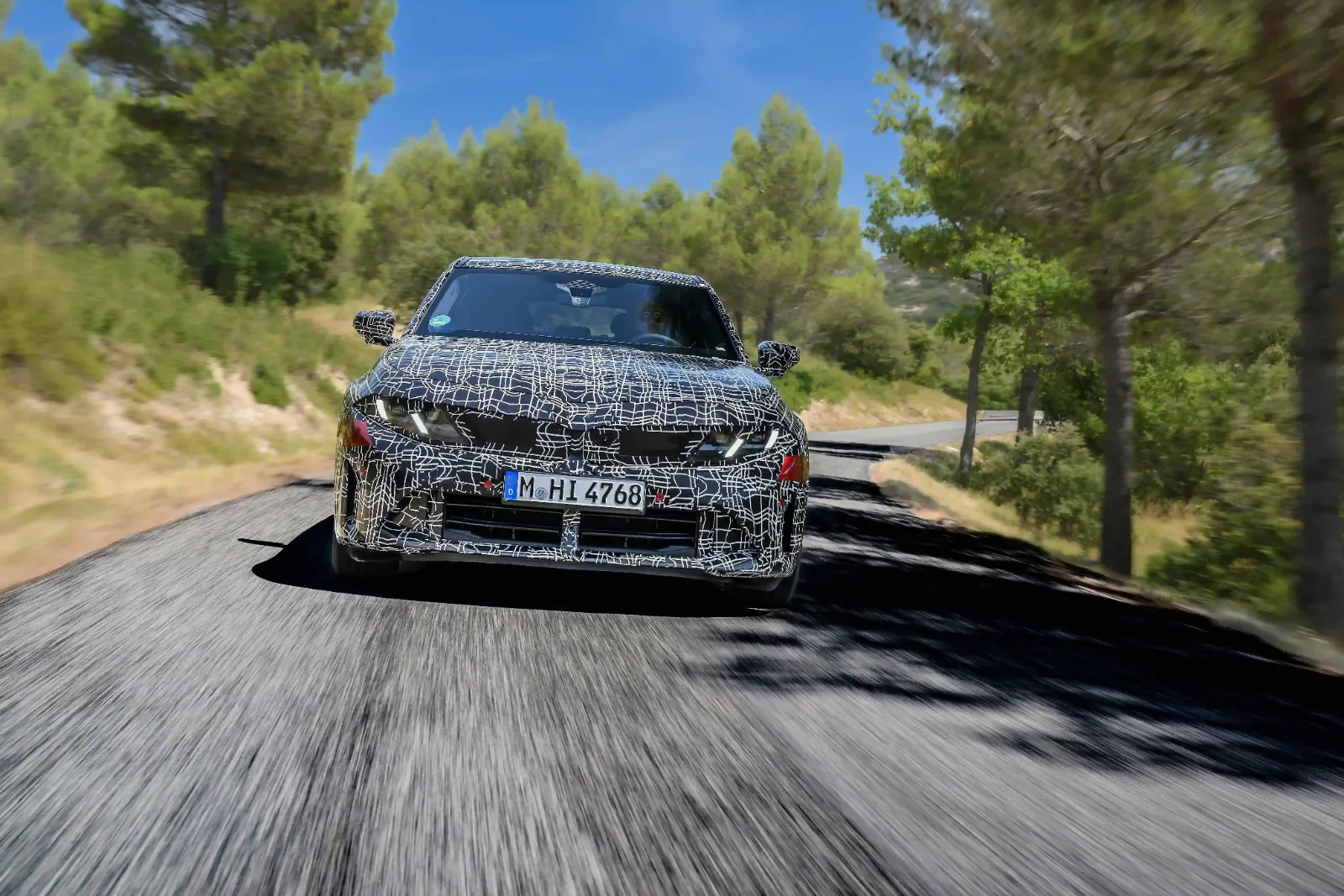 Technology alone will not determine whether the next 3 Series succeeds. For decades, one of the model's strongest selling points has been the way it drives. BMW clearly understands that expectation. The final Miramas development program is concentrating on areas including driving dynamics, transverse dynamics and ride comfort. The proving ground provides high-speed sections, handling circuits and a range of different surfaces that allow engineers to tune the chassis under varied conditions. The interesting part is that chassis development is becoming increasingly connected to software. Modern cars no longer use software only for infotainment and navigation. Electronic systems increasingly influence acceleration, braking, steering, stability and the way the vehicle responds to driver inputs. BMW refers to its integrated vehicle-control approach as the BMW Driving Stack. For BMW, the difficult task is not simply adding more computing power. It is using that computing power without removing the natural, predictable behavior that drivers expect from a 3 Series. One small feature announced for the new generation illustrates how seriously BMW still takes the enthusiast side of the car. BMW says an upcoming 3 Series M Performance model will offer Drift Moment for the first time. That is hardly an essential feature for commuting. And that is precisely why it matters. Its inclusion suggests BMW still sees the 3 Series as something that should have a playful, performance-oriented side rather than becoming simply another premium sedan built around screens and software.
One BMW Design Era, Two Very Different Drivetrains
The relationship between the electric i3 and the combustion 3 Series may become one of the most interesting elements of BMW's next generation. Imagine both cars parked beside one another. They share a design philosophy. They use BMW's latest digital interface. They belong to the same technological era. Yet their propulsion systems are fundamentally different. The i3 relies entirely on batteries and electric motors. The combustion 3 Series continues with four- and six-cylinder engines supported by 48V mild-hybrid technology. BMW is not attempting to hide that difference. Instead, it is allowing two powertrain strategies to coexist underneath a common brand identity. That gives customers a choice without forcing BMW to maintain one modern-looking lineup of electric cars and another increasingly dated family of combustion vehicles. And BMW's commitment to EVs should not be underestimated simply because another combustion 3 Series is coming. Series production of the new electric i3 began at BMW Group Plant Munich on August 6, 2026. BMW spent four years transforming the facility, including major changes to body production, assembly and logistics. From 2027, BMW says the Munich plant will manufacture exclusively fully electric vehicles. That makes BMW's strategy particularly revealing. At the same time that one of its most important factories is becoming EV-only, the company is completing development of another generation of combustion-powered 3 Series. Those decisions can look contradictory. They make more sense when viewed through BMW's global strategy.
Different Markets Are Electrifying at Different Speeds
There is no single global EV transition. Some markets already have extensive public charging networks, strong government incentives and rapidly growing EV adoption. Others do not. Even within the same country, a driver with home charging has a very different ownership experience from someone living in a condominium or apartment without reliable access to a charger. Fuel and electricity prices differ. Climate differs. Driving distances differ. Regulations differ. And customers have different priorities. BMW's multi-powertrain approach gives the company room to respond to those differences. If EV adoption accelerates quickly in a particular market, BMW has products such as the iX3 and i3 ready to participate. If customers elsewhere continue demanding combustion or hybrid vehicles, BMW can continue serving those markets without leaving them with technology from the previous generation. That does not mean BMW believes combustion engines will remain dominant indefinitely. It means the company is unwilling to assume that one drivetrain will replace every alternative at exactly the same time.
More Than 40 BMW Models Are Part of the Transformation
The 3 Series is only one part of a much larger program. BMW says it plans to introduce more than 40 new or significantly updated vehicles by the end of 2027, with Neue Klasse technologies spreading across the portfolio. That does not mean BMW is launching 40 completely new vehicles. The number includes both new models and major updates. But it demonstrates the scale of what the company is attempting. Neue Klasse is gradually becoming less about a specific family of electric vehicles and more about the technological foundation of the next generation of BMW products. Some of those products will be fully electric. Others will use different powertrains. What increasingly connects them is the design, software, electronics and user experience surrounding those powertrains. And that may ultimately be what makes the next 3 Series important.
What About the Next M3?
Inevitably, discussion of a new 3 Series leads to one question: What happens to the M3? BMW has already made clear that high-performance electric vehicles will be part of its future, while confirmation of another generation of six-cylinder combustion-powered 3 Series models keeps the traditional path open as well. But this is also an area where speculation can easily run ahead of confirmed information. BMW's latest announcement about the combustion 3 Series focuses on the regular lineup and an upcoming M Performance model. It does not provide the complete specifications, powertrain strategy or final production details for every future M3 derivative. Until BMW releases those details, treating rumors as specifications would add little value. What can already be said is that BMW appears willing to explore more than one interpretation of the performance sedan during the transition toward electrification. For enthusiasts, that could make the next few years unusually interesting.
BMW's Transition Is More Complicated Than EV Versus ICE
The next BMW 3 Series represents something larger than another generation of a familiar premium sedan. It shows how BMW intends to manage one of the biggest transitions in automotive history. The company is clearly investing heavily in electric vehicles. The iX3 has launched the Neue Klasse generation. The electric i3 is already being manufactured in Munich. One of BMW's most historic factories is preparing to produce only electric vehicles from 2027. And Neue Klasse technology is spreading quickly across the company's broader portfolio. But none of that means BMW believes the combustion engine needs to disappear from the 3 Series immediately. Instead, four- and six-cylinder engines will continue into another generation, supported by mild-hybrid technology and surrounded by many of the same digital systems, design principles and vehicle technologies being introduced with BMW's EVs. That is what makes the next 3 Series particularly interesting. BMW isn't asking the model to choose between its history and its electric future. It is attempting to bring elements of both into the same generation. The design will change. The cabin will change. Software will play a much larger role. And the technology underneath the car will become considerably more sophisticated. But BMW appears determined to preserve the principle that has made the 3 Series important for decades: Whatever powers it, a 3 Series should still be a car its owner wants to drive.
Sources & References:
1. BMW Group PressClub - Next-generation BMW 3 Series final driving-dynamics testing, September 2026. Confirms the four- and six-cylinder engines, 48V mild-hybrid system, Neue Klasse design and Drift Moment feature. BMW 3 Series development announcement
2. BMW Group - Series production of the BMW i3 begins in Munich, August 2026. BMW i3 production announcement
3. BMW Group - BMW Panoramic iDrive and Operating System X. BMW Panoramic iDrive information
4. BMW Group - Neue Klasse overview. Covers BMW's wider technology rollout and the planned expansion into dozens of models. BMW Neue Klasse overview


Comments
No comments yet. Be the first to join the discussion.