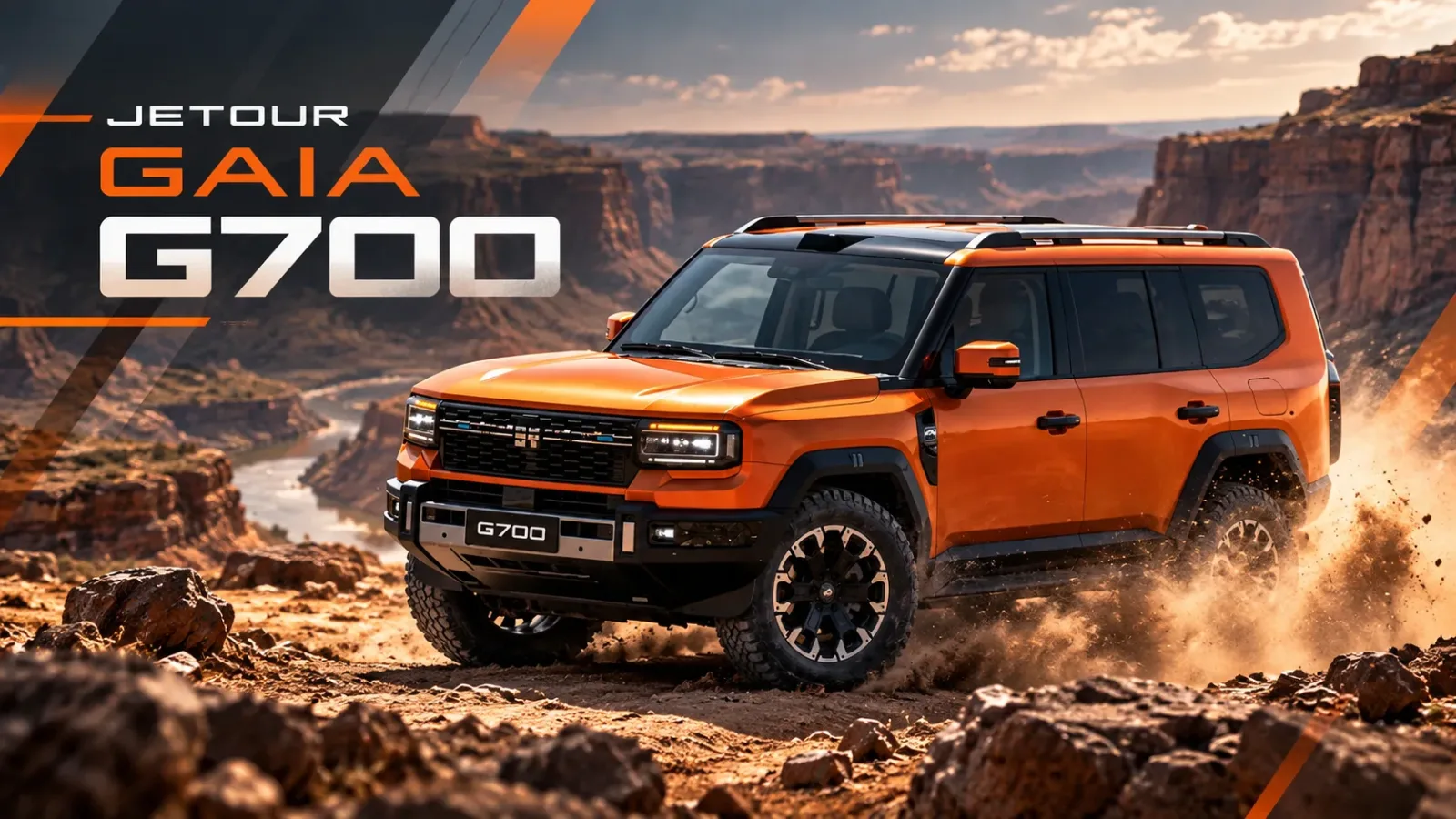
Jetour GAIA G700: Can 904 PS, PHEV Power and Serious Off-Road Hardware Work in the Real World?
The Jetour GAIA G700 is not simply another large SUV joining an increasingly crowded market. It represents something considerably more ambitious for Jetour: an attempt to combine traditional body-on-frame off-road engineering, plug-in hybrid technology, high-output electric motors and a luxury-focused six-seat cabin in one flagship vehicle. Introduced in the Philippines under the premium GAIA name, the G700 also moves Jetour into a very different part of the market. With a Philippine price of ₱4.488 million, this is no longer a vehicle competing primarily on affordability. It enters territory where buyers expect strong engineering, sophisticated technology, comfort and convincing long-term usability. That makes the Jetour GAIA G700 particularly interesting. Its specifications certainly attract attention. Jetour quotes as much as 904 PS and 1,135 Nm of torque, while the G700 retains the rugged fundamentals expected from a serious off-road SUV. It uses an integrated ladder-frame structure, intelligent four-wheel drive, locking differentials and an adaptive suspension system, while its plug-in hybrid powertrain provides an official pure-electric range of up to 100 km. But impressive numbers alone do not determine whether a large SUV works in the real world. Beyond the specifications, the more important question is how all this engineering could translate into everyday use.
A New Kind of Flagship for Jetour
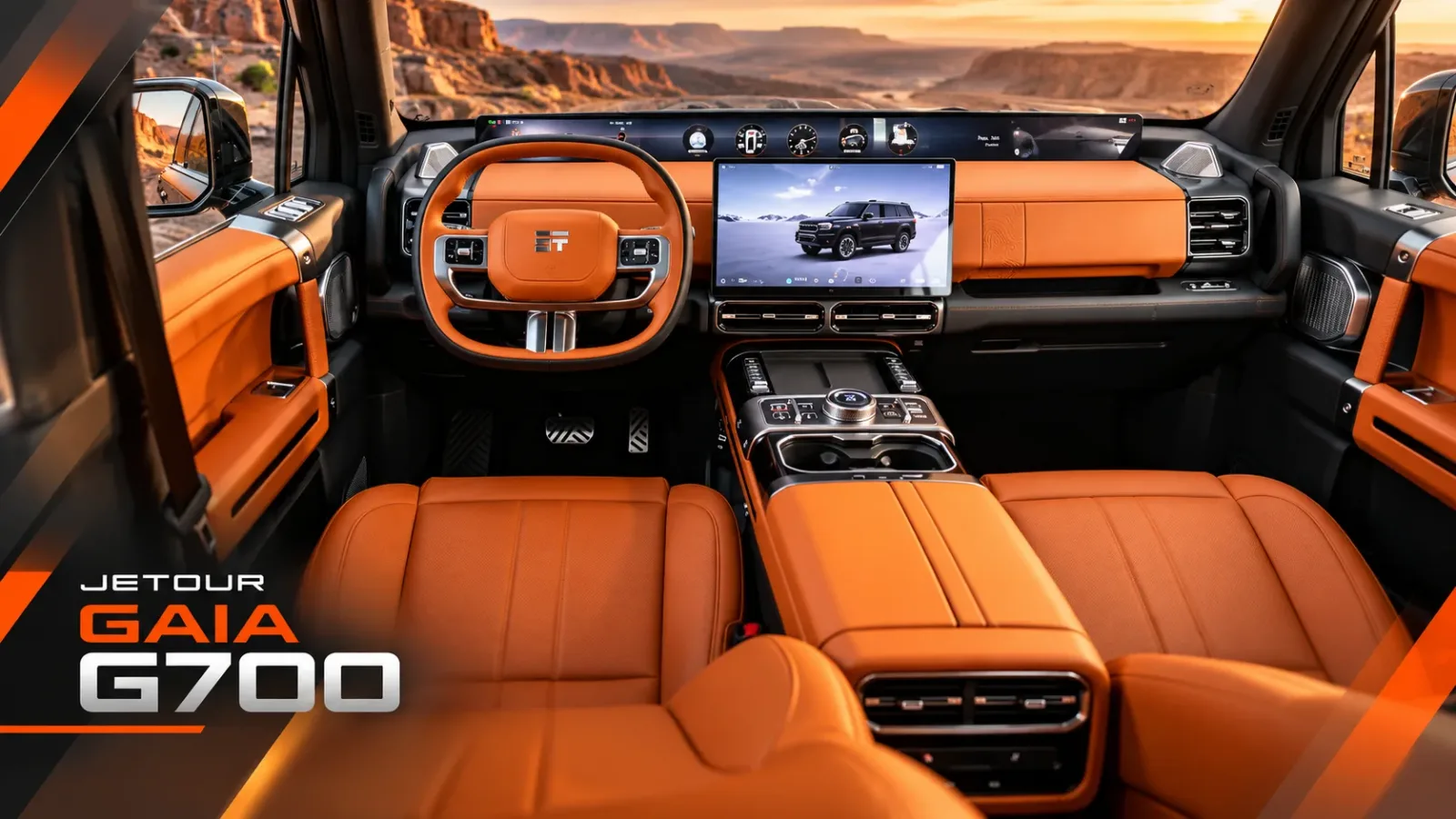 The G700 sits within Jetour's GAIA premium off-road line, marking a substantial step upward from the more familiar Jetour SUVs. The concept behind the vehicle is relatively straightforward: retain the toughness and mechanical capability associated with traditional large off-road SUVs while using electrification to provide considerably more performance, efficiency and flexibility. That starts with its construction. Unlike many modern crossovers that use a car-like unibody platform, the G700 is built around an integrated ladder-frame structure. This type of architecture remains popular among vehicles designed for demanding off-road conditions because the chassis can be engineered to handle significant loads and stresses independently from the passenger body. Jetour then combines that traditional foundation with a sophisticated plug-in hybrid drivetrain and electronically controlled four-wheel-drive technology. The result is an unusual mixture of old-school SUV fundamentals and modern electrification. And physically, the G700 has the proportions to match its flagship status. This is a genuinely large SUV, designed around a 2+2+2 six-seat configuration rather than trying to disguise its size. Its upright body, substantial ground clearance and squared-off styling communicate its off-road intentions, but the interior takes a noticeably different direction. Instead of creating a deliberately utilitarian cabin, Jetour has equipped the G700 with large digital displays, powered seating, massage functions, premium audio and numerous convenience technologies. This dual personality rugged underneath but luxurious inside is central to what the G700 is trying to achieve.
Jetour G700 Technical Specifications and PHEV Technology
At the center of the Jetour G700 PHEV is a 2.0-liter turbocharged gasoline engine working together with two permanent-magnet synchronous electric motors. One electric motor drives the front axle while another provides propulsion at the rear. According to published Philippine specifications, the front motor can deliver up to 210 kW, while the rear motor is rated at up to 300 kW. The complete system produces a manufacturer-claimed 904 PS and 1,135 Nm of torque. Those are extraordinary figures for a large SUV, but power is only one part of the system. Energy is stored in a 34.13-kWh battery, allowing the G700 to operate as a plug-in hybrid rather than relying exclusively on its gasoline engine. Jetour lists up to 100 km of pure-electric driving range and approximately 1,000 km of combined hybrid range under its published specifications. It is important to put those numbers into context.
The quoted ranges are manufacturer figures obtained under specified testing conditions, not guarantees of what every owner will achieve. Actual range can change substantially depending on speed, terrain, traffic, temperature, passenger and cargo load, driving style, climate-control use and battery state of charge. Still, a 100-km claimed EV range creates some interesting possibilities. An owner who can regularly charge the G700 at home may be able to complete many shorter daily trips largely on electric power. On a longer journey, the gasoline engine and hybrid system provide the flexibility to continue travelling without depending entirely on charging infrastructure. That is one of the fundamental attractions of a long-range PHEV. Instead of forcing the owner to choose between an internal-combustion SUV and a battery-electric vehicle, the G700 attempts to combine characteristics of both.
More Than a Hybrid: Intelligent Energy Management
The complexity of the G700 becomes more apparent when looking beyond its battery and engine. Jetour's G-Series engineering strategy combines mechanical off-road hardware with what the company describes as AI-powered energy management and an all-domain intelligent control system. In practical terms, a system like this has to continuously manage several variables. The vehicle can determine how much propulsion should come from the gasoline engine, how much should come from the electric motors, when battery energy should be conserved and how power should be distributed between the axles. That becomes particularly important off-road. A conventional four-wheel-drive vehicle normally depends heavily on mechanical components to distribute engine torque. An electrified drivetrain gives engineers another tool: electric motors can react extremely quickly to changes in traction. The G700 therefore represents a different interpretation of the traditional 4x4. Instead of abandoning mechanical off-road engineering in favor of electronics, Jetour has attempted to make the two work together.
Built for Serious Off-Road Driving
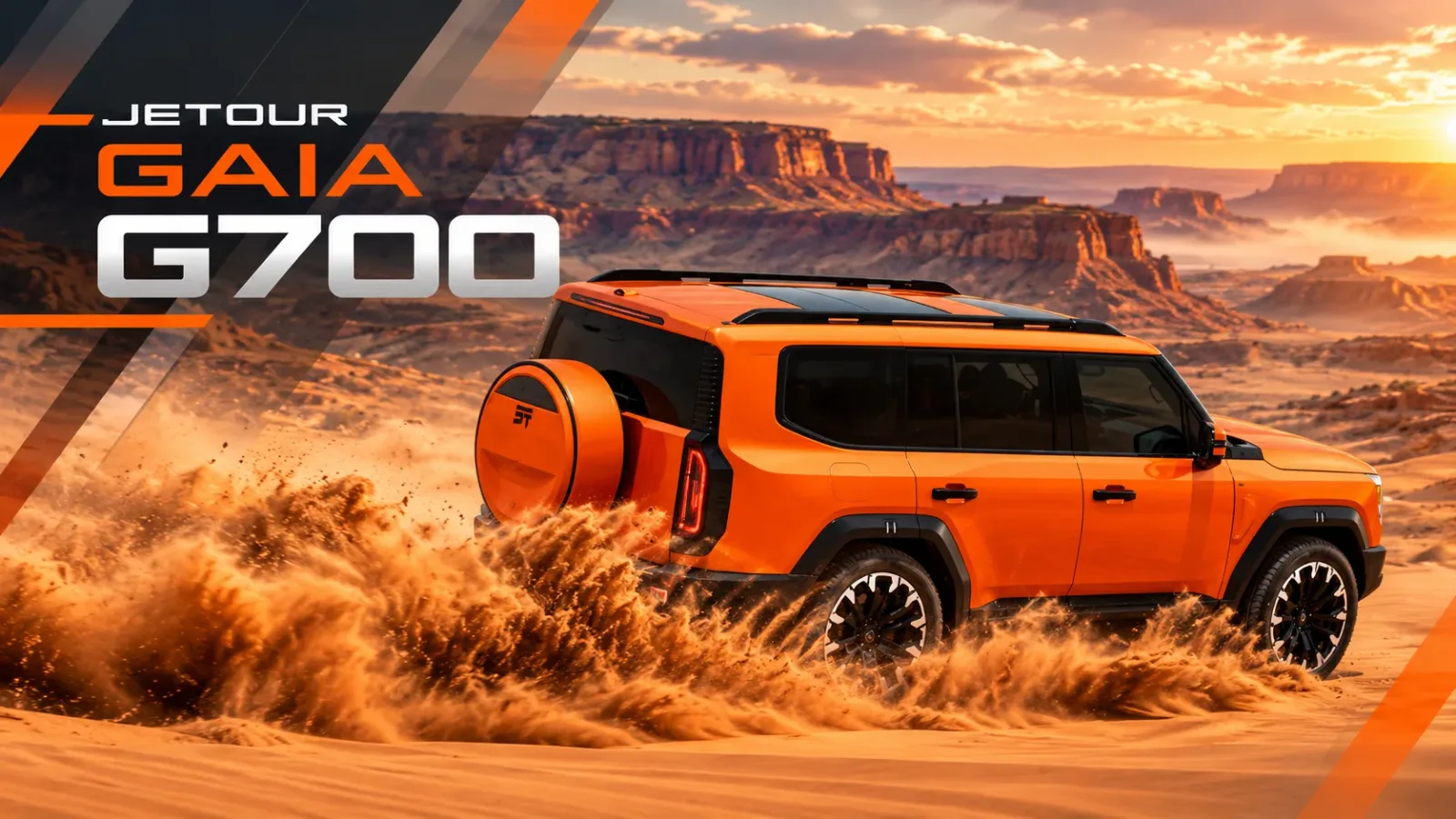 This is where the Jetour GAIA G700 off-road capability becomes one of the vehicle's defining characteristics. Jetour's G-Series architecture incorporates an integrated ladder frame, intelligent control systems and three locking differentials as part of its off-road engineering strategy. The Philippine G700 also features adaptive air suspension and an intelligent four-wheel-drive system, while published local specifications cite a 900-mm maximum wading depth. Ground clearance is another important part of the equation. Jetour's Philippine GAIA website currently advertises up to 300 mm of maximum ground clearance, while some local specification reports list 230 mm under other operating conditions. The difference is likely associated with the adjustable suspension configuration, making it important to distinguish maximum raised clearance from normal ride height. Adaptive air suspension can provide a meaningful advantage in a vehicle expected to perform several different roles. A lower setting can make entering, exiting and loading the vehicle easier, while additional ride height can be useful when tackling rocks, deep ruts, uneven trails or water crossings.
The G700 also incorporates features such as front and rear electronic locking differentials, multiple terrain-management functions and specialized maneuvering capabilities including tank-turn and crab-walk functions according to Philippine product information. Those features may rarely be needed by an owner who spends most of the vehicle's life on paved roads, but they illustrate how seriously Jetour has approached the off-road side of the G700. This is not simply a crossover wearing rugged bodywork. There is substantial off-road engineering underneath it.
904 PS in a Full-Size SUV
Then there is the performance. Jetour claims the G700 can accelerate from 0–100 km/h in approximately 4.6 seconds. Again, this should be treated as a manufacturer performance figure until independently verified under local testing conditions. Nevertheless, it demonstrates what electrification can do to a vehicle of this type. Large off-road SUVs traditionally trade outright acceleration for durability, towing ability and low-speed torque. Electric motors dramatically alter that equation because they can deliver substantial torque almost immediately. The G700's quoted 1,135 Nm therefore matters beyond the headline acceleration figure. For an off-road vehicle, controllable torque at lower speeds can be just as important as outright horsepower. The challenge for the vehicle's control system is not simply producing enormous power, but distributing that power effectively when surface conditions change. On pavement, meanwhile, the combination gives the G700 sports-car-like claimed acceleration despite its size and off-road-focused construction. Whether drivers actually need 904 PS in a six-seat SUV is another question. But the figure demonstrates just how dramatically hybrid technology is changing the traditional performance limits of large SUVs.
Jetour G700 Price in the Philippines
The Jetour G700 price in the Philippines is ₱4,488,000 for the locally offered model. And that price changes the conversation. At lower price points, an extensive feature list can be enough to attract buyers looking for value. At ₱4.488 million, customers are likely to consider more than the number of screens, horsepower figures or luxury features. Brand reputation, dealership support, warranty coverage, resale value, long-term reliability, parts availability and after-sales service can become increasingly important. Jetour is supporting the G700 with substantial warranty coverage in the Philippines. Published launch information lists a 10-year engine warranty and six-year general vehicle warranty, with coverage extending up to 1,000,000 km under applicable terms and conditions. That warranty package could help address some concerns buyers may have when considering a relatively new premium nameplate. The larger question will take longer to answer: how well will vehicles containing this much technology perform after years of Philippine driving conditions? That cannot be determined from a specification sheet or launch event. It will ultimately depend on long-term owner experience.
Luxury Without Forgetting the Passengers
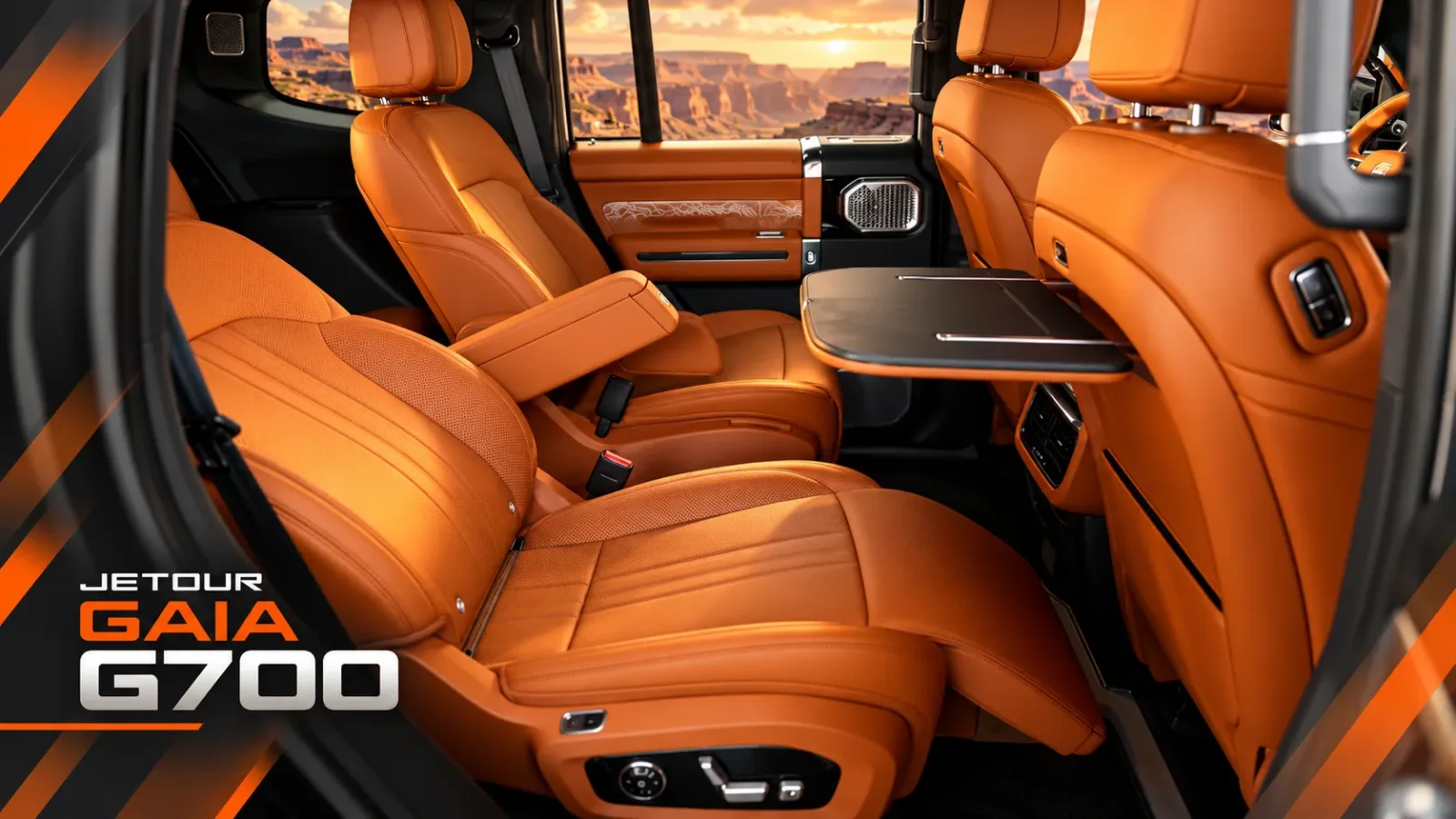 Despite its off-road focus, the G700's interior suggests that Jetour expects many owners to spend considerably more time on highways and city streets than on difficult trails. The cabin uses a six-seat 2+2+2 layout, giving second-row passengers individual captain's chairs rather than a conventional bench. The technology package is extensive. Depending on specification, the G700 features a 35.4-inch Skyline display, 15.6-inch central control screen, 17.3-inch ceiling-mounted rear entertainment display and an additional rear climate-control interface. An 18-speaker Lexicon audio system, powered seating, massage functions, ambient lighting, fragrance system and triple-zone climate control further reinforce the vehicle's luxury positioning. This is important because the G700 isn't asking buyers to accept a basic cabin in exchange for off-road ability. It is trying to deliver both.
But How Practical Is the Jetour G700 in Everyday Use?
This may ultimately be the more interesting question than its 904 PS output. The Jetour GAIA G700 is a very large SUV, and that brings advantages as well as compromises. Its six-seat layout should work particularly well for families that frequently carry four or five passengers, especially because the second-row captain's chairs provide occupants with their own seating space. For long provincial trips, the combination of a large fuel tank, plug-in hybrid drivetrain and claimed long-distance range could also reduce the need for frequent stops. There is another advantage to the PHEV system in city driving. If an owner has reliable home charging and normally travels relatively short distances, much of the routine commute could potentially be completed using electric propulsion. The gasoline engine remains available when longer journeys are required. That gives the G700 two very different personalities. Charge it regularly and it can behave partly like an EV during everyday use. Take it on a long journey and it retains the convenience of liquid fuel. But owners also need to consider the other side of the equation.
A vehicle of this size will require more attention in narrow streets, older parking structures and crowded urban areas. Advanced cameras, sensors and automatic parking assistance can make maneuvering easier the G700 uses 12 ultrasonic radars in support of its parking technology but electronics cannot physically make a large SUV smaller. Third-row practicality also deserves consideration. A 2+2+2 configuration is excellent when passenger comfort is the priority, but owners who frequently travel with all six seats occupied should evaluate how much luggage capacity remains behind the third row. That is something best assessed physically rather than from a specification sheet.
Charging Will Determine How Useful the PHEV System Becomes
There is also an important reality with any plug-in hybrid, the owner has to plug it in to receive the full benefit of having a large battery. Someone who can charge at home every night may experience the G700 very differently from an owner who rarely connects it to a charger. For regular urban driving, beginning the day with a charged battery gives the hybrid system much more electrical energy to work with. On long highway journeys, the role of the gasoline engine naturally becomes greater once the usable battery charge has been consumed. This makes the G700 particularly interesting for Philippine use. It doesn't require the driver to depend entirely on public charging stations during long journeys, yet it still provides meaningful electric-only capability for shorter trips. The G700 also offers vehicle-to-load capability of up to 6.6 kW according to local product information. That could be genuinely useful for camping, outdoor equipment or situations where portable electrical power is needed away from a conventional outlet.
The Technology Also Brings Complexity
There is one aspect of the G700 that shouldn't be ignored. It is a complicated machine. A turbocharged gasoline engine, high-voltage battery, multiple electric motors, sophisticated power electronics, adaptive suspension, electronic differentials, advanced driver-assistance systems and a cabin filled with displays and powered equipment create tremendous capability. They also create more systems that eventually need to be maintained. That does not mean those technologies will necessarily be unreliable. It simply means that long-term ownership is one of the remaining questions surrounding the G700, particularly because the vehicle and GAIA premium positioning are still new to the Philippine market. Service capability, replacement-parts availability and dealer support may therefore become just as important to owners as horsepower and electric range. Those are areas that will become clearer as more G700s accumulate mileage in Philippine conditions.
A Different Interpretation of the Modern Off-Road SUV
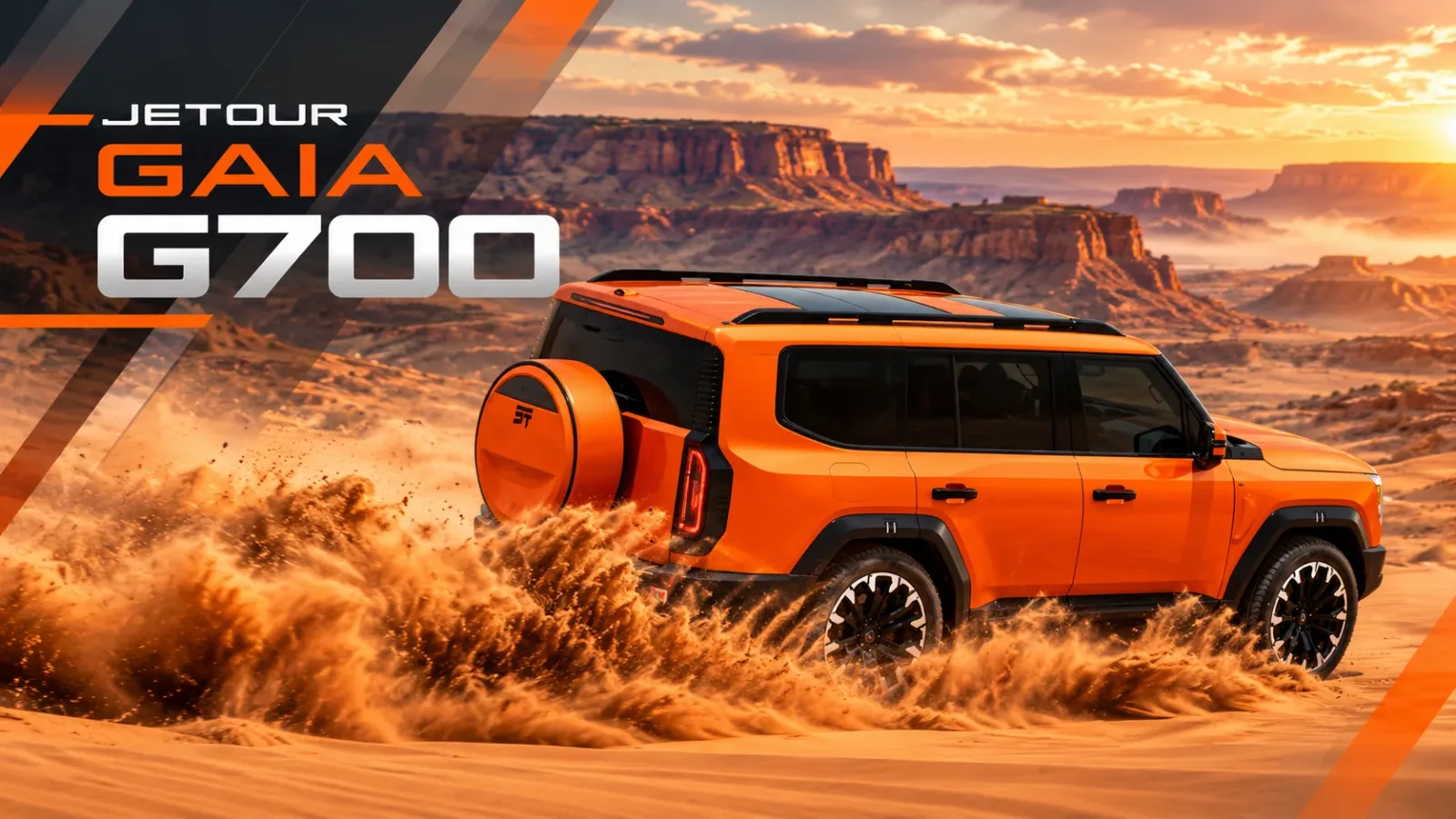 The Jetour GAIA G700 is interesting precisely because it doesn't follow only one established formula. Underneath is an integrated ladder-frame chassis and serious four-wheel-drive hardware characteristics associated with traditional off-road vehicles. Above that foundation sits an entirely different generation of technology: a high-output plug-in hybrid system, powerful electric motors, intelligent energy management, adaptive suspension and an extensively digital cabin. Jetour claims 904 PS, 1,135 Nm, 0–100 km/h in 4.6 seconds, up to 100 km of pure-electric range and around 1,000 km of combined hybrid range. Those numbers make the G700 impressive on paper. But specifications are only the beginning of the story.
At ₱4.488 million, the G700 needs to demonstrate more than straight-line performance or an extensive equipment list. Buyers at this price will also expect refinement, durability, dependable after-sales support and technology that continues working reliably years after the vehicle leaves the showroom. Its enormous size may also be more capability than some urban drivers need, while buyers who genuinely travel long distances, tow, explore difficult terrain or regularly carry several passengers may find considerably more value in what the G700 offers. For now, the engineering makes one thing clear. Jetour is no longer limiting itself to the affordable end of the SUV market. With the GAIA G700, the company is attempting something much more ambitious combining the mechanical toughness of a traditional off-roader with the performance and flexibility of a modern plug-in hybrid. Whether that combination works as convincingly on Philippine roads and trails as it does on the specification sheet is something a proper road test and eventually long-term ownership will have to answer.


Comments
No comments yet. Be the first to join the discussion.