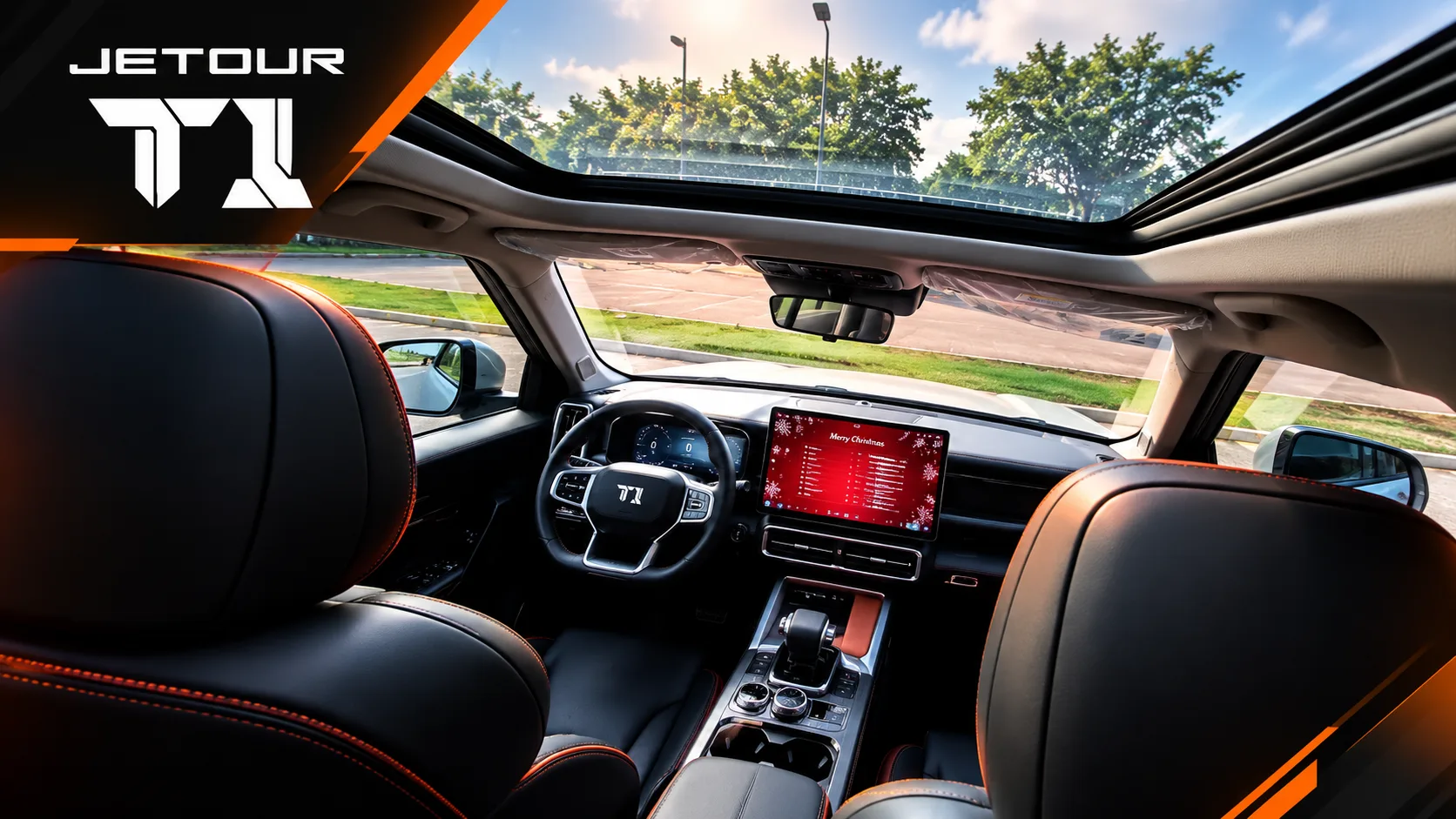
The Jetour T1 makes a strong first impression from the outside, with its boxy shape and rugged SUV styling. But living with a vehicle is mostly about what happens inside and this is where the T1 takes a slightly different approach. Rather than trying to create an outright luxury cabin, the T1 combines a tough-looking interior design with modern technology, comfortable seating and materials that generally feel appropriate for the vehicle. After spending time exploring the cabin, seats, second-row space and infotainment system, here are some of the key things that stood out.
Interior Design: Rugged Without Feeling Too Basic
The overall interior design matches the personality of the Jetour T1 very well. Instead of a minimalist cabin where almost everything disappears into a touchscreen, the T1 retains a substantial, rugged appearance. There are large surfaces, prominent handles and strong geometric shapes throughout the dashboard and center console. Material selection is also interesting. There is a combination of soft-touch areas, leather-like surfaces, textured trim and harder plastics depending on where you look. The materials don't necessarily give the impression of a true premium vehicle, but they generally feel appropriate for the T1's positioning and rugged design theme. More importantly, the different textures prevent the interior from looking cheap or overly plain. There are enough contrasting materials and details to make the cabin visually interesting without making it unnecessarily complicated.
Front Seats: Comfortable With a Clever Driver-Seat Feature
The seats are one of the more important parts of the T1's interior because this is where owners will spend most of their time. The front seats have a substantial design with good cushioning and support. The upholstery also complements the rest of the cabin, giving the seats a more upscale appearance without going too far into luxury-car territory. Seat adjustment is electrically operated, making it easy to fine-tune the driving position. One feature I particularly like is the automatic movement of the driver's seat when entering or leaving the vehicle. When the driver's door is opened, the seat can automatically move backward to provide additional room for getting in or out. Once the driver is seated and the vehicle is ready, it can return to the saved driving position. It sounds like a relatively small convenience feature, but it becomes much more noticeable during everyday use. It's the type of feature normally associated with vehicles trying to provide a more premium ownership experience.
Dashboard: Modern Technology Meets Rugged Styling
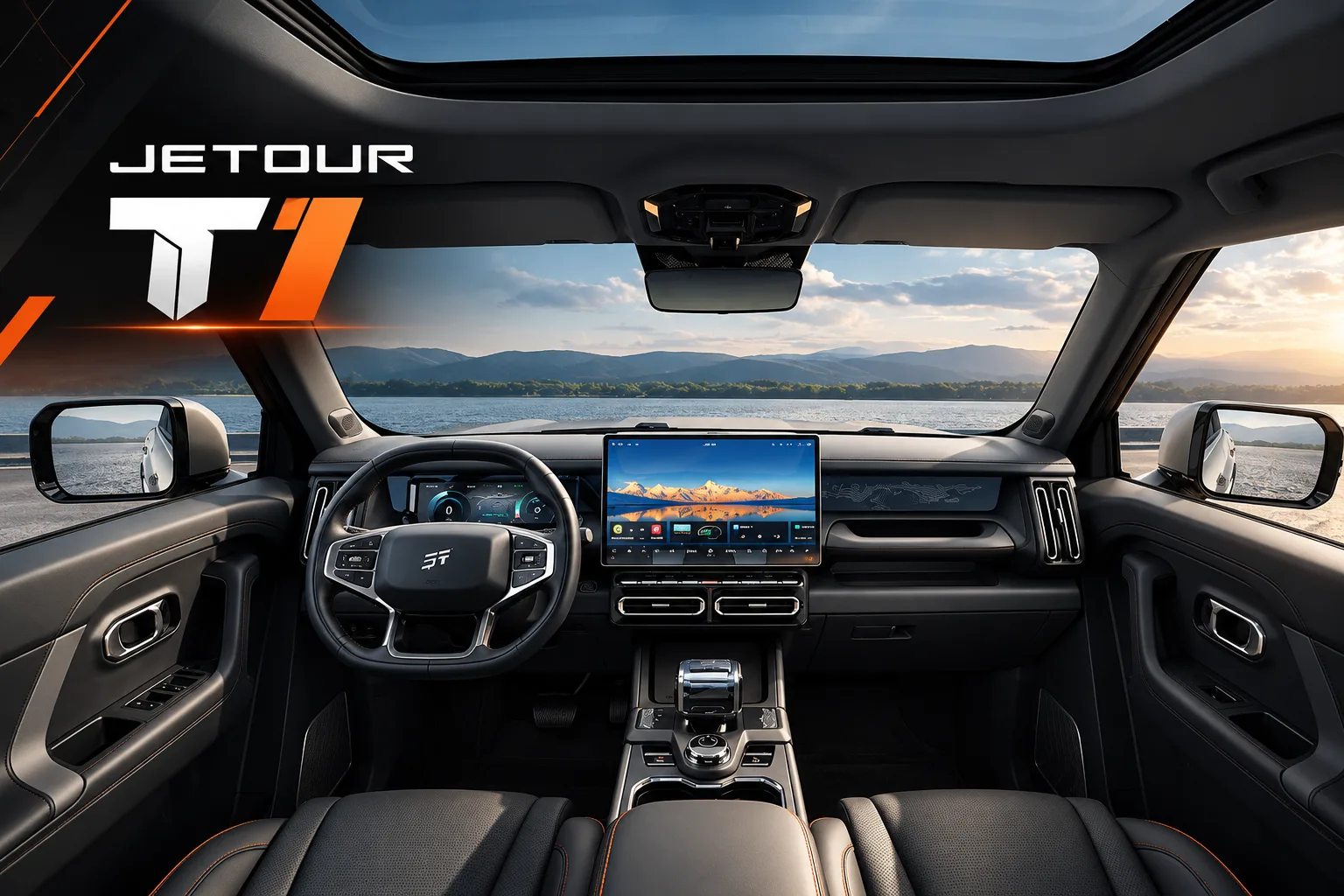 The dashboard continues the rugged theme. Rather than using flowing curves, the T1 relies heavily on horizontal lines and squared-off shapes. This works particularly well with the vehicle's exterior styling. Directly in front of the driver is the digital instrument display, while the large central infotainment screen dominates the middle of the dashboard. The steering wheel itself has a thick, substantial feel and incorporates several buttons so commonly used functions can be controlled without constantly reaching for the center screen. The A-pillars are also quite prominent because of the upright windshield and overall shape of the vehicle. Integrated into this area are speakers that become part of the cabin design rather than simply being hidden away. Another detail that reinforces the T1's rugged character is the use of grab handles. These aren't merely decorative. Combined with the upright dashboard, center console and large windshield, they help give the cabin the feeling of being inside a proper adventure-oriented SUV.
Panoramic Sunroof and Sunshade
One of the features that dramatically changes the feeling inside the T1 is the panoramic glass roof. Because the vehicle already has a relatively tall and spacious cabin, opening the sunshade makes it feel even larger. But a panoramic roof also raises an obvious question in a hot climate: heat. Fortunately, the sunshade itself doesn't feel excessively thin. When closed, it provides a meaningful barrier between passengers and the glass above. That matters because some panoramic-roof vehicles use relatively lightweight shades that still allow a noticeable amount of radiant heat into the cabin. The T1's sunshade feels more substantial and helps isolate the cabin from direct sunlight when the panoramic view isn't needed.
Second Row: Plenty of Space, With a Few Compromises
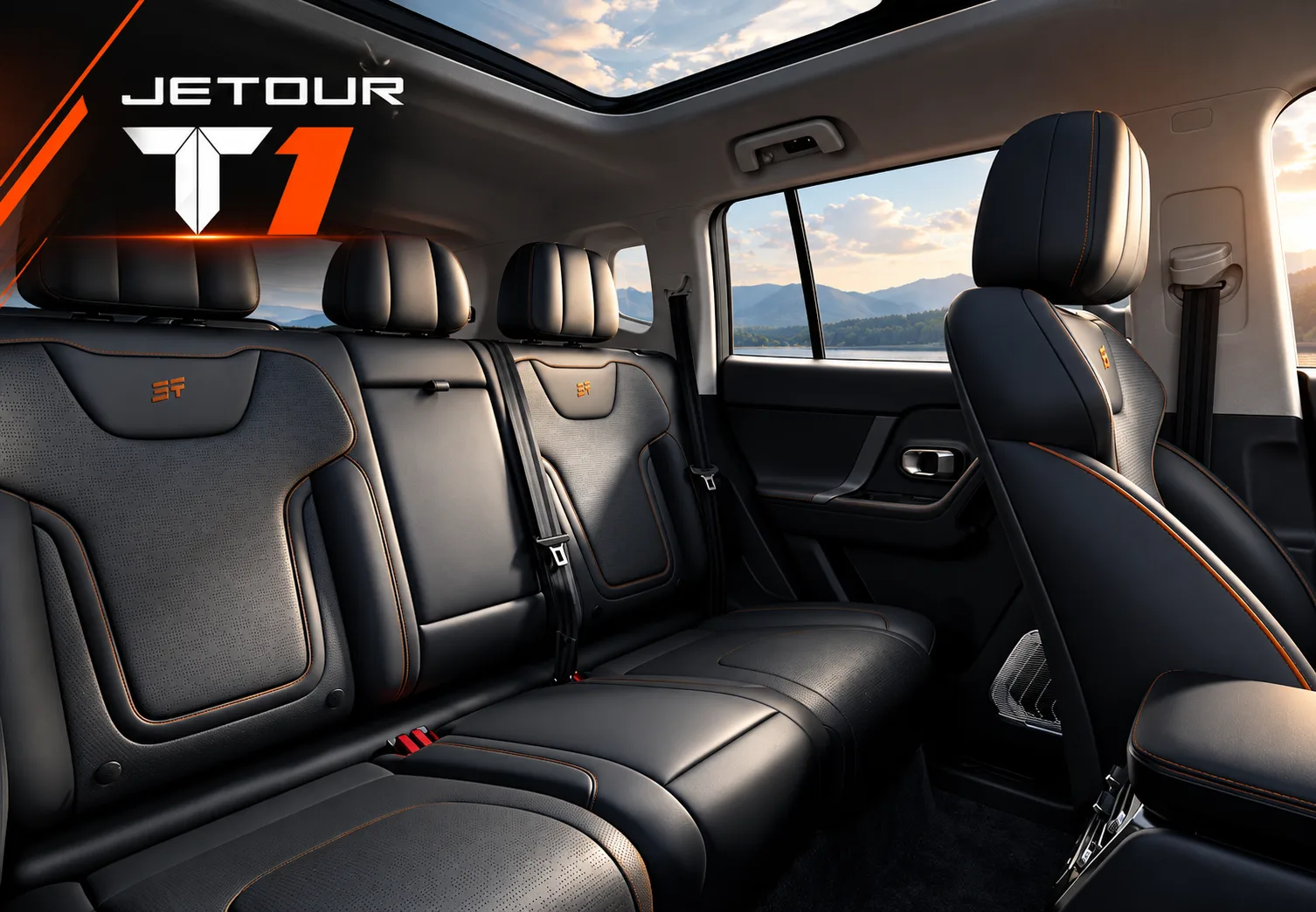 Rear-seat space is another strong point. There is generous legroom, and the tall roof provides good headroom even for larger passengers. The width of the cabin also contributes to the feeling of space. For longer journeys, the seat cushioning is comfortable enough that passengers shouldn't immediately feel like the second row was treated as an afterthought. However, there are two areas where I think the T1 could have been better. The first is the lack of overhead air-conditioning vents for the second row. For a vehicle with this much cabin space and particularly when used in a hot climate roof-mounted vents would have been a welcome addition. Rear passengers have to rely on the existing ventilation arrangement to cool the second-row area. The other limitation is the seatback adjustment. Although the rear seats provide a comfortable seating position, they cannot be reclined as far as I would have preferred. More recline adjustment would make the second row considerably more relaxing during long highway trips. Neither issue ruins the rear-seat experience, but they are worth considering if the vehicle will regularly carry adult passengers over long distances.
Infotainment: Big, Fluid and Easy to Navigate
The large central display is one of the first things you'll notice when sitting inside the T1. More importantly, the screen isn't impressive only because of its size. During the walkthrough, navigating through the menus felt fluid and responsive. Moving between different vehicle settings and functions doesn't feel excessively slow or cumbersome. That's important because many vehicle controls are now integrated into infotainment systems. A large display isn't particularly useful if every interaction involves waiting for menus to respond. The T1's interface is reasonably easy to navigate once you become familiar with where the major functions are located. The size of the screen also makes information easy to read, while the large interface elements help when operating it from the driver's seat. There is still a learning curve because the system contains numerous menus and vehicle settings, but overall, the experience feels modern rather than frustrating.
Overall Impression: Very Good, but Not Quite Premium
After going through the entire cabin, my overall impression of the Jetour T1 interior is positive. It doesn't feel like the designers simply installed a large touchscreen into an ordinary cabin and called it modern. There is a consistent design theme running from the dashboard and steering wheel to the handles, seats, trim and panoramic roof. There are also thoughtful touches such as the automatic driver's seat movement, generous second-row space and responsive infotainment system. At the same time, I wouldn't describe the interior as genuinely premium. Some of the materials and finishing remind you that the T1 isn't trying to compete directly with established luxury SUVs. Look closely enough and you'll find harder plastics and areas where material quality could still be improved. But that isn't necessarily a weakness. The better question is whether the cabin feels well designed, comfortable and appropriately equipped for the type of vehicle the T1 is trying to be. From my experience with it, the answer is largely yes. The T1 offers a spacious and comfortable interior, useful technology and enough rugged character to distinguish itself from the increasingly similar-looking cabins found in many modern crossovers. There are things I would change particularly adding overhead rear air-conditioning vents and allowing greater second-row seat reclined but neither takes away from what is otherwise a well-executed cabin. And perhaps that's the best way to describe the Jetour T1 interior: not luxury, but much better than simply functional.

Comments
No comments yet. Be the first to join the discussion.