Why Ford Is Selling Hybrids and Big V6 Diesels at the Same Time?
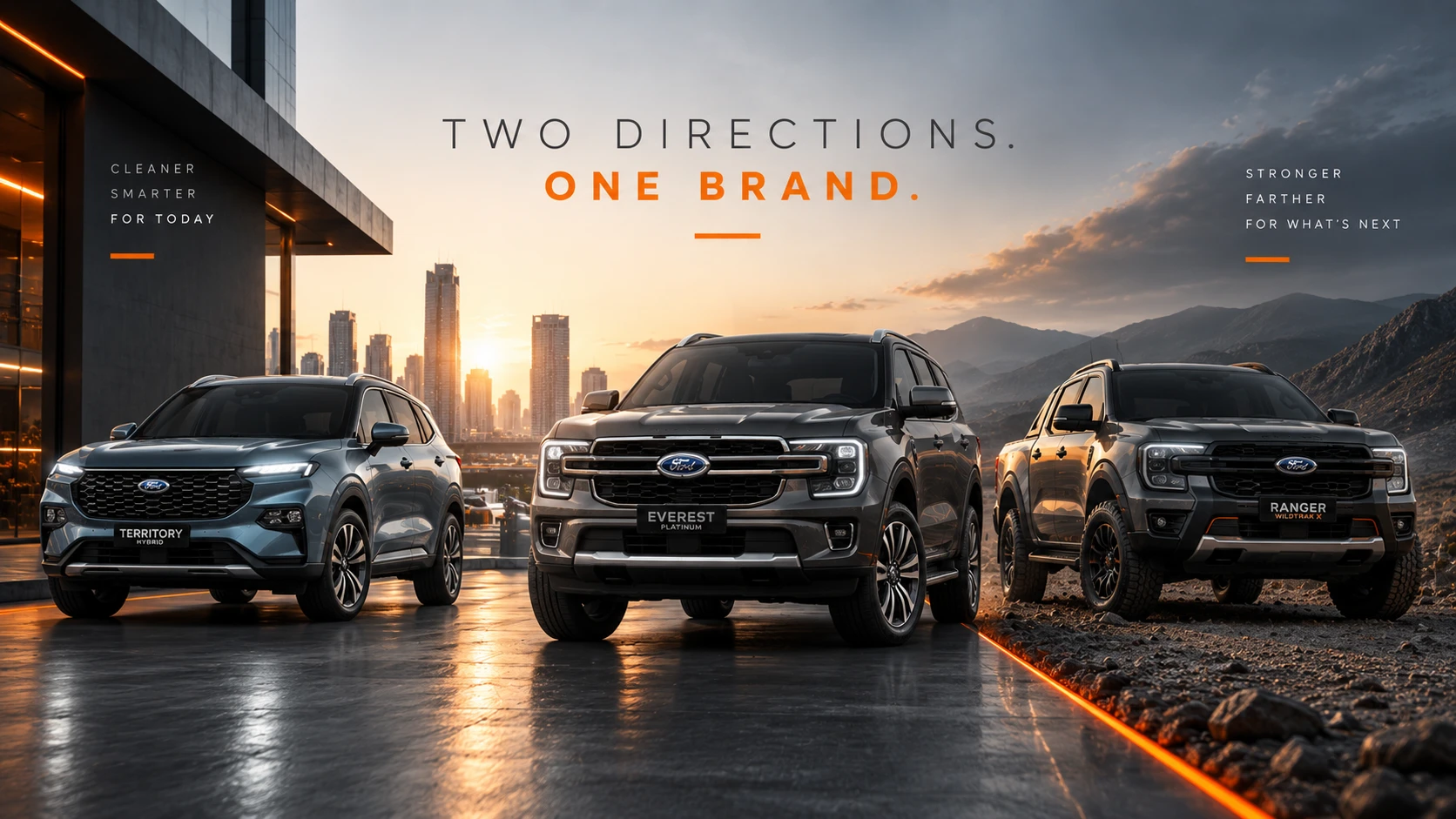
The automotive industry often makes the future sound simple. Gasoline and diesel are the past. Hybrids are the transition. Electric vehicles are the future. But walk into a Ford showroom in the Philippines today and the picture becomes much more complicated. On one side is the Territory Hybrid, an electrified crossover designed around efficiency and everyday urban driving. On the other are the newly refreshed Everest Platinum and Ranger Wildtrak X, both powered by a 3.0-liter V6 turbodiesel producing around 250 hp and a substantial 600 Nm of torque. Ford isn't choosing one side of the powertrain debate. It's selling both. And in the Philippine market of 2026, that strategy may make more sense than it initially appears. The Everest has always had the appearance of a large, powerful SUV. Now its flagship Philippine variant finally gets an engine to match. The new Everest Platinum 3.0 V6 4x4 sits at the top of the refreshed range with an official price of ₱2,849,000. Under the hood is Ford's 3.0-liter turbocharged V6 diesel. It produces approximately 250 hp and 600 Nm, connected to a 10-speed automatic transmission. Those numbers immediately separate it from the 2.0-liter four-cylinder diesel powering the lower Everest variants. But the Platinum isn't simply about the engine. It gets 21-inch wheels, Matrix LED headlights, a panoramic sunroof, quilted leather seating, heated and ventilated front seats, a 12.4-inch digital instrument display and a 12-inch infotainment system. Ford has essentially turned the Everest into something approaching a premium SUV without abandoning its body-on-frame roots. And that creates an interesting proposition. At a time when manufacturers are downsizing engines, adding electric motors and talking constantly about efficiency, Ford has given its flagship Everest two additional cylinders.
Then Ford Put the Same V6 Into the Ranger
The Ranger story may be even more interesting. Previously, Filipino buyers wanting a V6 Ranger had to move into Raptor territory. That's no longer the case. The regular Ranger Wildtrak 3.0 V6 4x4 now starts at ₱2,469,000, while the more off-road-oriented Wildtrak X 3.0 V6 4x4 costs ₱2,609,000. Both use the same basic 3.0-liter V6 turbodiesel producing approximately 250 hp and 600 Nm. The Wildtrak X then adds hardware intended for more serious terrain. It gets Bilstein position-sensitive dampers, increased ride height, all-terrain tires, 17-inch wheels, metal underbody protection, bash and skid plates and off-road side steps. So Ford isn't simply creating another appearance package. There's meaningful hardware underneath it. And this is happening while much of the rest of the industry is talking about batteries. This is where Ford's strategy becomes more interesting. Because sitting in the same Philippine lineup is the Territory Hybrid. Ford currently offers three Territory Hybrid variants; Trend ₱1,399,000, Titanium X ₱1,599,000, Platinum ₱1,655,000. Unlike a PHEV, there's nothing for the owner to plug in. The Territory uses a conventional full-hybrid architecture built around a 1.5-liter turbocharged dedicated hybrid engine, electric motor and 1.83-kWh lithium-ion battery. Ford lists the gasoline engine at 150 PS while the electric motor can produce 218 PS and 315 Nm, operating through a two-speed dedicated hybrid transmission. It's a completely different philosophy from the Everest Platinum. And yet Ford is selling both philosophies simultaneously. Imagine the two customers. One spends most of the week driving through Metro Manila traffic. That customer probably doesn't need 600 Nm from a 3.0-liter diesel. A hybrid crossover makes considerably more sense. For that person, a large diesel engine with four-wheel drive can still be extremely attractive. That's the important distinction. Electrification doesn't make every existing powertrain requirement disappear overnight. Different vehicles still perform different jobs. Look at several of the rapidly growing Chinese manufacturers we've been discussing. Much of their innovation is centered around electrification. Ford's Philippine strategy looks much broader. The Territory moves toward electrification. The Everest and Ranger continue developing diesel. The Ranger Raptor sits at the extreme end with a 3.0-liter twin-turbo gasoline V6, currently priced at ₱2.879 million. Ford isn't saying: “This is the one powertrain everyone should use.” It's effectively saying: “Choose the powertrain that fits what you actually do.” It's easy to criticize a large engine purely because smaller and more efficient alternatives now exist. But displacement isn't the only consideration for vehicles like the Ranger and Everest. Torque delivery matters. Towing matters. Payload matters. Off-road performance matters. Sustained highway driving matters.
Why 600 Nm Still Matters in an Age of Electrification?
And sometimes buyers simply want effortless power. The 600 Nm available from Ford's V6 diesel isn't there because someone needs it while crawling through EDSA traffic. It's there because these vehicles are designed to operate far beyond that environment. That doesn't mean every Everest buyer needs a V6. Most probably don't. That's precisely why Ford continues offering the 2.0-liter engine lower in the Everest range. The V6 becomes the choice for customers who specifically want it. Cars aren't purchased entirely through spreadsheets. If they were, we'd all probably drive the most efficient vehicle capable of completing our daily journey. But people buy vehicles for other reasons. Sound. Power. Character. Capability. Design. And sometimes simply because driving something powerful feels good. That's something the transition toward electrification occasionally overlooks. Electric motors can produce extraordinary acceleration. Hybrids can deliver excellent efficiency. But a large combustion engine still has a mechanical character that some buyers value. The V6 Everest and Ranger acknowledge that buyer rather than pretending they no longer exist. There's another detail in Ford's refreshed Ranger and Everest lineup that's easy to miss. Ford has discontinued the previous 2.0-liter bi-turbo diesel in the refreshed range and consolidated the regular diesel offering around a revised 2.0-liter single-turbo unit. More importantly for long-term ownership, reports on the new specification indicate Ford has moved the 2.0-liter engine from a wet timing belt to a timing chain. That's not the kind of feature that dominates launch advertisements. But it's exactly the kind of mechanical change long-term owners pay attention to. The 10-speed automatic has also become standard across the refreshed Ranger and Everest ranges. So Ford's changes aren't confined to adding a V6 badge.
The Territory May Actually Be the More Important Vehicle
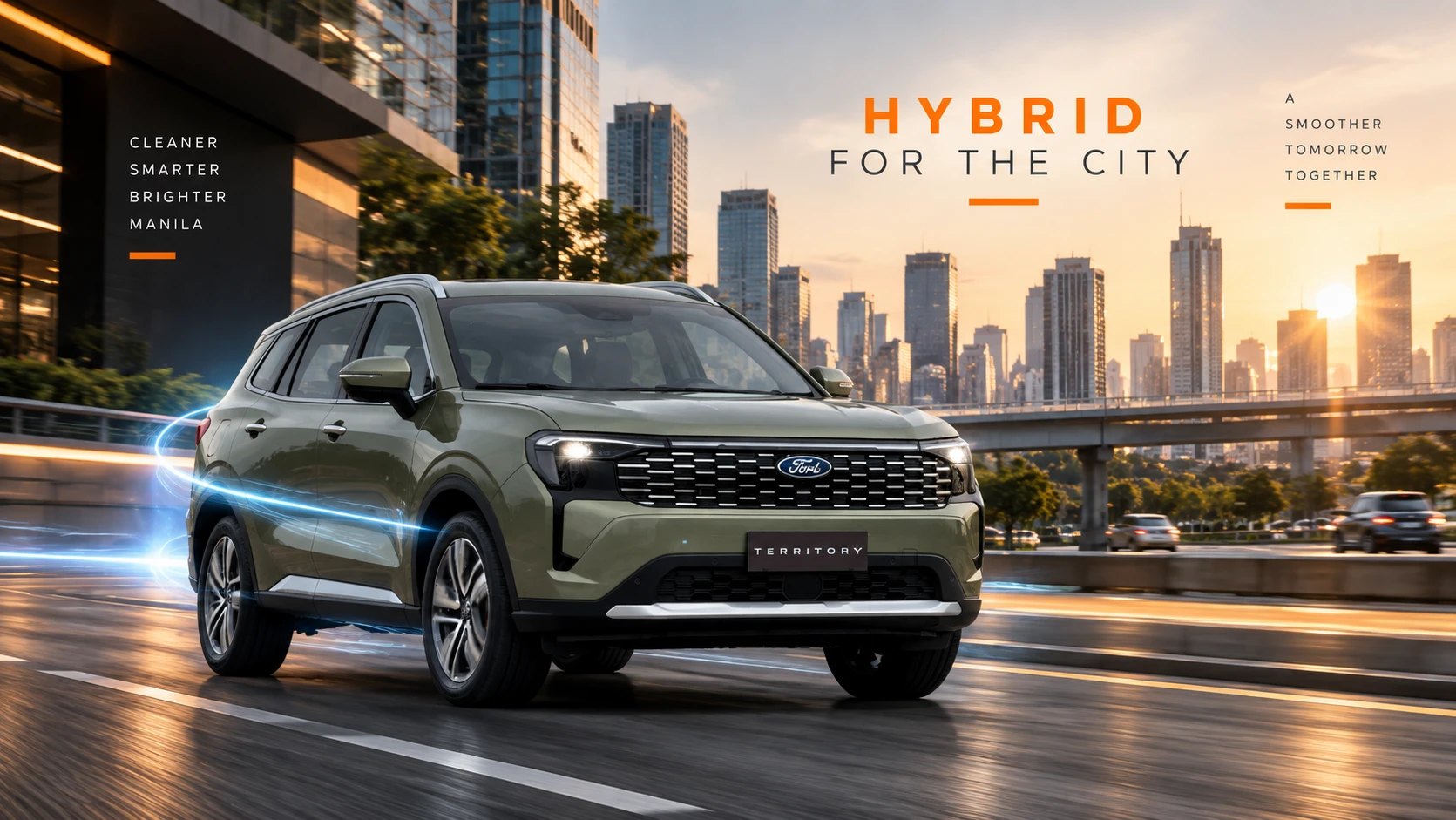 The V6 grabs attention. But commercially, the Territory Hybrid may tell us more about Ford's future. A midsize SUV or pickup buyer might still have strong reasons to choose diesel. A compact crossover buyer has fewer. Urban driving is where hybrid technology can make its strongest argument. Frequent stops allow regenerative braking. Electric assistance reduces the workload on the gasoline engine. Low-speed driving can make greater use of electric propulsion. And unlike a PHEV or BEV, the owner doesn't have to change their fueling routine or install a charger. You simply drive it. That removes one of the biggest barriers to electrification we've discussed before: Where do I charge? With a conventional hybrid, you don't need to answer that question. There is one interesting hole in this strategy. Ford Philippines now gives buyers conventional hybrid technology. And Ford sells powerful conventional combustion vehicles. But there's still a large space between them. The plug-in hybrid. That's exactly the part of the Philippine market where Chinese manufacturers are expanding rapidly. A PHEV can provide meaningful electric-only commuting while keeping a gasoline engine for longer journeys. For Philippine buyers who have home charging but aren't ready for a full EV, that formula is increasingly attractive. So while the Territory Hybrid broadens Ford's electrified offering, Ford's local lineup still leaves room for something between a conventional hybrid and a full battery EV. That's an area worth watching. There's another reason I think this strategy makes sense. Ford has a strong identity in pickups and SUVs. The Ranger is one of the company's most important products. The Everest has built a strong following. Trying to transform those vehicles overnight simply because electrification is fashionable could risk weakening what customers already like about them. Instead, Ford appears to be evolving different segments at different speeds. Urban crossover? Hybridize it. Heavy-duty lifestyle pickup? Give buyers a V6 diesel. Performance pickup? Keep the twin-turbo gasoline V6. Family SUV? Offer both a practical four-cylinder diesel and a flagship V6. It's not technologically pure. This brings us back to something we've repeatedly encountered while examining electrification in the Philippines. There isn't one Filipino driving environment. Someone living in a condominium in Makati has very different transportation needs from someone living in a provincial town. A business owner carrying equipment in a Ranger has different priorities from someone commuting in a Territory. A family regularly driving between Manila and Baguio has different requirements from someone whose vehicle rarely leaves Metro Manila. That makes the Philippine market particularly suitable for a multi-powertrain transition. All may coexist for quite some time. And once again, Chinese competition sits quietly in the background. Ford isn't operating in the same Philippine market it was five years ago. Customers can now walk into showrooms offering highly equipped hybrid, PHEV and electric SUVs at increasingly aggressive prices. The refreshed Ranger and Everest suggest Ford understands that simply relying on established nameplates isn't enough. The product itself has to keep moving. That raises expectations. More technology. More power. More standard equipment. Better efficiency. Better warranties. Better value.
My Veiw: The Philippines Auto Transition won't be One Size Fits All
I find Ford's current Philippine strategy interesting precisely because it isn't following one simple narrative. The Territory Hybrid acknowledges where the industry is heading. The Everest Platinum V6 and Ranger Wildtrak X acknowledge that we haven't arrived there yet. And perhaps both things can be true. Electrification will continue growing. Hybrids will become increasingly common. PHEVs and EVs will take a larger share of the market. But that doesn't mean every diesel engine suddenly becomes obsolete. For some vehicles and some owners, combustion still makes sense. For others, hybridization already makes more sense. Ford is effectively placing both choices in the showroom and allowing customers to decide. Maybe that's a more realistic picture of the automotive transition than declaring that one technology has already won. The future of the Philippine car market may not be electric versus combustion. For the next several years, it may simply be about having the right powertrain for the right job.
Comments
No comments yet. Be the first to join the discussion.