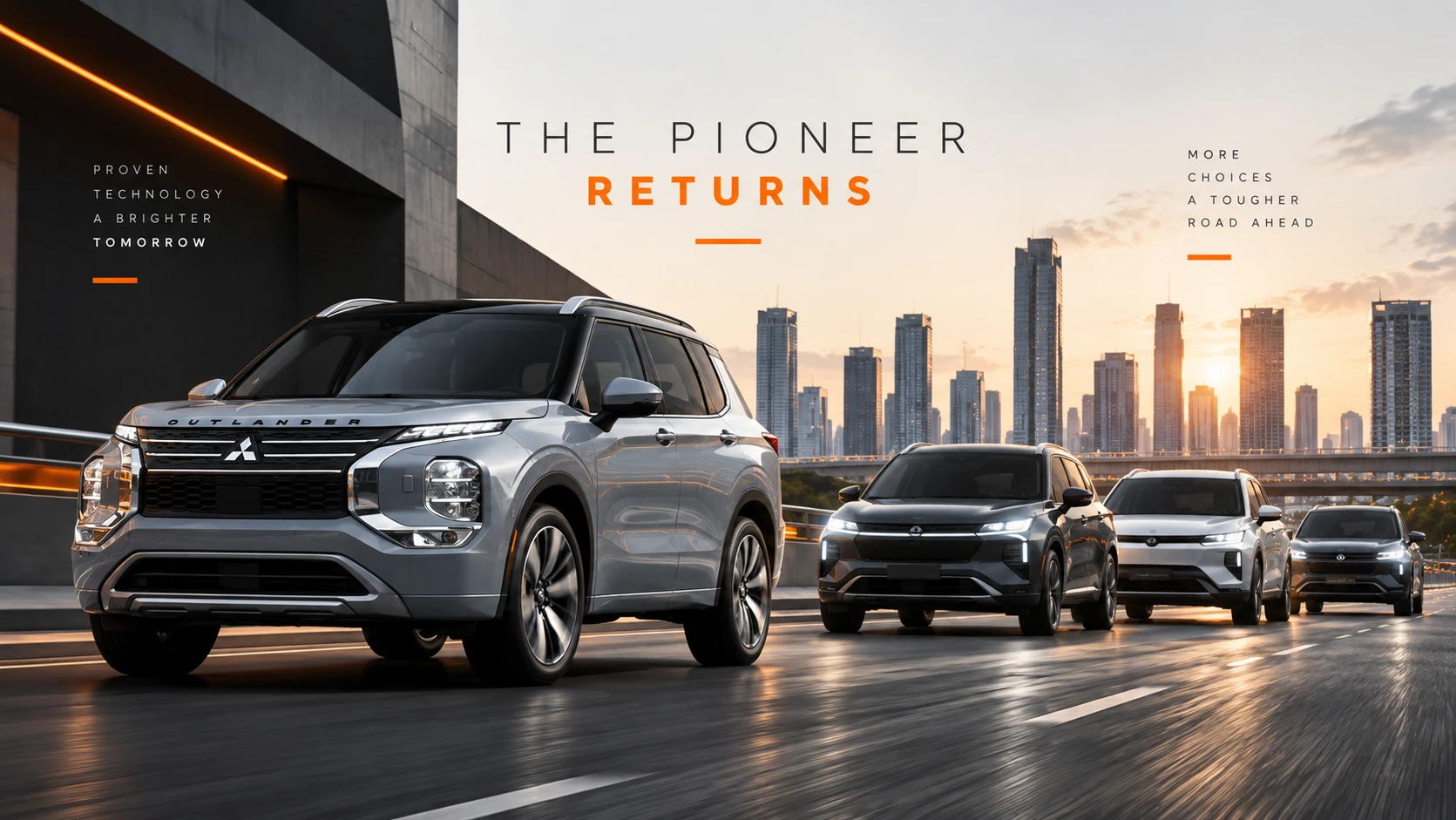
The Outlander PHEV Arrived Early Now the Market Has Caught Up
Mitsubishi didn't suddenly discover plug-in hybrids. In fact, it was one of the manufacturers that helped prove the idea could work in an SUV. The original Outlander PHEV was introduced globally in 2013, and Mitsubishi describes it as the world's first plug-in hybrid SUV. Since then, the model has been sold in more than 60 countries. The Philippines even received the previous-generation Outlander PHEV in 2020. But there was a problem. It arrived before the Philippine market was truly ready for it. Six years later, Mitsubishi has brought the Outlander PHEV back. This time, however, Mitsubishi isn't introducing Filipinos to the idea of a plug-in hybrid. Think about the Philippine automotive landscape in 2020. Charging infrastructure was much smaller. EV awareness was limited. Electrified vehicles were still viewed by many consumers as expensive experiments. Gasoline and diesel remained the obvious choices. And plug-in hybrids occupied an awkward middle ground that many buyers didn't completely understand. Then Mitsubishi introduced the Outlander PHEV. Technically, the concept made a lot of sense. Drive electrically for shorter trips, charge the battery externally and keep a gasoline engine available when you need to travel farther. That's essentially the same basic argument being used to sell many PHEVs today. But good technology can still arrive at the wrong time.
The Philippine market hadn't caught up yet.
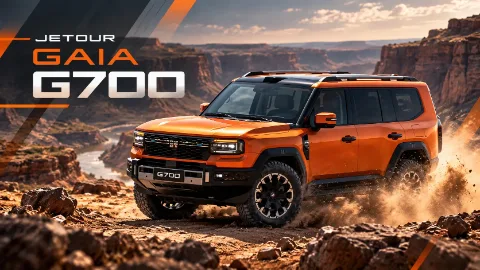
Fast-forward to 2026 and plug-in hybrids are no longer a curiosity. During the first half of this year, Philippine sales of hybrids, PHEVs and battery EVs reached 31,381 units, up 132.7% compared with the same period in 2025. PHEV growth was particularly dramatic. Only 160 PHEVs were recorded during the first half of 2025 in the available CAMPI data. One year later, that figure had climbed to 5,531 units. That's not a small change. That's a market transforming in front of us. And look at who's leading it. Jetour recorded 1,891 PHEV sales during the first half of 2026. Geely recorded 1,270. Chery followed with 737, while Omoda & Jaecoo recorded 421. Most of the leading names on that PHEV list are Chinese. That is the market Mitsubishi has returned to. There's something fascinating about that reversal. Mitsubishi has decades of experience in the Philippines. It has enormous brand recognition. It has an established dealer network. And it has considerably more history developing plug-in hybrid SUVs than many of the companies it now competes against. Yet in the Philippine PHEV market of 2026, Mitsubishi is effectively the newcomer. The competitors got there first. They educated buyers. They put PHEVs in showrooms. They made long combined-range claims familiar. They normalized plugging a gasoline-powered vehicle into a charger.
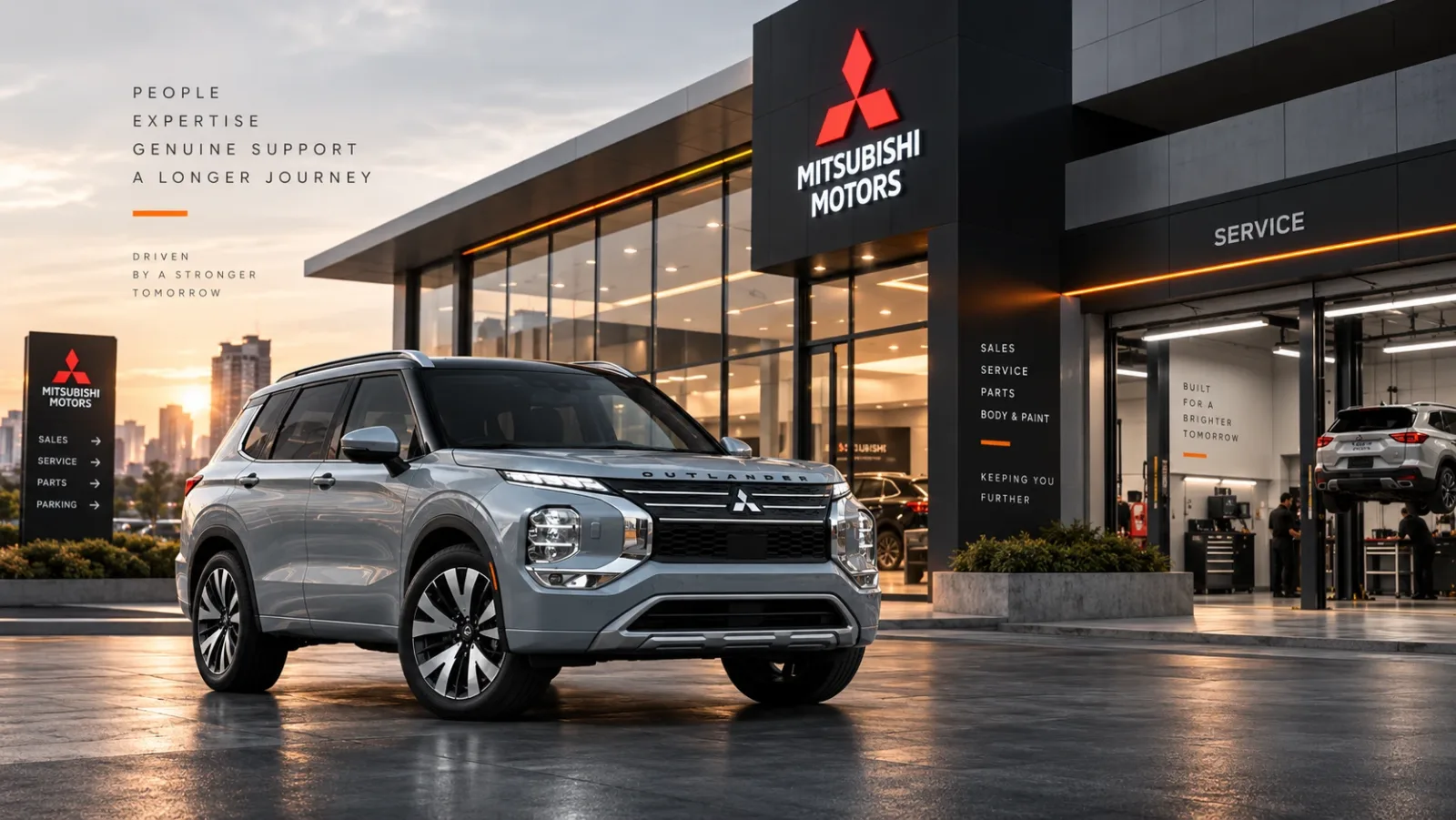 PPerhaps most importantly, they changed consumer expectations about how much technology and equipment should come with a new vehicle. Mitsubishi may have helped pioneer the technology. But this time it has to fight for attention. Fortunately, Mitsubishi hasn't returned with an ordinary hybrid wearing a PHEV badge. The new Philippine-market Outlander PHEV combines a 2.4-liter MIVEC gasoline engine with separate front and rear electric motors. That gives it an electrically driven all-wheel-drive architecture integrated with Mitsubishi's Super All-Wheel Control, or S-AWC system. Mitsubishi positions the Outlander as its new Philippine flagship. Local specifications put combined system output at approximately 306 hp and 450 Nm, with Mitsubishi claiming up to approximately 100 km of pure-electric driving and close to 1,000 km of combined range under its stated testing parameters. Those numbers immediately make the Outlander much easier to understand in 2026 than its predecessor was in 2020. A 100-km claimed EV range potentially covers many ordinary daily driving routines without requiring the gasoline engine. Then the engine remains available when the journey becomes longer. It's essentially the philosophy we've been discussing in our previous PHEV article: electric for everyday driving, gasoline when necessary. Mitsubishi itself describes the concept in almost exactly those terms “EV for everyday driving, hybrid for longer journeys.”
Mitsubishi’s PHEV Advantage May Be Traction, Not Just Electric Range
This is where Mitsubishi has an opportunity to differentiate the Outlander. Some PHEVs are primarily sold around efficiency. Others emphasize enormous combined driving ranges. The Outlander can make another argument: traction and vehicle dynamics. Mitsubishi has spent decades building its reputation around four-wheel-drive vehicles. And various generations of its Super All-Wheel Control technology. The Outlander PHEV connects electrification with that history. Because it has electric motors at both ends, Mitsubishi can electronically manage torque between the front and rear wheels while integrating braking and stability control through S-AWC. That's potentially a stronger identity than simply saying: “Here's another PHEV that can travel a long distance.” Chinese PHEVs Changed the Value Equation This is another way Chinese manufacturers have changed the Philippine automotive market. They've conditioned buyers to examine specification sheets aggressively. How large is the battery? How far can it travel electrically? How powerful is it? How large is the screen? Does it have a panoramic camera? Fast charging? How long is the warranty? What equipment is standard? And finally: How much does it cost?
Why Long-Term Support Could Matter More Than Another 50 km of EV Range?
That's a very different buying environment from the one Mitsubishi encountered when it introduced the previous Outlander PHEV. Brand heritage alone isn't enough anymore. The product has to justify itself line by line. There's another side to this argument. Specifications aren't everything. We've discussed this in our article about Chinese brands changing the Philippine market. Buying a vehicle isn't simply buying horsepower, battery capacity and screens. You're also buying the organization behind the vehicle. And hopefully many years of continued manufacturer presence. This is where Mitsubishi's history in the Philippines becomes valuable. Mitsubishi Motors Philippines is currently the country's second-largest automaker by sales in the available H1 2026 industry figures, recording 36,321 vehicles during the first six months of the year. That's an established ownership ecosystem. And for someone considering a complicated vehicle containing a gasoline engine, battery, power electronics and two electric motors, long-term support may matter just as much as another 50 kilometers of advertised range.
The Competition Is Good for Everyone And this brings us back to the bigger transformation happening in the Philippine automotive market. Chinese manufacturers forced their way into segments that established manufacturers once controlled almost automatically. Now the established brands are responding. That's exactly what competition is supposed to do. The Outlander PHEV doesn't need to destroy Jetour, Geely, BYD or anyone else for its return to matter. Its presence gives consumers another option. And Mitsubishi's return puts pressure on newer PHEV manufacturers in areas where established brands can be particularly strong: dealer support, durability, chassis engineering and long-term ownership. At the same time, newer manufacturers pressure Mitsubishi on pricing, technology, equipment and battery performance. Both sides have something to prove. And Filipino buyers benefit from that fight.
The Outlander PHEV’s Real Test Is Proving It’s Worth the Premium
But Then We Get to the Price. And this may be Mitsubishi's biggest challenge. The new Outlander PHEV carries an official price of ₱2,848,000. Mitsubishi is offering an introductory price of ₱2,749,000 until September 30, 2026. That firmly places it in premium territory. And today's Filipino PHEV buyer has choices. A lot of them. That means the Outlander can't compete purely by saying that it's electrified. Electrification itself is no longer special enough. Mitsubishi has to convince buyers that they're paying for something beyond the battery and electric motors. And Mitsubishi's experience developing this particular type of vehicle. Those become much more important parts of the argument. Mitsubishi Isn't Trying to Win a Price War. I don't think Mitsubishi should try to beat every Chinese PHEV on price. It probably can't. More importantly, it may not need to. The better strategy is to convince buyers that the Outlander represents a mature interpretation of PHEV technology rather than simply another electrified SUV. That means Mitsubishi needs to sell its experience. Not just its badge. The Outlander PHEV first appeared globally in 2013 and has since been sold across more than 60 countries. Mitsubishi says the model led Japan's PHEV market in fiscal 2024 and 2025 and was Canada's top-selling PHEV for three consecutive years from 2023 through 2025. That's meaningful history. But Philippine buyers will ultimately judge the new vehicle on what it delivers here. Ironically, Mitsubishi's biggest disadvantage six years ago may now have disappeared. Filipino consumers understand electrification much better. Charging stations are more visible. Home chargers are becoming familiar. Hybrid terminology has entered normal automotive conversation. Fuel prices have made efficiency increasingly relevant. And consumers now see PHEVs from multiple manufacturers. Mitsubishi no longer has to explain why someone might want an SUV that can operate electrically while retaining a gasoline engine. Its competitors have already helped explain that. The challenge now is convincing buyers why they should choose Mitsubishi's version.
The PHEV Pioneer Returns to a Market It No Longer Owns
Mitsubishi finds itself in an unusual position. It helped pioneer the plug-in hybrid SUV, yet today it has to prove itself in a Philippine PHEV market that has been transformed largely by newer competitors. The company that once had to explain the technology is now returning to a market where buyers already understand what a PHEV can offer. That isn't necessarily a disadvantage. Mitsubishi brings experience. It has an established Philippine dealer and service network. It has S-AWC. And unlike manufacturers that are only beginning to explore plug-in hybrids, Mitsubishi has spent years developing vehicles around this technology. But history alone won't sell the new Outlander PHEV. At nearly ₱2.85 million, Filipino buyers will naturally compare it with increasingly competitive alternatives. Mitsubishi therefore has to demonstrate that its engineering, driving experience, all-wheel-drive capability and long-term ownership support justify that premium positioning. Six years ago, Mitsubishi's challenge was convincing Filipinos that a plug-in hybrid SUV made sense. In 2026, much of that argument has already been won. The question has changed. Why should today's PHEV buyer choose the pioneer when there are now so many challengers? How Mitsubishi answers that question may ultimately determine whether the Outlander PHEV becomes simply another electrified SUV in a crowded market or successfully begins a new chapter for the brand in the Philippines. And that's exactly why the Outlander PHEV's return is worth watching.
Comments
No comments yet. Be the first to join the discussion.