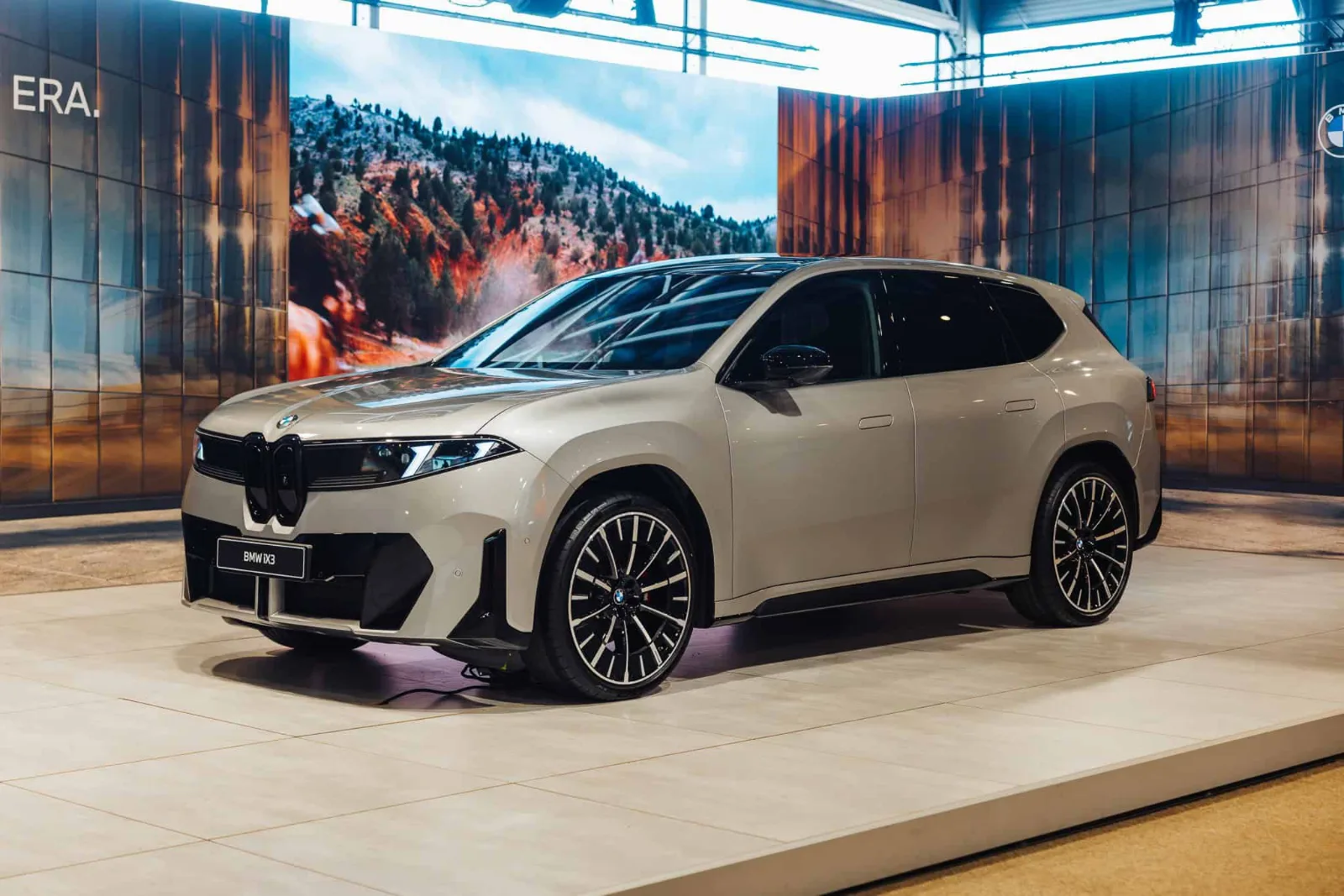
BMW Group Hits 2 Million EV Sales as the New iX3 Leads Its Next Electric Era
BMW’s electric-vehicle story has reached a point that would have seemed difficult to imagine when the unusual BMW i3 appeared in 2013. The BMW Group has now delivered two million battery-electric vehicles to customers worldwide, a milestone reached in August 2026. Including plug-in hybrids, the company says approximately 3.5 million electrified vehicles have been delivered since 2013. More than one in four BMW Group vehicles sold during the first half of 2026 carried some form of electrified powertrain. The two-millionth BEV was a BMW i5 M60 xDrive, produced at BMW Group Plant Dingolfing in Germany and delivered to a customer in Spain. Interestingly, BMW had already announced another two-million milestone several months earlier: in May, that same Dingolfing-built i5 represented the Group’s two-millionth fully electric vehicle produced. Those numbers matter, but perhaps the more important story is what is happening next. BMW’s first generation of modern electric cars often existed alongside the company’s traditional lineup as something different. The original i3 looked different, was engineered differently and was clearly intended to demonstrate what an electric BMW could become. The new BMW iX3 represents almost the opposite philosophy. Instead of placing electric vehicles in their own experimental corner of the showroom, BMW is increasingly integrating them into the vehicle families customers already know. And early demand for the first Neue Klasse model suggests buyers are responding.
From the Experimental i3 to Two Million BEVs
When BMW launched the original i3 in late 2013, the global EV market was still small. Tesla was expanding with the Model S. Nissan had already introduced the Leaf. Charging infrastructure remained limited in many markets, battery costs were high and mainstream buyers were still learning what living with an electric car actually involved. The i3 was BMW’s attempt to approach electrification almost from first principles. Its carbon-fiber-intensive construction, unusual proportions, minimalist interior and rear-mounted electric drivetrain made it dramatically different from a conventional 3 Series or X3. Thirteen years later, BMW’s electric strategy looks much less experimental. In 2025 alone, the BMW Group delivered roughly 442,000 battery-electric vehicles worldwide, representing about 17.9% of total Group sales. When plug-in hybrids were included, electrified vehicles accounted for just over 26% of BMW Group deliveries. The transition has therefore moved beyond proving that BMW can build an electric vehicle. The question now is whether electric power can become a normal part of BMW’s highest-volume and most important model families. That is where the iX3 becomes particularly significant.
The iX3 Is Emerging as BMW’s EV Star
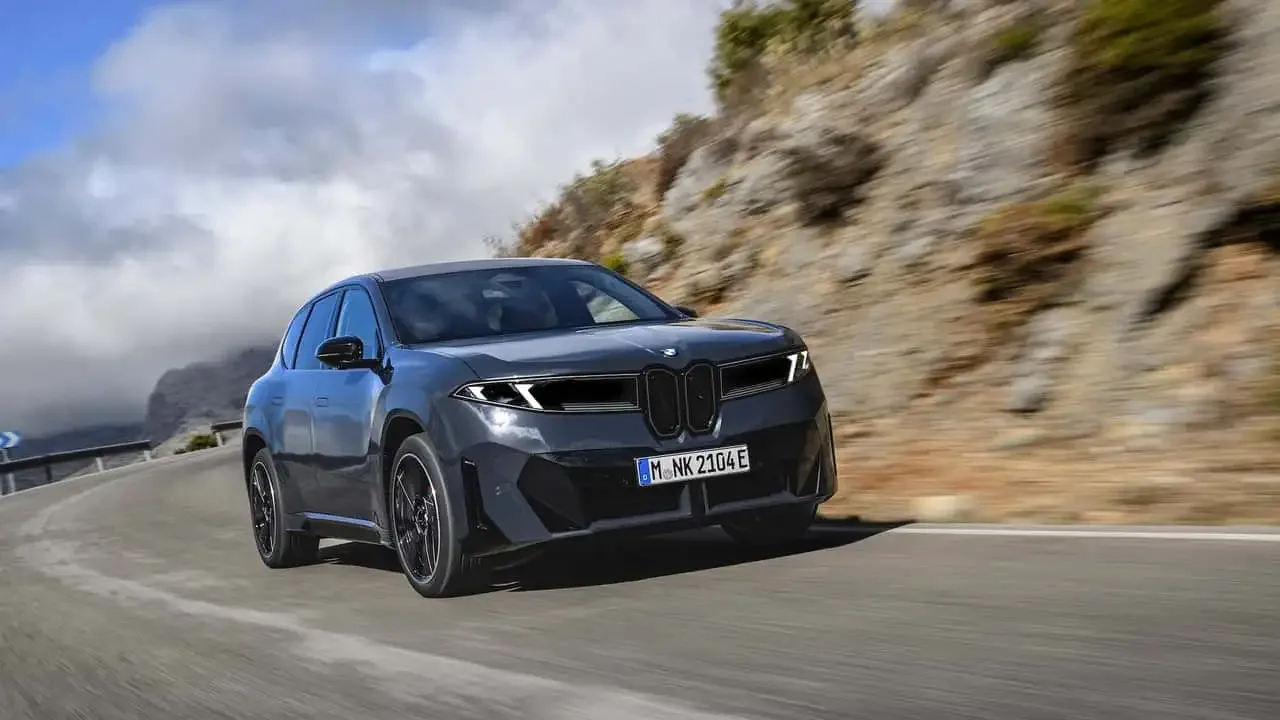 The new iX3 is the first series-production model based on BMW’s Neue Klasse generation of electric-vehicle technology. And early European demand appears strong. BMW said in August that it was approaching 100,000 new orders for the iX3. Since the vehicle’s world premiere, one out of every three fully electric BMWs ordered in Europe has been an iX3. Even more striking, within the broader X3 family, approximately one in every two vehicles ordered in Europe is now the fully electric iX3. That is an important distinction. It suggests buyers are not simply comparing the iX3 with other dedicated EVs. Some are apparently choosing between different versions of a familiar BMW vehicle family and deciding that the electric version makes sense. That is a much more mature stage of EV adoption than the one represented by the original i3. Instead of asking customers to buy something radically different because it is electric, BMW can now increasingly ask a simpler question: which powertrain do you want in the type of vehicle you were already considering?
Europe Is Driving BMW’s Current Electric Momentum
Europe has become particularly important to BMW’s recent BEV growth. During the second quarter of 2026, BMW Group battery-electric sales in Europe climbed 38% to 81,445 vehicles as iX3 availability increased. Fully electric vehicles represented around 28% of BMW Group sales in Europe during the first half of the year. That is a substantial shift. Only a few years ago, electric vehicles still represented a relatively small portion of most traditional premium manufacturers’ sales. BMW is now operating in a European market where nearly three out of every ten vehicles it sells can already be fully electric. And the iX3 gives the company something it did not previously have: an EV built from the beginning around its newest generation of battery, software and electrical architecture rather than an electric drivetrain adapted into an existing platform.
Neue Klasse Is About More Than a New Body Style
The iX3 matters because the Neue Klasse platform represents a major technical reset for BMW. The iX3 50 xDrive uses BMW’s sixth-generation eDrive technology, including new cylindrical battery cells, an 800-volt electrical architecture and a battery that is more deeply integrated into the vehicle structure. BMW says the new cell technology provides around 20% higher cell-level energy density compared with its previous generation, while the new electrical system enables faster charging and reduced drivetrain losses. The high-voltage battery in the iX3 50 xDrive has 108.7 kWh of usable capacity. Depending on specification and market testing standards, BMW quotes up to 805 km of WLTP range, while the U.S.-spec 2027 iX3 50 xDrive has received an EPA estimate of up to 434 miles with the most efficient wheel and tire configuration. Charging is another major part of the Neue Klasse strategy. With its 800-volt architecture, the iX3 can accept up to 400 kW of DC charging power. BMW says the battery can charge from 10% to 80% in approximately 21 minutes at a suitable high-power charger, while as much as 372 km of WLTP-rated range can be added in ten minutes under the specified conditions. Those numbers illustrate how quickly the technical priorities of premium EVs are changing. Range still matters, but reducing charging time, improving efficiency and integrating software more deeply into vehicle control are becoming just as important.
BMW Is Trying to Make the EV Feel Like a BMW
There is another challenge that specifications alone cannot solve. BMW has spent decades building its identity around driving dynamics. An EV can easily deliver enormous straight-line acceleration. Electric motors provide immediate torque, and adding another motor can produce very large power figures. But making a fast electric car is not necessarily the same as making an electric car that feels distinctly BMW. That is one reason the company places so much emphasis on the Neue Klasse electronics architecture and its so-called Heart of Joy controller. The iX3 uses four high-performance computers that BMW calls “superbrains,” with one combining drivetrain, braking, energy recuperation and vehicle-dynamics control. BMW argues that tighter integration allows the vehicle to coordinate these functions more quickly and smoothly than previous systems. Whether drivers ultimately agree will require more than specifications and manufacturer claims. But strategically, the direction is clear. BMW does not simply want Neue Klasse vehicles to be competitive electric cars. It needs them to preserve enough of the brand’s character that customers still recognize the experience as BMW.
The Electric Transition Is Not Moving at the Same Speed Everywhere
BMW’s EV story is also a reminder that electrification is not progressing uniformly across global markets. Worldwide, BMW Group BEV deliveries rose modestly in 2025 to approximately 442,000 vehicles, up around 3.6%. Europe showed much stronger momentum, with fully electric BMW Group sales increasing more than 28% during that year. The United States has presented a different picture. BMW of North America reported 42,484 BEV sales in 2025, down 16.7% from 2024. The company described that performance as reflecting softer U.S. EV demand, particularly toward the end of the year. That difference explains part of BMW’s broader powertrain strategy. The company continues to sell combustion vehicles, plug-in hybrids and fully electric cars rather than betting everything on a single drivetrain immediately. That may look less dramatic than declaring a fixed date for ending combustion engines, but it gives BMW flexibility in markets where the transition is happening at very different speeds.
The New BMW i3 Takes Neue Klasse Into the Heart of the Brand
The iX3 is only the first major step. BMW has already begun production of the new BMW i3, the second Neue Klasse model, at its Munich plant. BMW said production began in August 2026 and that early demand has been strong following the opening of orders. The name is significant, but this is not a direct replacement for the quirky compact i3 of 2013. The new model is effectively an electric interpretation of BMW’s traditional sports-sedan formula and brings Neue Klasse technology directly into territory historically occupied by the 3 Series. BMW’s U.S. specifications for the i3 50 xDrive describe an estimated range of up to 440 miles, an 800-volt system and DC charging at up to 400 kW. That makes the i3 potentially more strategically important than another niche electric model. The 3 Series has long sat near the center of BMW’s identity. Bringing an electric model into that space means Neue Klasse technology is moving from the edges of the portfolio toward its core.
Two Million Is a Milestone, but the Next Million Matters More
BMW’s two-million-BEV milestone is impressive, but it also shows how long automotive transitions take. The company’s modern electric journey began with the i3 in 2013. It took more than a decade to deliver two million fully electric vehicles. But the market BMW operates in today looks very different from the one that greeted the first i3. Charging infrastructure has expanded dramatically. Battery technology has improved. Consumers understand EVs better. Governments have introduced increasingly strict emissions rules. And manufacturers from China, Europe, Korea and the United States are competing aggressively for electric-car buyers. BMW is therefore no longer being judged simply on whether it can produce a credible EV. It is being judged against companies whose newest platforms were designed entirely around electric propulsion. That raises the stakes for Neue Klasse. The iX3 must compete on range, charging, efficiency, software, pricing and driving experience while still feeling worthy of the BMW badge. Early European demand suggests BMW has made a convincing start.
The Bigger Change Is That Electric BMWs Are Becoming Normal
Perhaps the most important part of BMW’s two-million milestone is not the number itself. It is the change in how the company approaches electric vehicles. The original i3 existed almost as a laboratory on wheels. It demonstrated lightweight materials, unusual packaging and electric propulsion at a time when few mainstream premium buyers were ready to abandon combustion. The iX3 is different. It is an electric SUV competing inside one of BMW’s most important vehicle families. The new i3 goes even further by bringing Neue Klasse technology into the territory of BMW’s traditional sports sedan. That suggests BMW’s electric strategy has moved beyond experimentation. Electric vehicles are becoming part of the normal product cycle. And if the iX3 can maintain its early momentum while the new i3 and future Neue Klasse models expand the lineup, BMW’s next million BEV deliveries may arrive considerably faster than its first two million. The bigger question is no longer whether BMW has an electric future. It is how quickly that electric future becomes indistinguishable from BMW’s mainstream business.
Sources & References
BMW Group - “Neue Klasse accelerates growth in fully-electric vehicle sales: Milestone of two million achieved”, August 27, 2026. This is the primary source for the two-million BEV delivery milestone, approximately 3.5 million electrified vehicles, iX3 order momentum, European Q2 BEV sales and the start of new i3 production. BMW Group PressClub
BMW Group PressClub Two million BEVs milestoneBMW Group - “BMW Group produces its two-millionth all-electric vehicle”, May 5, 2026. Primary source for the earlier production milestone and the Dingolfing-built i5 M60 xDrive. BMW Group PressClub
BMW Group PressClub Two-millionth BEV producedBMW Group - 2025 Group Report / Annual Conference 2026. Source for 2025 worldwide BEV deliveries, electrified-vehicle share and overall sales mix. BMW Group
BMW Group Annual Conference 2026BMW Group - “The start of a new era. The new BMW iX3.” Primary technical source for the iX3’s Gen6 battery, 108.7-kWh usable capacity, 800-volt architecture, WLTP range and 400-kW charging capability. BMW Group PressClub
BMW Group PressClub New BMW iX3 technical overviewBMW of North America - 2027 BMW iX3 50 xDrive pricing and range announcement, May 2026. Source for the U.S. EPA range, charging figures and U.S. specification. BMW Group PressClub
BMW USA PressClub 2027 BMW iX3 50 xDriveBMW of North America - Full Year 2025 U.S. Sales Results. Source for BMW’s 42,484 U.S. BEV sales in 2025 and the 16.7% year-over-year decline. BMW Group PressClub
BMW USA 2025 U.S. sales resultsBMW of North America - “The new BMW i3. Second model of the Neue Klasse.” Primary source for the new i3’s 800-volt architecture, up-to-400-kW charging and projected U.S. range. BMW Group PressClub
BMW USA PressClub New BMW i3
Comments
No comments yet. Be the first to join the discussion.