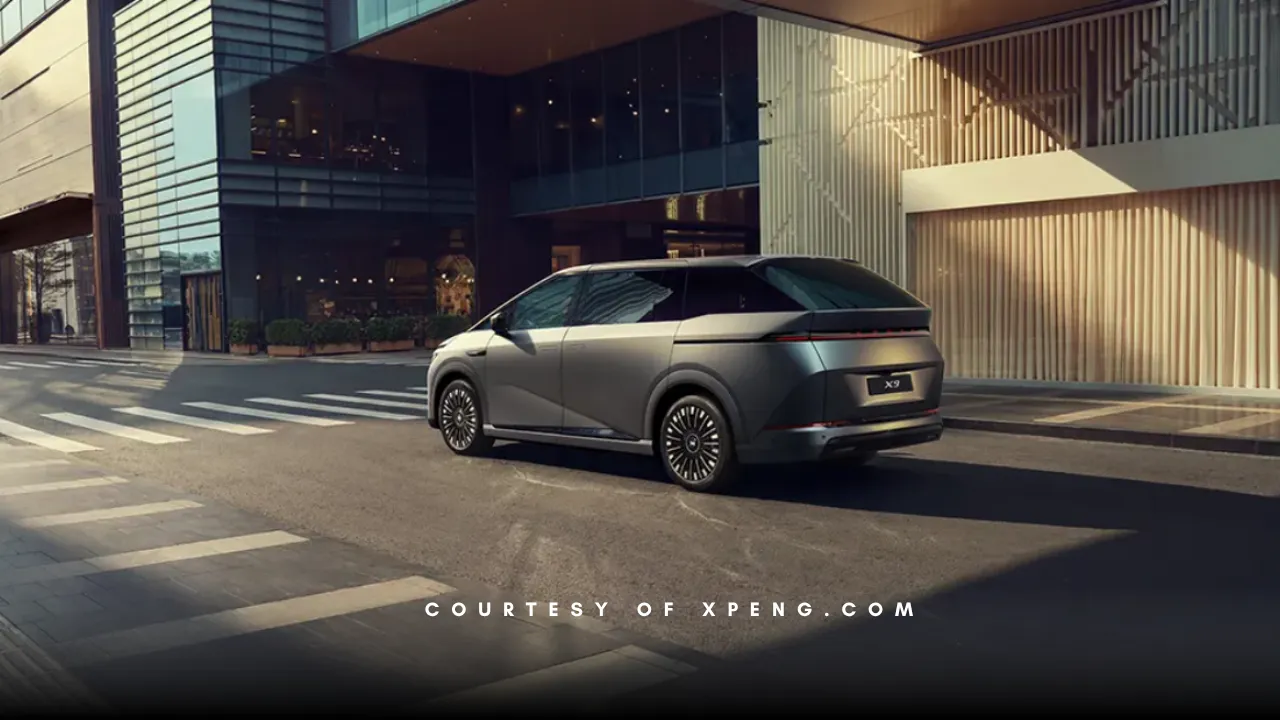
Chinese electric vehicle manufacturer XPENG is preparing to officially enter the Philippine automotive market, and it wants Filipino buyers to see the company as more than another EV brand. XPENG Philippines will formally launch on September 25, 2026, introducing two very different electric vehicles: the sporty XPENG L03 SUV coupe and the premium seven-seat XPENG X9 electric MPV. Even before the official launch, XPENG has already revealed pricing. The L03 EV RWD Long Range Ultra will start at ₱2.058 million, while the flagship X9 with Second Row Premium Seat Package is priced at ₱4.058 million. But XPENG's Philippine strategy isn't focused solely on electric propulsion. The Chinese automaker wants to introduce Filipino drivers to what it calls “AI Mobility” vehicles designed around artificial intelligence, connected software, advanced driver-assistance technology and increasingly intelligent interaction between the car and its occupants. That could make XPENG one of the more interesting new Chinese brands entering an already rapidly changing Philippine EV market.
XPENG Is Coming Directly to the Philippines
One important aspect of XPENG's Philippine arrival is how the company is entering the market. Rather than relying entirely on a third-party distributor, the local operation will be handled by XPENG Philippines, the automaker's direct subsidiary. The company will oversee local sales, marketing, distribution and retail operations. That structure signals a longer-term commitment to the Philippine market and gives XPENG greater control over how its vehicles, technology and customer experience are introduced locally. The Philippines also becomes part of XPENG's wider international expansion as the company increases its presence beyond China. Instead of launching with several closely related vehicles, XPENG has chosen two products aimed at very different customers. The L03 is a sleek electric SUV coupe targeting buyers looking for a technology-focused personal or family EV. The X9, meanwhile, is a much larger seven-seat electric MPV designed around executive-class comfort, family travel and premium passenger space. Together, the two vehicles give XPENG an entry point into two increasingly important segments of the Philippine EV market. The L03 enters the highly competitive electric crossover category. The X9 enters the premium MPV market, where electrification is increasingly becoming part of the luxury car conversation.
XPENG L03: The ₱2.058-Million Entry Point
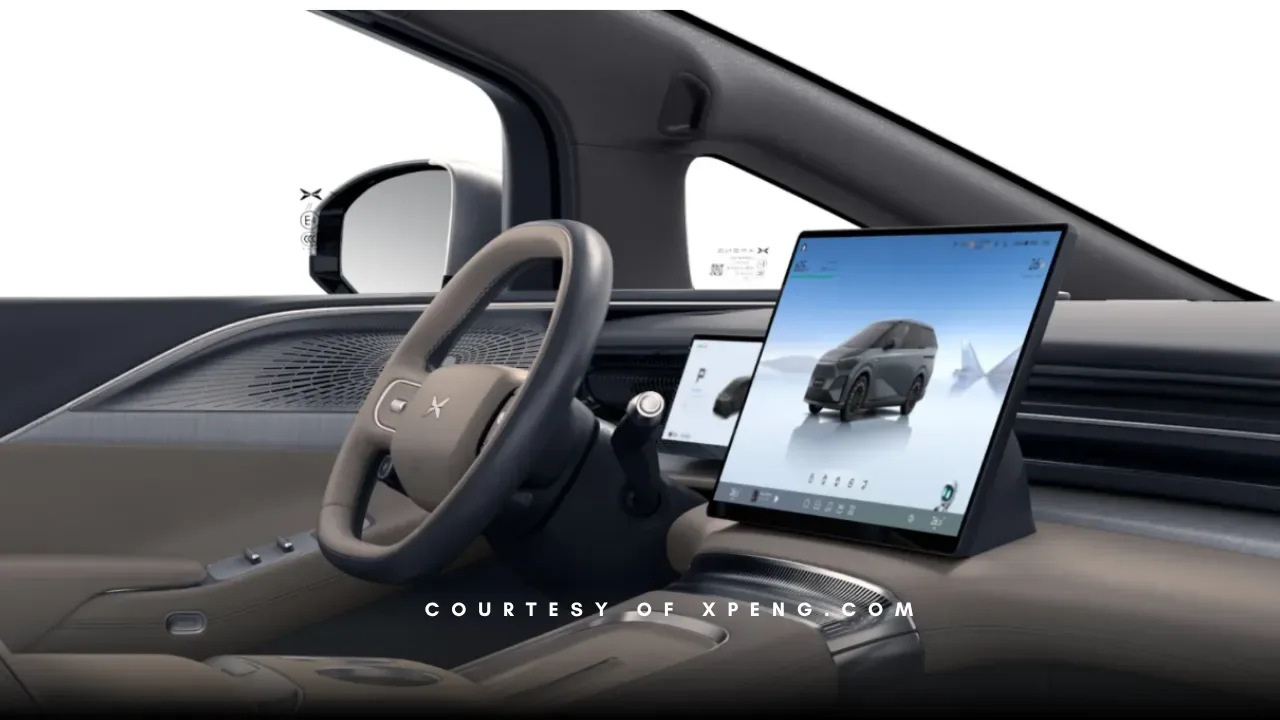
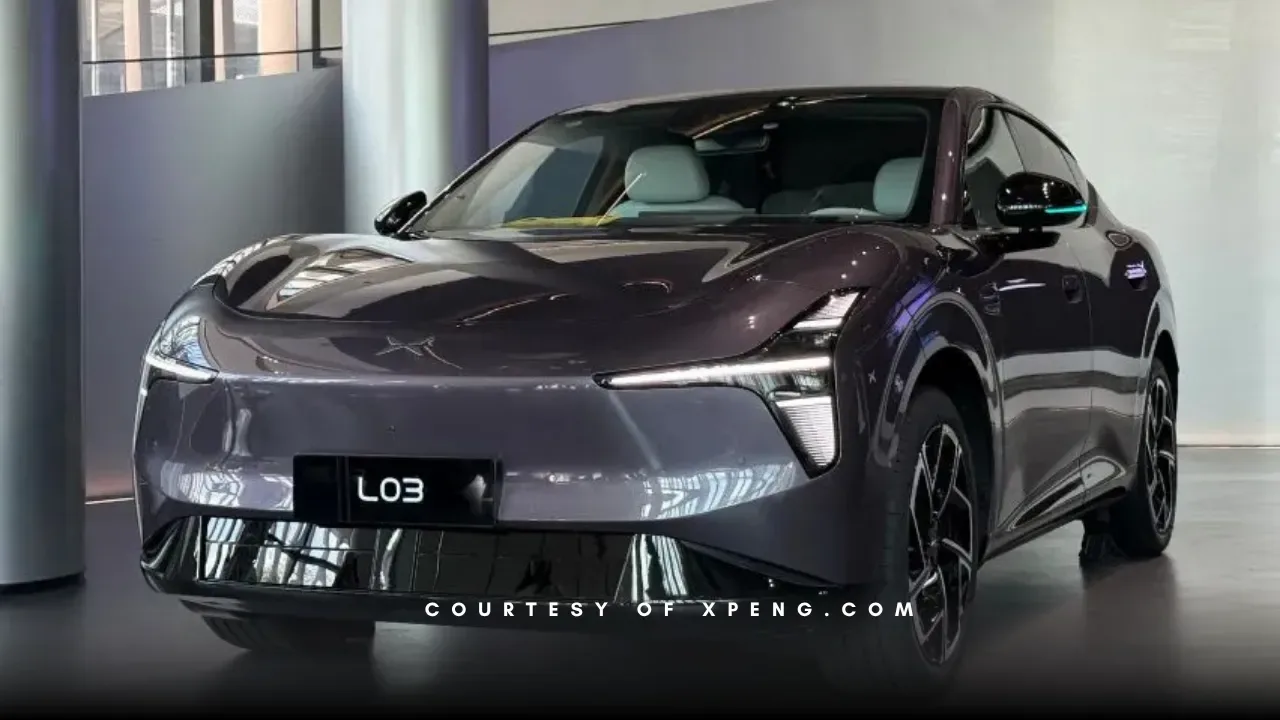 For many Filipino buyers, the XPENG L03 will probably be their first introduction to the brand. XPENG describes it as a next-generation AI SUV coupe. Its design combines crossover proportions with a streamlined fastback roofline, giving it a noticeably sportier appearance than a conventional box-shaped SUV. For the Philippines, XPENG has announced the L03 EV RWD Long Range Ultra at ₱2.058 million. The L03's positioning is important. At just over ₱2 million, it places XPENG directly into a part of the EV market where buyers already have an expanding selection of electric crossovers from Chinese and established international manufacturers. XPENG therefore needs to compete on more than styling and electric range. Its answer is technology. Inside, the L03 emphasizes digital features, comfort and flexible storage. XPENG's Philippine product information highlights features such as 256-color interactive ambient lighting, electrically controlled air vents and extensive storage solutions. Depending on configuration, the seats can also offer heating, ventilation and a 14 point massage function. The vehicle provides a 102 liter front trunk in addition to approximately 539 liters of rear cargo capacity, giving owners storage at both ends of the vehicle. There are also smaller practical details throughout the cabin, including a pull-out drawer underneath the second-row seats and mounting points incorporated into the interior. It is a good example of how newer Chinese EV manufacturers are increasingly treating the cabin as both a passenger space and a configurable technology environment.
XPILOT ASSIST Brings Advanced Driver Assistance
The L03 also incorporates XPENG's XPILOT ASSIST driver-assistance technologies. Available functions include adaptive cruise control, lane-centering assistance, automatic lane-changing assistance and intelligent parking features. These systems are designed to reduce driver workload, particularly during highway driving and parking. However, they remain driver-assistance systems, not a replacement for an attentive driver. The person behind the wheel remains responsible for monitoring traffic and taking control whenever necessary. Which XPILOT features are activated for Philippine vehicles and how they perform in local traffic conditions will be one of the more interesting things to evaluate once customer vehicles begin reaching Philippine roads. At the other end of the lineup sits the XPENG X9. Priced at ₱4.058 million with the Second Row Premium Seat Package, the X9 is positioned as XPENG's flagship Philippine offering. Rather than following the traditional luxury SUV formula, XPENG has created a large electric MPV centered on passenger comfort. The seven seat configuration makes the X9 suitable for families, executives and buyers who prioritize second and third row accommodation. Its exterior is also unusual for the segment. XPENG uses a streamlined, coupe-inspired shape intended to reduce aerodynamic drag while maintaining the large interior volume expected from an MPV. The result is a vehicle that looks distinctly different from a traditional van. The X9's Second Row Premium Seat Package gives us a clear indication of the vehicle's intended market. Its two second-row captain's chairs feature extensive 18-way power adjustment, powered leg supports and headrests. They also provide heating and ventilation, seat memory and a 16-point massage function. The focus is clearly on creating a first-class passenger experience rather than simply maximizing the number of seats. XPENG has also developed an unusual climate-control system for the X9 using thousands of micro-vents designed to distribute air gently throughout the cabin. Voice control is divided into multiple cabin zones, allowing different occupants to interact with the vehicle's systems. For a premium MPV, those details may be just as important as acceleration figures.
An Electric MPV With Serious Battery Technology
 Large electric MPVs create an engineering challenge. They need substantial battery capacity to move a heavy vehicle and its passengers while still providing useful driving range. They also need fast charging to prevent long-distance journeys from becoming dominated by charging stops. XPENG's X9 incorporates the company's newer battery and charging technologies, including an enhanced 5C battery system on the latest version. The technology is designed to support very high charging rates under compatible conditions. As with any fast-charging EV, however, actual charging performance will depend on the charger, battery temperature, state of charge and local infrastructure. How much of the X9's maximum charging capability Filipino owners will be able to take advantage of will therefore depend partly on the continued development of high-power DC charging infrastructure in the country. XPENG isn't limiting its technology pitch to infotainment and artificial intelligence. The X9 comes standard with nine airbags and uses an ultra-high-strength safety cage incorporating material rated at up to 2,000 MPa in key areas. The L03, meanwhile, comes with seven airbags and a high-strength steel safety structure. XPENG also integrates thermal and collision protection into its battery safety systems. These features matter because buyers evaluating unfamiliar automotive brands often look beyond equipment lists. Battery protection, structural safety, long-term reliability and after-sales support can be just as important as performance and technology. This may be the most important part of XPENG's Philippine strategy. The company doesn't want its vehicles to be defined simply by the absence of a gasoline engine. XPENG argues that electrification is only one component of the next generation of transportation. Its larger ambition is what it calls AI Mobility. The idea is that artificial intelligence can increasingly allow a vehicle to understand its environment, respond to occupants more naturally and automate certain driving and convenience functions. That can include advanced driver assistance, voice interaction, intelligent parking, cabin personalization and software features that improve through updates. Both the L03 and X9 support over-the-air software updates, allowing XPENG to improve existing functionality or introduce additional features without requiring the vehicle's core software to remain frozen at the specification it had when it left the factory.
Software Is Becoming Part of the Car
This represents a major change in how vehicles are developed. Traditionally, a car's capabilities were largely determined when it rolled off the assembly line. Modern connected EVs increasingly behave more like evolving digital products. Software can change the user interface, improve energy management, modify driver-assistance behavior and add new functions. XPENG is among the Chinese manufacturers investing heavily in this software-defined approach. That could appeal particularly to technology-focused Filipino buyers who already expect smartphones, computers and other devices to improve through regular updates. But it also raises new questions about long-term software support, connectivity and how features evolve over the ownership life of the vehicle. XPENG's arrival comes at a very different time from the first wave of Chinese vehicles entering the Philippines. Chinese manufacturers are no longer competing primarily through low prices. Brands such as BYD, Geely, Jetour and others are increasingly using electrification, battery technology, software and advanced cabin features to differentiate their products. XPENG pushes that competition further toward artificial intelligence. That means Filipino buyers will increasingly compare vehicles not only through traditional measurements such as horsepower, fuel economy and cabin space, but also through charging speed, software capability, driver-assistance systems and digital services. While the X9 demonstrates what XPENG can do at the premium end of the market, the L03 may ultimately be more important to the brand's growth in the Philippines. At ₱2.058 million, it brings XPENG closer to buyers shopping for mainstream premium crossovers rather than ₱4-million luxury vehicles. Its combination of distinctive styling, electric propulsion, practical cargo space and AI-focused technology could make it one of the more interesting newcomers in its price range. But specification sheets only tell part of the story. Range in Philippine conditions, charging performance, software reliability, service coverage, warranty support and resale value will all matter as XPENG establishes itself locally.
September 25 Will Give Us the Complete Picture
XPENG has already answered one of the biggest questions ahead of its Philippine launch: price. The L03 EV RWD Long Range Ultra will cost ₱2.058 million, while the X9 with Second Row Premium Seat Package will cost ₱4.058 million. Now attention turns to September 25. The official launch should give Filipino buyers a clearer understanding of the vehicles' complete local specifications, ownership programs, after-sales support and XPENG's broader plans for the country. And the timing could hardly be more interesting. The Philippine EV market is becoming increasingly crowded, particularly with technologically ambitious Chinese manufacturers. For XPENG, simply offering another electric vehicle may not be enough. Its challenge is to prove that its concept of AI Mobility provides something Filipino drivers can actually use and value every day. If it can do that, XPENG's arrival could add another important competitor to the rapidly evolving Philippine electric vehicle market.
Comments
No comments yet. Be the first to join the discussion.