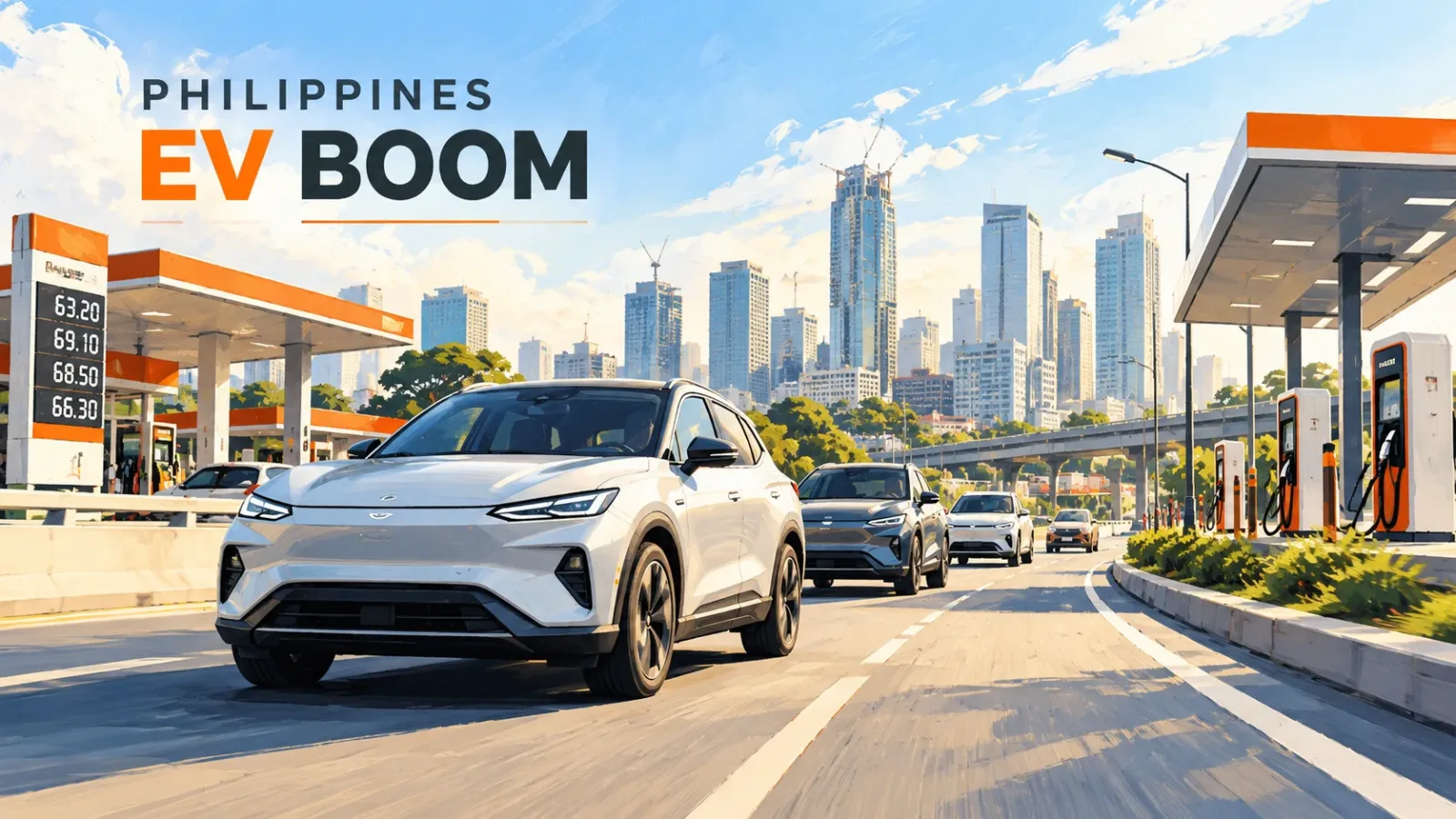
The Philippines’ EV Boom Is Accelerating But What Is Really Driving It?
For years, electric vehicles in the Philippines occupied a relatively small corner of the automotive market. They were interesting technology, but for many Filipino motorists they remained expensive, unfamiliar and difficult to justify compared with conventional gasoline or diesel vehicles. That picture is changing surprisingly quickly. According to the Department of Energy, more than 67,000 electric vehicles were registered during the first eight months of 2026, representing roughly 130 percent year-on-year growth. Against approximately 270,000 vehicles sold during the same monitoring period, EVs represented around 24.7 percent of the market. That is a significant number for a country where EV adoption was still relatively limited only a few years ago. But there is an important question behind the headline.
Why are Filipinos suddenly buying so many electrified vehicles?
There is no single answer. Fuel prices are playing an important role, but the Philippine EV market is also benefiting from a combination of government policy, rapidly expanding Chinese automakers, lower vehicle prices, more charging stations and a growing awareness that electricity can offer an alternative to imported petroleum. Together, these forces may be creating the first genuinely large-scale shift in the Philippine automotive market.
Expensive Fuel Changes the Calculation
The most immediate reason is difficult to ignore every time motorists visit a fuel station. Gasoline prices have climbed sharply in 2026 amid disruption in international energy markets. Reuters reported that Philippine gasoline prices had risen by around 68 percent following the escalation of conflict involving the United States, Israel and Iran. For Filipino motorists, global geopolitics quickly becomes a household expense. The Philippines remains heavily dependent on imported petroleum. When international oil prices rise or supply routes become disrupted, drivers eventually feel the consequences at the pump. That changes the economics of owning an EV. A gasoline-powered car requires its owner to repeatedly purchase a commodity whose price is determined partly by events thousands of kilometers away. An EV still consumes energy, of course, and Philippine electricity is not particularly cheap. But electricity prices do not move in exactly the same way as gasoline and diesel prices. The DOE reported earlier in 2026 that average charging rates were approximately ₱24.03 per kWh for AC charging and ₱30.15 per kWh for DC fast charging, although actual prices vary considerably depending on charging provider and location. Home charging can present a different cost equation again. For owners who have access to residential parking and charge overnight, an EV can potentially shift a significant portion of transportation spending away from fuel stations altogether. When gasoline becomes expensive enough, something important happens psychologically as well. A buyer who previously considered an EV primarily for environmental or technological reasons can begin considering one simply because the operating cost makes sense.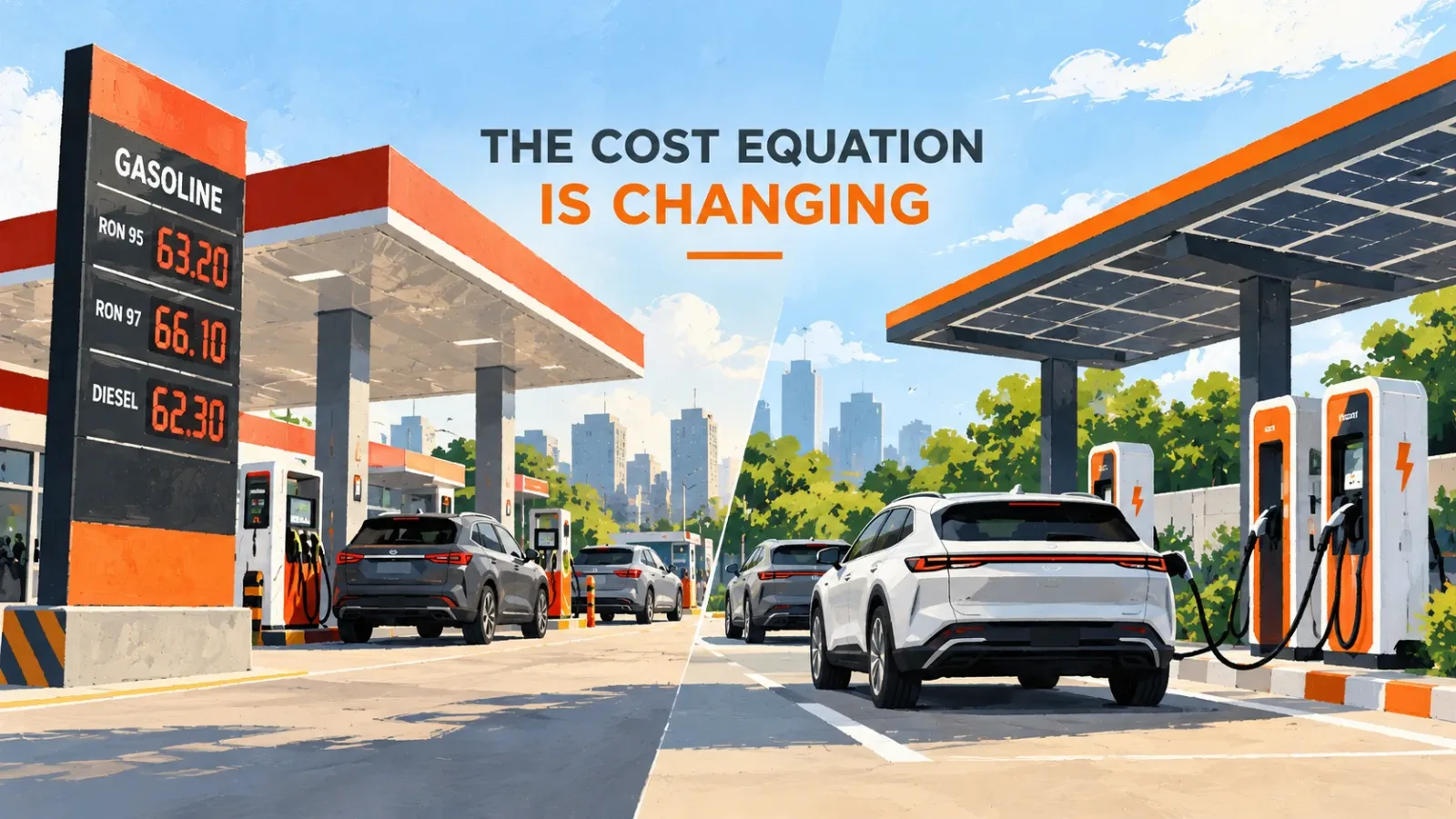
This Is Not Just a Battery-Electric Car Story
There is an important detail when interpreting Philippine EV statistics. Under the Philippine EV framework, the term electric vehicle does not necessarily mean only a fully battery powered car.
DOE classifications include:
- Battery electric vehicles or BEVs
- Plug-in hybrid electric vehicles or PHEVs
- Hybrid electric vehicles or HEVs
- Light electric vehicles or LEVs
That distinction matters. The dramatic rise in registrations should therefore not automatically be interpreted as tens of thousands of Filipinos abandoning gasoline completely. Instead, something broader appears to be happening.
Filipino buyers are becoming comfortable with electrification.
Some are choosing full EVs. Others are selecting hybrids that use considerably less fuel. And another group is adopting plug-in hybrids that can operate electrically for daily journeys while retaining an internal combustion engine for longer travel. In many ways, PHEVs and hybrids may actually be helping accelerate the transition because they remove one of the biggest concerns associated with EV ownership: charging availability. A driver can experience electric propulsion without becoming completely dependent on public charging infrastructure.
Chinese Automakers Are Changing What Filipinos Can Buy
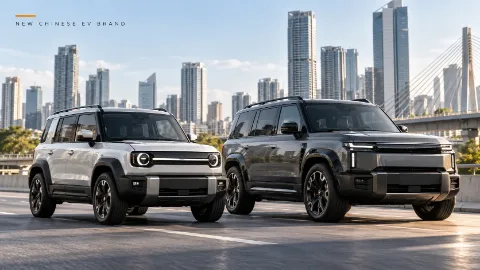
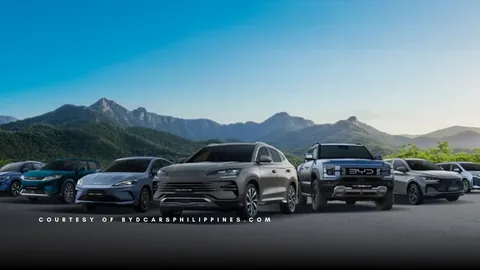
High fuel prices alone would not create an EV boom if affordable vehicles were unavailable. This is where the arrival of Chinese automakers becomes particularly important. Only a few years ago, buying an electric car in the Philippines generally meant choosing from a very limited selection of relatively expensive vehicles. That has changed dramatically. Brands such as BYD, Geely, Jetour, Chery, GAC, MG and several newer Chinese manufacturers have expanded the number of electrified choices available to Filipino consumers. Some compete directly with conventional gasoline vehicles on price. Others offer plug-in hybrid powertrains capable of completing everyday commuting primarily on electricity while preserving gasoline capability for long-distance driving. BYD illustrates how quickly this change is occurring. Reuters reported that BYD's Philippine sales during the first eight months of 2026 increased approximately 99 percent, already exceeding its total sales for the entire previous year. This is part of a much larger global development. Chinese manufacturers have become increasingly aggressive outside China as intense competition at home pushes them toward overseas markets. BYD's overseas passenger vehicle and pickup shipments increased around 154 percent year-on-year in September 2026, according to Reuters calculations based on company disclosures. The Philippines has become one of the markets where that expansion is especially visible.
The Choice Has Expanded Dramatically
Vehicle availability may be one of the most underestimated factors behind EV adoption. The DOE reported that by the end of August 2026 there were already 949 recognized EV models in the Philippine market. That was 67 more models than just one month earlier. That creates competition. Competition pushes manufacturers to offer: better batteries, longer electric range, faster charging, more equipment, longer warranties, and increasingly competitive prices. The conversation is therefore gradually changing. Instead of asking: “Should I buy an EV?” consumers are increasingly able to ask: “Which EV should I buy?” That is a much more mature stage of market development.
Government Policy Is Helping Too
It would also be misleading to attribute the entire transition to gasoline prices. Philippine policy has gradually reduced some of the barriers to electrified vehicles. Under current government programs, eligible EVs benefit from measures including zero import tariffs through 2028, along with applicable excise-tax advantages and other incentives created under the Electric Vehicle Industry Development Act or EVIDA. The government has gone further in 2026. President Ferdinand Marcos Jr. signed Executive Order No. 121 in July, establishing the Electric Vehicle Incentive Strategy, or EVIS, designed to encourage investment in electric vehicles and their associated industries. The DOE says EVIS could provide as much as ₱60 billion in performance-based fiscal support for qualified investments involving EVs and related industries. This matters because long-term EV adoption cannot depend exclusively on imported vehicles. A genuine electric-mobility industry eventually requires: local manufacturing, battery-related businesses, parts suppliers, technical services, charging infrastructure, and skilled workers. The Philippines still has a long way to go before reaching that point, but policy is increasingly focused on developing an ecosystem rather than merely encouraging consumers to purchase cars.
Charging Infrastructure Is Finally Starting to Catch Up
Range anxiety remains one of the most common objections to EV ownership. But the charging situation in the Philippines is no longer what it was several years ago. The DOE reported 1,876 registered EV charging stations nationwide by the end of August 2026. Meanwhile, the number of DOE-accredited EV charging-station providers reached 422 by August, up from 333 at the end of June. Charging power is increasing as well. Some Philippine charging hubs now provide very high-power DC chargers, including installations capable of delivering hundreds of kilowatts to compatible vehicles. That does not mean the charging problem has been solved. The more important issue is increasingly where chargers are located, not simply how many exist. Metro Manila and major commercial centers naturally receive significant infrastructure investment. Drivers travelling between provinces, living in condominiums or parking on streets may face a very different experience. For EV adoption to move beyond early adopters, charging must eventually become ordinary infrastructure rather than something drivers actively search for.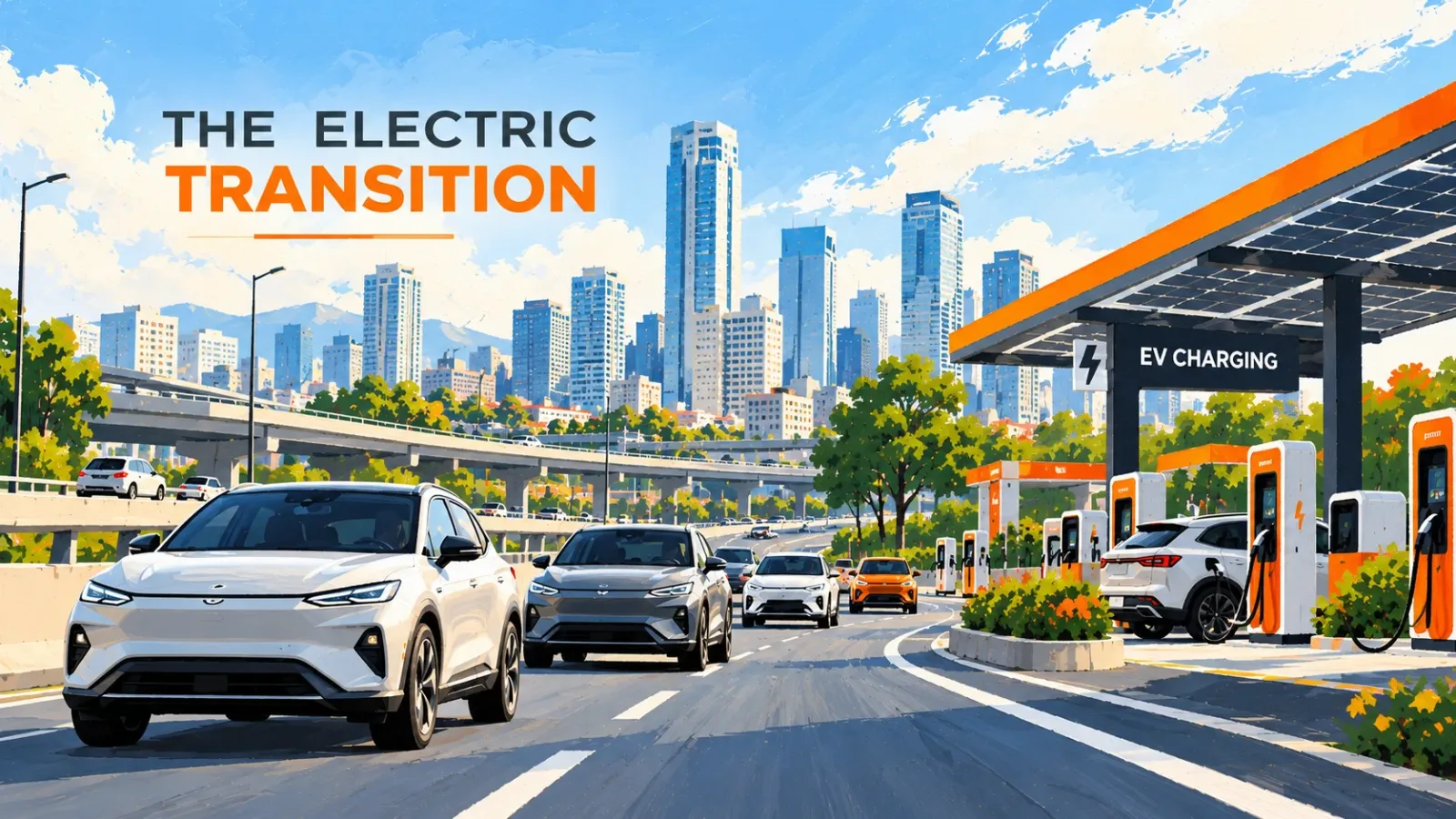
The Philippines Has Another Reason to Electrify: Energy Security
There is also a bigger issue that extends beyond individual car owners. The Philippines imports most of the petroleum products that keep its transportation system moving. That makes transportation particularly vulnerable to global disruptions. The current Middle East situation has highlighted this weakness again. Reuters reported that Southeast Asian governments are accelerating discussions around petroleum reserves, renewable energy and regional energy security after disruption to oil supplies flowing through the Strait of Hormuz. Electric vehicles cannot eliminate this problem overnight. Electricity itself must still be produced, and part of the Philippine power mix remains dependent on imported fuels. But electrification creates something conventional vehicles cannot provide: flexibility in where transportation energy comes from. A gasoline car can essentially use gasoline. A diesel vehicle needs diesel. An EV can potentially be powered by electricity generated from: solar, wind, geothermal, hydroelectric power, natural gas, coal, battery storage, or future energy sources added to the grid. As the Philippine electricity mix evolves, an EV already on the road can indirectly benefit without replacing its drivetrain. That makes transport electrification an energy-security strategy as much as an automotive one.
But There Are Still Major Obstacles
Rapid growth should not be mistaken for a completed transition. Several obstacles remain.
Charging access
Homeowners with garages have an enormous advantage. Condominium residents, apartment tenants and motorists without dedicated parking face a much more complicated charging experience. This could eventually become one of the largest barriers to mass EV adoption in Philippine cities.
Upfront price
Affordable EVs are arriving, but many remain more expensive than comparable entry-level gasoline cars. This is especially important for motorcycles and lower-income transport users. Reuters notes that electric-motorcycle adoption remains comparatively slow, with purchase price still an important concern.
Battery longevity and resale values
Many buyers are still unfamiliar with EV battery degradation. Used-EV pricing and battery-health certification will become increasingly important as the first large generation of EVs enters the second-hand market.
Repair infrastructure
Traditional mechanics have decades of experience repairing combustion engines. High-voltage EV systems require different training, equipment and safety procedures. The service network will need to expand alongside vehicle sales. A few thousand EVs are relatively easy for the grid to absorb. Millions represent something entirely different. Charging demand will eventually need to become part of distribution-network planning, particularly if large numbers of motorists charge simultaneously in residential areas. The DOE says EV charging demand is already being incorporated into long-term power planning.
What Happens If Gasoline Becomes Cheap Again?
This may be the most interesting question. High gasoline prices can accelerate EV adoption very quickly because they create an immediate financial incentive. But oil markets move in cycles. If gasoline prices eventually fall substantially, will Filipino buyers return to conventional vehicles? Some probably will. But the market may already be approaching a point where EV growth becomes increasingly independent of fuel prices. Once manufacturers have established dealerships, charging companies have invested in infrastructure, consumers understand the technology and large numbers of EVs are already on the road, the ecosystem becomes much harder to reverse. The comparison also stops being simply: gasoline versus electricity. It becomes: technology, performance, software, maintenance, charging convenience, operating cost, vehicle price, and ownership experience. That is a considerably more complicated competition.
The Real Story Is Bigger Than High Gasoline Prices
High fuel prices may have accelerated the Philippine EV market in 2026. But they did not create all of the conditions behind it. The vehicles had to become available. Prices had to become more competitive. Charging infrastructure had to expand. Government policy had to encourage adoption. And motorists had to become comfortable with electrified drivetrains. Those pieces are now beginning to come together. The Philippines has moved from fewer than 10,000 cumulative registered EVs in the early part of this decade to tens of thousands of new registrations in a matter of months. Historical DOE data recorded approximately 9,666 cumulative EV registrations through 2022, illustrating just how rapidly the market has developed since then. The transition is still young, and gasoline vehicles will remain part of Philippine transportation for many years. But something fundamental appears to have changed. Electric vehicles are no longer merely an alternative technology waiting for the Philippine market to become ready. They are becoming part of the mainstream Philippine car market. And expensive gasoline may simply have convinced more Filipinos to notice.
Sources and References
Philippine Department of Energy - EV Adoption Gains Ground as DOE Strengthens Safety, Charging Ecosystem: 67,000+ EV registrations, 24.7% market share, 949 recognized models and 1,876 registered charging stations. Department of Energy Philippines
Reuters - High gasoline prices drive EV sales surge in the Philippines, Oct. 8, 2026: Fuel-price impact, 130% registration growth, BYD sales and broader market conditions. Reuters
Philippine DOE - EV and charging policy: Charging costs, incentives, 2025 EV registrations and Philippine energy-security context. Department of Energy Philippines
Official Gazette - Executive Order No. 121, s. 2026: Establishment of the Electric Vehicle Incentive Strategy. Official Gazette
Philippine DOE - Accredited EVCS Providers: Expansion to 422 accredited charging-station providers by August 2026. Department of Energy Philippines
Philippine Energy Plan / CREVI: Historical EV registrations and long-term electric-vehicle adoption targets. Department of Energy Philippines
Comments
No comments yet. Be the first to join the discussion.