Redesigned Tesla Model Y: What's New and Why it Matters?
Nearly five years after the Model Y first reached customers, Tesla introduced a substantially redesigned version of its electric SUV. Rather than moving to an entirely new platform, the company concentrated on refining the existing vehicle through changes to aerodynamics, suspension, noise isolation, efficiency, interior materials, and passenger technology.
The result is an evolutionary update rather than a complete reinvention. The underlying formula remains recognizable, but many of the systems surrounding it have been reworked to address efficiency, comfort, refinement, and everyday usability. For buyers, the more interesting story is therefore not simply how different the new Model Y looks, but how a series of relatively small engineering changes can affect the way an electric vehicle performs and feels in everyday driving.
Quieter Cabin Through Better Noise Isolation
One of Tesla's major development targets for the redesigned Model Y was cabin noise. According to Tesla, road noise has been reduced by 22%, while both impact noise and wind noise have been reduced by 20% compared with the previous Model Y. These figures come from Tesla's own testing and should therefore be regarded as manufacturer claims rather than independent measurements.
The improvements come from several areas rather than one major change. Tesla revised parts of the body structure, improved sealing around the cabin, and expanded the use of acoustic glass. Noise isolation can be particularly noticeable in an electric vehicle. Without the continuous sound of an internal-combustion engine masking other frequencies, tire noise, airflow around the body, suspension impacts, and vibration can become more apparent to passengers. Improving acoustic insulation therefore contributes not only to perceived luxury but also to the overall refinement of the driving experience.
Finding More Range Without Simply Adding More Battery
Another important part of the update is efficiency. Tesla says the redesigned Model Y achieves approximately 5% more range using the same amount of battery energy. Instead of relying on a larger battery pack, engineers worked on reducing energy losses throughout the vehicle. Among the changes identified by Tesla are lower-friction lubrication fluid, optimized gear grinding, reduced brake drag, improved tire rolling resistance, and aerodynamic revisions.
Each improvement may appear relatively small, but efficiency gains can accumulate. A tire that requires slightly less energy to roll, a drivetrain that loses less energy through friction, and a body that encounters less aerodynamic resistance all reduce the amount of electricity required to move the vehicle. This illustrates an important principle of EV engineering: increasing driving range does not necessarily require increasing battery capacity.
Reducing energy consumption can achieve a similar result without adding the cost and weight associated with a larger battery. At the redesigned Model Y's U.S. launch, Tesla quoted an EPA-estimated 320 miles (about 515 km) of range for the All-Wheel Drive version, together with a claimed 0–60 mph time of 4.1 seconds. Those figures should not be treated as universal Model Y specifications. Range varies according to configuration, wheels, market, software, and testing methodology. Tesla's Philippine specifications, for example, use the WLTP testing standard rather than the U.S. EPA cycle. For that reason, buyers comparing Model Y variants should use figures from the same testing standard whenever possible.
Chassis Changes Target Ride Quality
Efficiency was not the only engineering priority. Tesla also revised the Model Y's chassis in an effort to improve the balance between ride comfort and handling. The redesigned vehicle uses a stiffer body structure, revised suspension geometry and kinematics, and updated damping technology related to developments introduced with the refreshed Model 3.
A stiffer body can provide engineers with a more stable foundation for suspension tuning. When the body itself flexes less, the suspension can perform more consistently because springs, dampers, bushings, and control arms are doing more of the work of controlling vehicle movement. The objective is not simply to make the suspension softer. A well-tuned system needs to absorb road imperfections while still controlling body movement during braking, acceleration, and cornering.
Whether the redesigned Model Y delivers a major real-world improvement will ultimately depend on road conditions, wheel and tire configuration, and independent testing, but the mechanical changes indicate that ride refinement received substantial attention during development.
Exterior Redesign Has an Aerodynamic Purpose
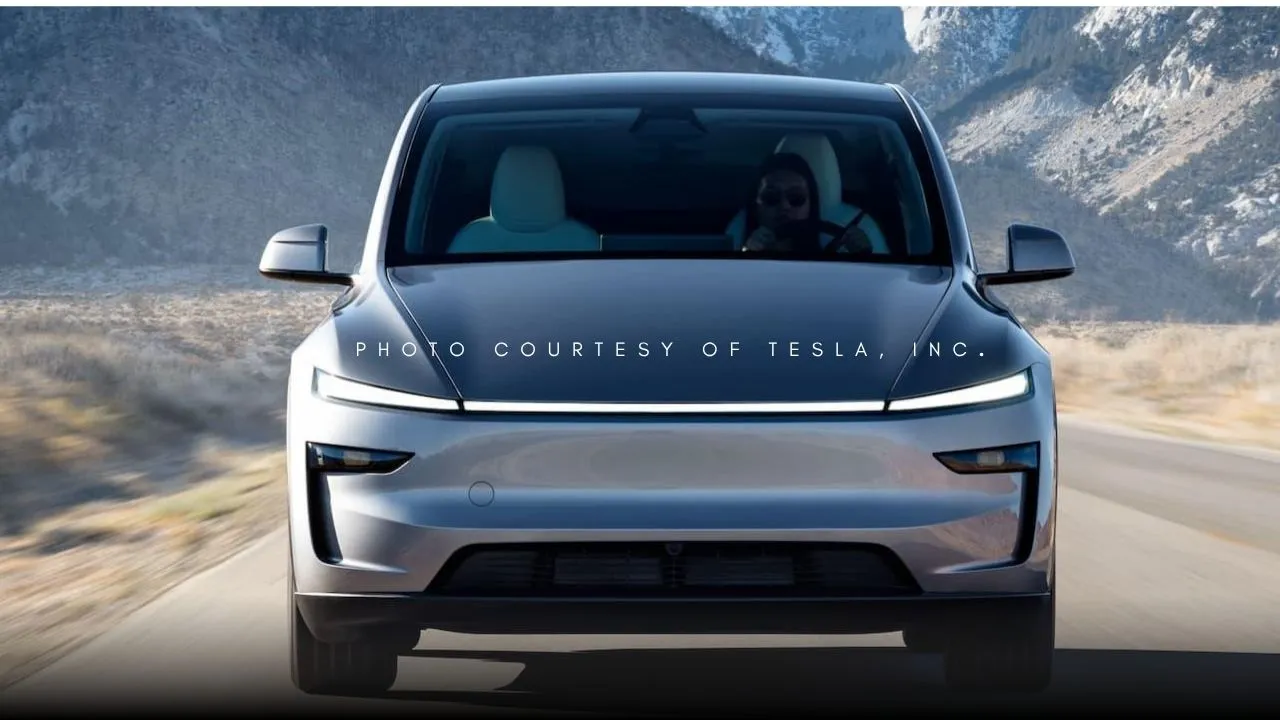
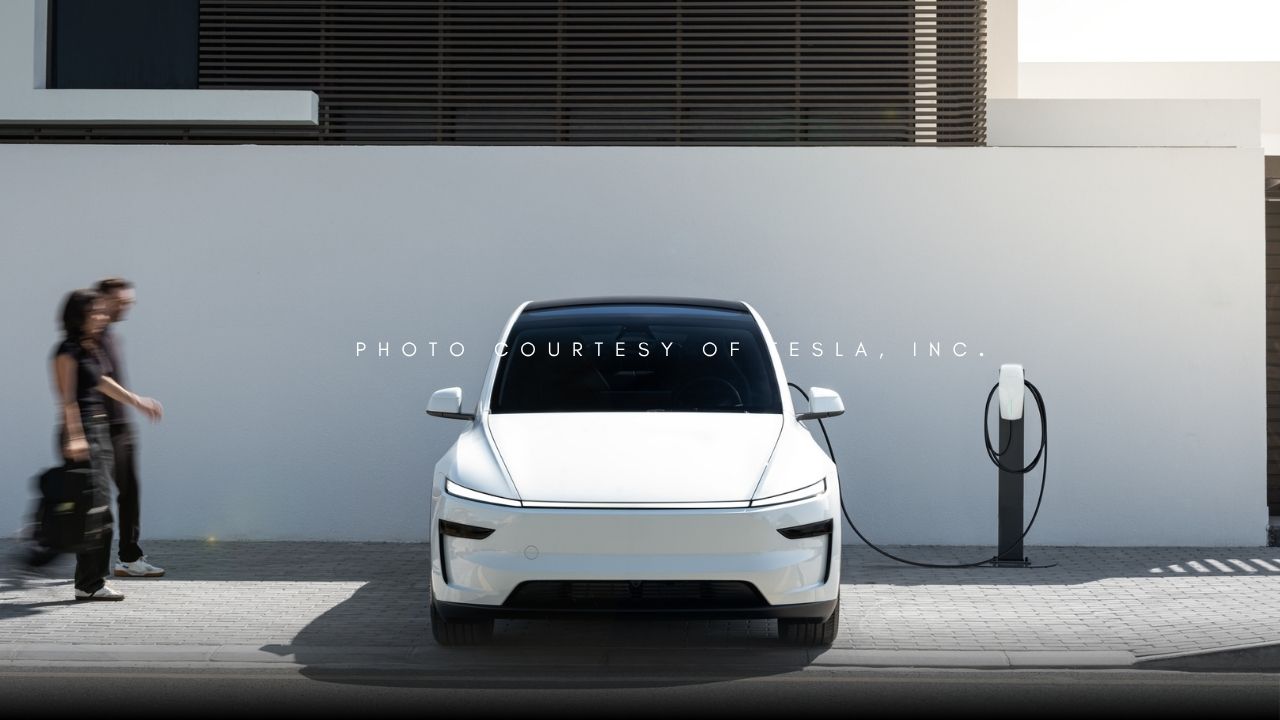
The new Model Y is immediately recognizable by its redesigned front end. A full-width cross-car light bar stretches across the upper fascia, giving the vehicle a visual connection to newer Tesla designs such as the Cybertruck and Cybercab. The front of the vehicle also sits lower than before. According to Tesla, the three-piece lighting and fascia arrangement was engineered with aerodynamic efficiency and pedestrian safety in mind. Because those safety benefits are manufacturer claims, they should not be interpreted as independent crash-test results.
Below the light bar, horizontal elements visually widen the vehicle, while outboard ducts help manage airflow around the body. Aerodynamics becomes increasingly important as vehicle speed rises because pushing air out of the way requires progressively more energy. For an EV, reducing aerodynamic drag can translate directly into lower electricity consumption, particularly during highway driving.
A New Approach to Rear Lighting
The rear of the Model Y has also been substantially redesigned. One of its most distinctive features is Tesla's full-width indirect rear lighting system.
Instead of presenting the entire lighting element as a conventional exposed lamp, the system directs light onto a specially designed rear applique. Tesla describes the illuminated section as approximately five feet wide. The change gives the Model Y a distinctive nighttime signature, but other modifications around the rear have more direct aerodynamic functions.
Tesla reshaped the tailgate, spoiler, rear fascia, and diffuser to better manage airflow leaving the vehicle. The company also says the extended diffuser contributes to aerodynamic performance while providing additional protection during some low-speed impacts. The spoiler now uses an advanced thermoplastic material that gives engineers greater freedom to create the desired aerodynamic profile.
Tesla has also introduced new wheel designs, including the 19-inch Crossflow wheel, with efficiency playing an important role in their development. Wheel aerodynamics can have a measurable effect on an EV because rotating wheels interact with airflow around the vehicle. More aerodynamically efficient wheel designs can reduce turbulence, although they must still balance cooling, strength, weight, and appearance.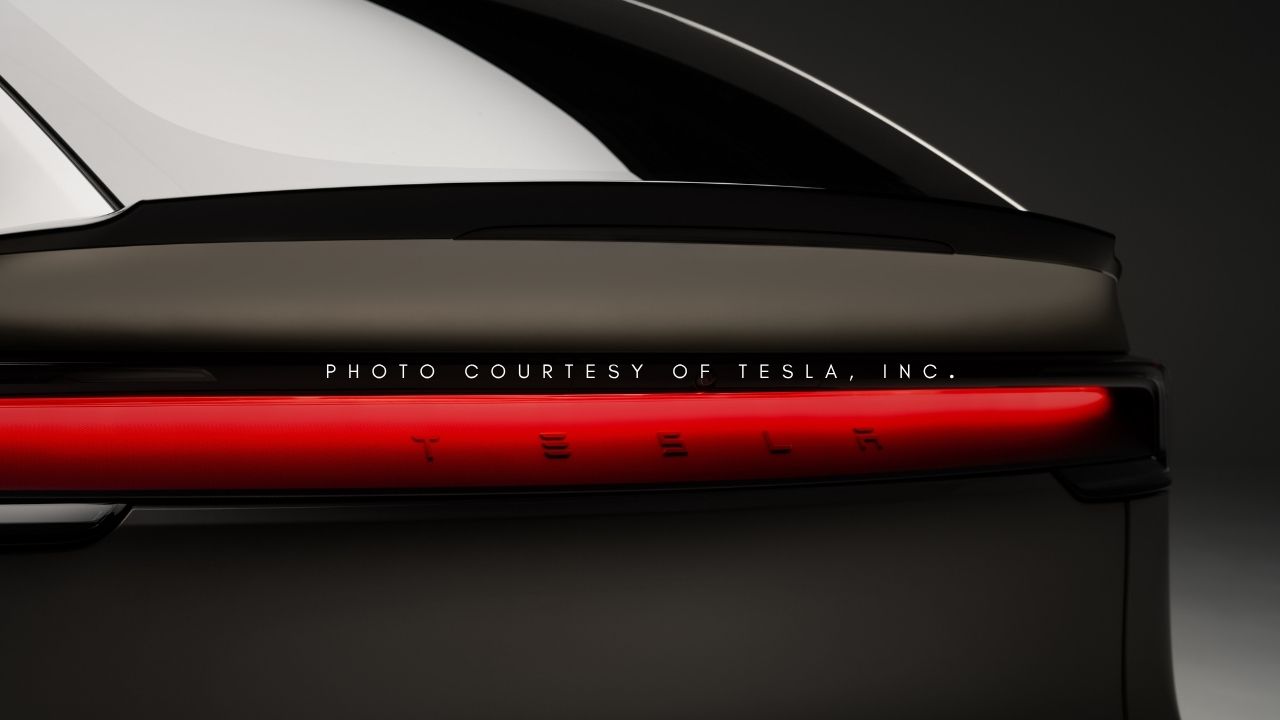
Interior Moves Toward Greater Refinement
Tesla has retained the Model Y's minimalist cabin philosophy, but much of the interior has been reworked. A new wraparound multicolor ambient-lighting system extends through the cabin. Tesla says the system can automatically adjust its brightness to help reduce distracting windshield reflections at night. The center console now incorporates redesigned sliding storage doors and aluminum trim, with additional aluminum details appearing around the steering wheel, door panels, and instrument panel.
Tesla has also expanded the use of softer wrapped surfaces and revised textile materials. These changes are significant because the electric SUV market has changed considerably since the original Model Y appeared. Range and acceleration remain important, but buyers now have far more EVs to choose from, making cabin quality, comfort, noise isolation, and materials increasingly important points of comparison.
Better Heat Rejection From the Glass Roof
The Model Y retains its large panoramic glass roof, but Tesla says its thermal performance has been substantially improved. According to the company, new coatings allow the glass to reflect seven times more solar energy than the previous design. This is another manufacturer-supplied measurement, but the engineering principle behind it is important.
Reducing solar energy entering the cabin can lower interior temperatures when the vehicle is exposed to sunlight. That means the climate-control system may require less energy to cool the cabin. For an EV, climate control draws electricity from the same battery used for propulsion. Reducing that demand can therefore contribute to efficiency while also reducing fan noise and improving passenger comfort. This type of improvement may be particularly relevant in hot climates such as the Philippines, where cabin heat buildup can place considerable demand on an air-conditioning system.
More Comfortable Seats, Front and Rear
Front-seat passengers now receive ventilated seats in addition to heating. The second row has also received attention, with thicker cushions and bolsters designed to improve passenger comfort. The seats incorporate powered reclining, while higher-output motors allow them to fold flat quickly when additional cargo capacity is required. Tesla has also introduced customizable steering-wheel switches, allowing drivers to assign selected functions to physical controls. This is a relatively small addition, but it can reduce reliance on touchscreen menus for frequently used functions.
Rear Passengers Get Their Own Screen
Technology upgrades extend beyond the driver. An 8-inch rear touchscreen gives second-row passengers access to climate controls and entertainment functions, including supported gaming and video-streaming services. The system also supports dual Bluetooth connectivity, providing more flexibility for passengers using separate audio devices.
A 65-watt dual USB charging system is capable, according to Tesla, of providing enough power to charge two compatible laptops simultaneously. Together, these features reflect a broader shift in vehicle infotainment. Digital systems are increasingly being designed around all occupants rather than concentrating almost entirely on the driver and front passenger.
Connectivity Becomes Part of Vehicle Engineering
Tesla has also upgraded the Model Y's communications hardware. The company claims cellular download speeds are up to 50% faster, with cellular range improved by approximately 30%. For Wi-Fi, Tesla claims download speeds of up to 300% faster and as much as 200% greater range compared with the previous system.
These percentages originate from Tesla and real-world results will depend heavily on network conditions, router performance, interference, location, and available signal strength. Nevertheless, connectivity is particularly important for Tesla vehicles because many functions depend on internet access, including streaming services, navigation data, remote vehicle communication, and over-the-air software updates. Greater Wi-Fi range could also make it easier for a vehicle parked in a garage or driveway to maintain a connection to a home network.
Evolution Rather Than Reinvention
The redesigned Model Y is not a ground-up replacement for the original, and that may be the most important point about the update. Tesla has instead taken an established vehicle architecture and concentrated on reducing inefficiencies and addressing areas where refinement could be improved. Better aerodynamics reduce the energy needed to maintain speed. Lower drivetrain and brake losses reduce wasted energy. Acoustic glass and improved sealing target cabin noise. Chassis revisions address ride quality, while new seats, materials, displays, and connectivity hardware improve the passenger experience.
No single change completely transforms the Model Y. Together, however, they demonstrate how automotive engineering often progresses: through dozens of incremental improvements rather than one revolutionary breakthrough.
That approach is particularly important as the electric SUV market matures. Battery capacity, acceleration, charging speed, and range remain major considerations, but they are no longer the only measures by which an EV is judged. Buyers increasingly expect electric vehicles to deliver the same qualities demanded from any modern family SUV—comfort, refinement, practicality, connectivity, safety, and predictable everyday usability. The redesigned Model Y is therefore less about changing what the Model Y is and more about improving how effectively it performs that role.

Comments
No comments yet. Be the first to comment.