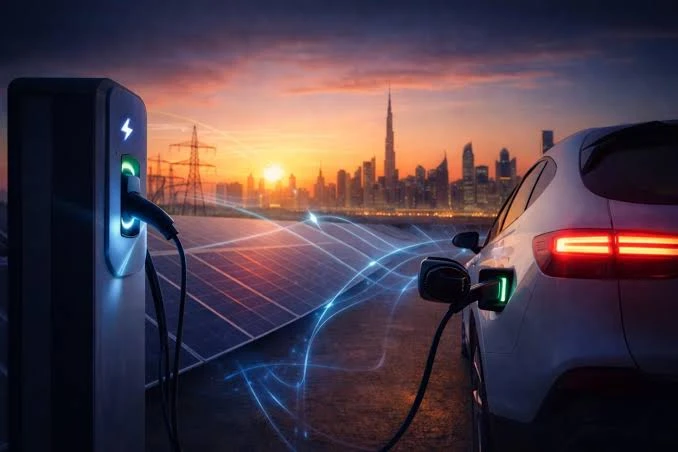
The first phase of the electric-vehicle transition was largely about proving that EVs could work. Could batteries provide enough range? Could electric cars be fast, practical and safe? Would established automakers actually build them? Would consumers buy them? Those questions have not disappeared, but the industry has already answered many of them. More than 20 million electric cars were sold worldwide in 2025, an increase of around 20 percent from the previous year. Electric vehicles accounted for roughly one in four new cars sold globally. In China, their share approached 55 percent, while European EV sales grew by more than 30 percent. There are now hundreds of battery-electric models available globally, ranging from inexpensive city cars to luxury sedans, SUVs, vans and heavy trucks. The EV itself is no longer an experiment. But that does not mean the transition is finished. In some ways, the difficult part is only beginning. The next stage is about building an entire transportation and energy system capable of supporting tens or eventually hundreds of millions of electric vehicles reliably. And that challenge is much bigger than putting more batteries into cars.
The EV Market Is Growing but Not Everywhere at the Same Speed
It is tempting to describe EV adoption as one smooth global curve. The reality in 2026 is far more complicated. The International Energy Agency expects electric cars to represent close to 29 percent of worldwide car sales in 2026, but regional trends differ dramatically. Europe continues to grow strongly, while a number of emerging markets are expanding rapidly. China remains the world's largest EV market. The United States tells a very different story. According to Cox Automotive, U.S. electric-vehicle sales fell 27 percent year over year during the first quarter of 2026, with EVs representing 5.8 percent of new-vehicle sales. The decline followed the end of federal purchase incentives and substantial changes in automaker EV strategies. That contrast matters. EV technology did not suddenly become worse in the United States while becoming better in Europe. What changed was the environment surrounding the technology. Pricing changed. Incentives changed. Manufacturer strategies changed. Consumer confidence changed. That demonstrates one of the most important lessons of the EV transition: Good technology alone does not guarantee adoption. Infrastructure, economics and policy matter too.
There Are More Chargers Than Ever
Charging infrastructure has expanded at an extraordinary rate. The number of public charging points worldwide increased by more than 33 percent during 2025, with almost 1.8 million chargers added in a single year. By the end of 2025, there were more than 7 million public charging points globally. That is real progress. And measured globally, charger deployment has broadly kept pace with the growing electric light-duty vehicle fleet: the IEA counted approximately 11 electric light-duty vehicles for every public charging point in 2025, roughly unchanged from 2024. So the problem is not simply: “There aren't enough chargers.” The more useful question is: Are the chargers where people actually need them, are they powerful enough, and can drivers depend on them? Those are very different problems.
Charger Numbers Don't Tell the Whole Story
Imagine two regions that each have 1,000 public charging points. One places most of them in shopping centers where people already have home charging. The other puts them in apartment neighborhoods, motorway corridors and locations where drivers cannot easily charge anywhere else. Numerically, the networks are identical. Practically, they are not. Power matters too. A low-power AC charger that keeps a vehicle parked overnight serves a completely different purpose from an ultra-fast DC station supporting long-distance travel. Location matters. Reliability matters. Pricing matters. Payment compatibility matters. Whether the charger is blocked, broken or already occupied matters. This is why simply announcing another thousand charging points does not necessarily mean the charging problem has been solved. A mature charging network has to be designed around how people actually use vehicles.
Home Charging Is the Hidden Advantage and the Hidden Divide
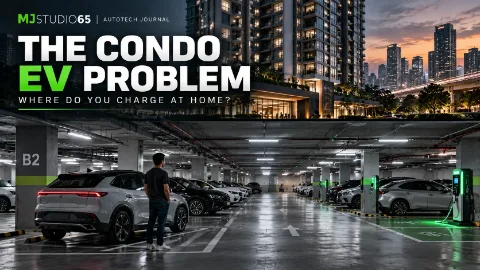
The easiest EV ownership experience usually belongs to someone who can charge where the car spends the night. Drive home. Plug in. Wake up with enough energy for the next day. For that owner, visiting a public charger may be something reserved mostly for long journeys. But millions of potential EV buyers do not have that option. Apartment residents, condominium owners, renters and people who park on streets face a very different experience. For them, public or workplace charging may not be supplemental infrastructure. It may be their primary source of energy. That creates one of the biggest challenges of mass-market electrification. The EV transition cannot be designed only around homeowners with garages. As adoption expands beyond early buyers, convenient charging has to reach people who live in very different housing situations. Governments are beginning to recognize this. In the United Kingdom, for example, charging grants were extended in 2026 for renters, flats, landlords and households that rely on on-street parking. This is exactly the type of less glamorous infrastructure policy that becomes more important as EVs move toward the mainstream.
The Grid Problem Is Real but Often Explained Badly
Another common argument is that electricity grids simply cannot support millions of electric vehicles. That is too simplistic. Globally, the energy requirement is manageable. The IEA estimates that electric vehicles consumed roughly 250 TWh of electricity in 2025, around one percent of worldwide final electricity demand. Under current policies, that could rise above 1,500 TWh by 2035. That sounds enormous and it is. But it would still account for only about 4 percent of global electricity demand in 2035. So the question is not simply whether enough electricity exists. The harder issue is when and where that electricity is required. A neighborhood transformer does not experience worldwide electricity demand. It experiences the homes connected to that transformer. If many households arrive home at 6 p.m., switch on air-conditioning, cook dinner and immediately connect powerful EV chargers, the local network can experience a concentrated peak. That can create problems even while the national electricity system has sufficient generating capacity overall. The challenge is therefore often a distribution and timing problem, not evidence that electrification itself is impossible.
Faster Charging Can Make Grid Connections Harder
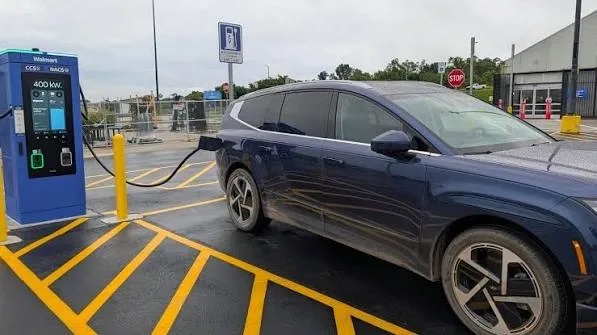 There is another interesting contradiction. EV buyers understandably want faster charging. Manufacturers are introducing higher-voltage vehicles, and ultra-fast chargers are becoming increasingly capable. But the faster a charging station needs to supply energy, the larger its electrical connection may need to become. That becomes particularly important at motorway charging hubs and commercial depots where multiple vehicles may charge simultaneously. The British government highlighted exactly this issue in 2026 when it proposed a Strategic Charging Infrastructure scheme for motorway service areas. Its consultation identified limited access to affordable electricity-network capacity as a significant obstacle to installing additional ultra-fast chargers at some locations. The chargers themselves are only one part of the infrastructure. Behind them may be substations, transformers, high-voltage connections and network reinforcement that drivers never see. And those projects can take much longer than installing a charging pedestal in a parking space.
Trucks and Fleets Make the Challenge Bigger
Passenger cars are only one part of transport electrification. Electric buses, delivery vehicles and heavy trucks can demand substantially more power. A commercial fleet may need dozens or hundreds of vehicles ready for work at approximately the same time. That changes the charging problem completely. The IEA notes that limited substation capacity, long permitting processes and required grid reinforcement can delay some urban fleet charging projects by several years. This may become one of the biggest infrastructure challenges of the next stage of electrification. Building an electric truck is one engineering problem. Providing several megawatts of dependable electricity at the depot where hundreds of those trucks operate is another. The automotive industry can solve the first problem. Utilities, regulators, property owners and governments have to participate in solving the second.
The Answer Isn't Necessarily a Bigger Grid Everywhere
Fortunately, not every EV needs to charge at maximum power at exactly the same time. A private vehicle might sit parked for ten hours overnight while requiring only two hours of charging. That creates flexibility. Instead of immediately charging when connected, software can schedule the vehicle for periods when electricity demand is lower or renewable generation is plentiful. This is known as smart or managed charging. The IEA considers managed charging one of the most important tools for integrating large numbers of electric vehicles efficiently because shifting charging away from peak periods can reduce stress on local networks. The car still receives the same amount of energy. It simply receives it at a better time. That sounds like a small software feature. Across millions of vehicles, it could become an important piece of electricity infrastructure.
EVs Could Eventually Help the Grid Instead of Only Drawing From It
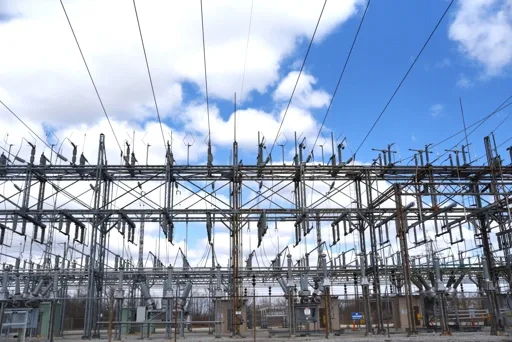 The next step is bidirectional charging. With vehicle-to-grid, or V2G, an EV can potentially return some stored electricity to the grid when demand is high and recharge later when electricity is abundant or cheaper. The concept changes the role of an electric car. Instead of being only another electrical load, the vehicle becomes a flexible battery connected to the wider energy system. The IEA says load shifting and V2G could reduce peak demand and potentially limit some future grid investment. But this technology is not yet something every EV owner can use. Compatible vehicles remain limited. Charger hardware varies. Electricity-market rules differ between countries. Utilities need ways of compensating owners. Standards and regulatory frameworks are still developing. So V2G should not be presented as a magical solution that makes every grid concern disappear. It is better understood as one potentially important tool in a larger system.
Policy Can Accelerate an EV Market or Disrupt It
The experience of 2026 also demonstrates how strongly electric-vehicle adoption remains connected to public policy. The United States provides perhaps the clearest example. When federal EV purchase incentives ended, sales declined sharply. That does not prove consumers will never buy EVs without incentives. But it does show that abruptly changing the economics of a relatively young market can produce immediate effects. Other governments are still expanding support. India's PM E-DRIVE program has allocated ₹2,000 crore for public charging infrastructure across the country. The United Kingdom, meanwhile, is reviewing the details of its Zero Emission Vehicle Mandate while continuing to support charging deployment and maintaining its longer-term zero-emission objectives. This illustrates an uncomfortable reality for automakers and infrastructure investors. Factories, charging sites and electricity upgrades require years of planning. Political policies can sometimes change much faster. If governments want private companies to commit billions to a transition, long-term regulatory predictability may be almost as important as the incentive itself.
The Next EV Buyer Is Different from the early Adopter
The first wave of EV buyers often had characteristics that made electrification comparatively easy. They could afford relatively expensive new technology. Many had private parking. Some owned multiple vehicles. They were willing to learn charging apps and tolerate occasional inconvenience because they actively wanted the technology. Mass-market buyers may be very different. They may have only one car. They may rent. They may live in an apartment. They may have limited tolerance for unreliable public charging. And they are far more likely to compare an EV against a petrol or hybrid car primarily on price and convenience. That changes what the industry needs to deliver. The next stage of EV adoption will not be won simply by producing a car with another 100 km of theoretical range. A dependable 350 km EV with easy charging might be far more useful than a 600 km vehicle whose owner cannot conveniently charge it.
Reliability May Matter More Than Charger Count
This is another point that deserves more attention. A charging network can look impressive on a map and still produce a frustrating ownership experience. Drivers need to know that when they arrive. The charger will work, the connector will fit, payment will be straightforward, the advertised power will be reasonably achievable, and the price will be clear. Those details do not generate the same headlines as a new 500 kW charging station. But they may matter more to everyday users. As networks mature, quality of service should become as important as the number of plugs installed. The EV transition needs reliable infrastructure, not just visible infrastructure.
The Hardest Part May Be Coordination
This is ultimately why the next phase of electrification is more complicated than the first. Automakers can design better EVs. Battery companies can develop cheaper cells. Charging companies can build faster chargers. Utilities can reinforce networks. Governments can create regulations. Property developers can install charging in buildings. Software companies can manage demand. But none of those things operates independently. An ultra-fast charger accomplishes very little if the grid connection takes four years. A brilliant EV is inconvenient for an apartment resident who has nowhere to charge it. A utility cannot manage charging intelligently if vehicles and chargers cannot communicate. A charging operator may hesitate to invest if regulations change every few years. The EV transition is increasingly becoming a coordination problem. And coordination is often harder than inventing the technology itself.
This Doesn't Mean the EV Boom Is Failing
None of this should be interpreted as evidence that electric vehicles have failed. The numbers suggest the opposite. More than 20 million electric cars were sold worldwide last year, public charging passed seven million points, and EV adoption continues expanding into markets that were barely part of the global EV conversation several years ago. The technology has reached a scale where different problems naturally begin to appear. That is what happens when something moves from niche to mainstream. A few thousand EVs can be supported with existing infrastructure. Millions require planning. Tens or hundreds of millions require an ecosystem.
The Cars Are Becoming Ready. Now the System Has to Catch Up.
For much of the last decade, the EV conversation revolved around the vehicle itself.
- How far can it travel?
- How quickly can it accelerate?
- How large is the battery?
- How fast can it charge?
Those questions still matter. But the questions defining the next decade may be different.
- Can someone living in a condominium charge conveniently?
- Can a motorway service area obtain enough grid capacity for dozens of ultra-fast chargers?
- Can an electric-truck depot be connected without waiting years?
- Can millions of cars automatically charge when electricity is cheapest and most abundant?
- Can public chargers become as dependable and straightforward as drivers expect fuel stations to be?
And can governments maintain policies long enough for industry to make the investments required? The EV boom was not the end of the transition. It was the beginning. The automotive industry has demonstrated that it can build increasingly capable electric cars. The harder task now is building everything around them. And that may ultimately decide how quickly electric transportation moves from a rapidly growing alternative to an ordinary part of everyday mobility. The question is no longer whether an electric car can work. It is whether the entire system can work when millions of them arrive.
Sources & References
1. International Energy Agency - Global EV Outlook 2026
Global sales, regional adoption, charging infrastructure, electricity demand and future EV projections. IEA
2. International Energy Agency - Vehicle-to-Grid Technology, 2026
Smart charging, V2G and the role of EV flexibility in reducing grid peaks. IEA
3. Cox Automotive - Q1 2026 U.S. EV Sales Report
Documents the 27% year-over-year decline in American EV sales during Q1 2026 and the change in market share. Cox Automotive Inc.
4. UK Department for Transport - Strategic Charging Infrastructure Scheme
Explains how electricity-network capacity and connection costs can constrain ultra-fast charger deployment at motorway service areas. GOV.UK
5. UK Department for Transport - ZEV Mandate Review, 2026
Current review of the UK's zero-emission vehicle policy and future targets. GOV.UK


Comments
No comments yet. Be the first to join the discussion.